AI Fitness Photo Generator: Create Gym Photos That Look Strong, Not Strange
TL;DR
Use an AI fitness photo generator when you want confident athletic photos without renting a gym, hiring a photographer, or pretending a dumbbell rack is your natural habitat. The best results come from realistic lighting, believable body shape, simple outfits, and poses that match your actual build.
A good gym photo should say "I train" before it says "I discovered the liquify tool." An AI fitness photo generator can create polished athletic portraits for dating profiles, creator content, trainer branding, or personal motivation, but realism is the whole game. Tools like HotphotoAI are useful because they let you test fitness, lifestyle, and model-style looks without organizing a traditional shoot. The trick is knowing what to ask for, and what to leave out, unless you want biceps with their own zip code.
AI fitness photo generator: a tool that uses generative AI to turn input photos or prompts into athletic, gym, lifestyle, or physique-focused portraits.
Table of Contents
What is an AI fitness photo generator?
An AI fitness photo generator creates athletic-style portraits by combining a person's facial likeness, pose direction, clothing, lighting, and setting into a new image. It is not a workout tracker or health app; it is a visual creation tool for gym, sports, model, lifestyle, and transformation-themed photos.
A fitness model, in the standard sense, is someone who promotes fitness-related products, services, or lifestyles through a healthy, toned, athletic look. AI fitness portraits borrow that visual language: defined posture, clean lighting, fitted clothing, active settings, and confident facial expression.
These tools sit beside a broader wave of AI in personal health and image technology. A 2023 review in Sensors examined AI-based wearable sensors for digital health, showing how AI is already tied to fitness-adjacent personal data and presentation, even though photo generation focuses on appearance rather than measurement (Shajari, Kuruvinashetti, and Komeili, 2023).
Key insight: the best AI gym portrait is not the most shredded one; it is the one your friends would believe for more than three seconds.
What makes AI fitness photos look believable?
Believable AI fitness photos look attractive when the body, face, pose, lighting, outfit, and setting all agree with each other. If one element screams "Olympia finalist" while the rest says "Tuesday after work," the image starts to fall apart.
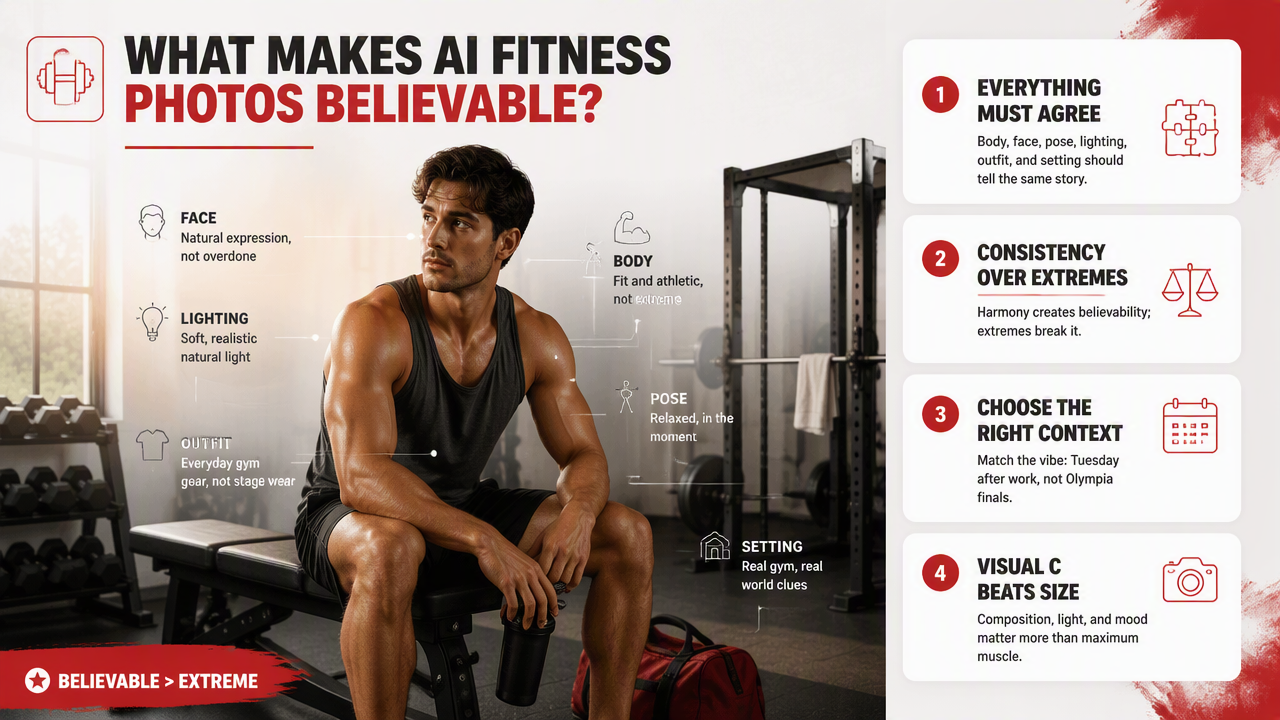
Most weak images fail because they chase maximum muscle instead of visual consistency. A natural athletic photo usually has moderate definition, slight skin texture, practical clothing, and lighting that could exist in a real gym or studio.
Fitness portrait realism checklist
| Element | Believable choice | Risky choice |
|---|---|---|
| Body shape | Athletic, proportional, close to your real build | Extreme abs, giant arms, tiny waist |
| Lighting | Side light, window light, soft studio light | Overdone shadows that carve fake muscles |
| Outfit | Tank top, fitted tee, leggings, shorts, sports bra | Costume-like gear or impossible fabric |
| Pose | Standing, stretching, holding weights, post-workout | Bent joints, twisted torso, floating equipment |
| Setting | Gym, track, locker room, rooftop, studio | Crowded backgrounds with warped machines |
| Skin detail | Natural texture and mild sweat | Plastic skin or oily superhero shine |
A little imperfection helps. Real gyms have uneven lighting, creased shirts, water bottles, scuffed flooring, and slightly awkward hands. Perfect symmetry often looks less human, which is unfair, but so is leg day.
How to create better AI gym photos
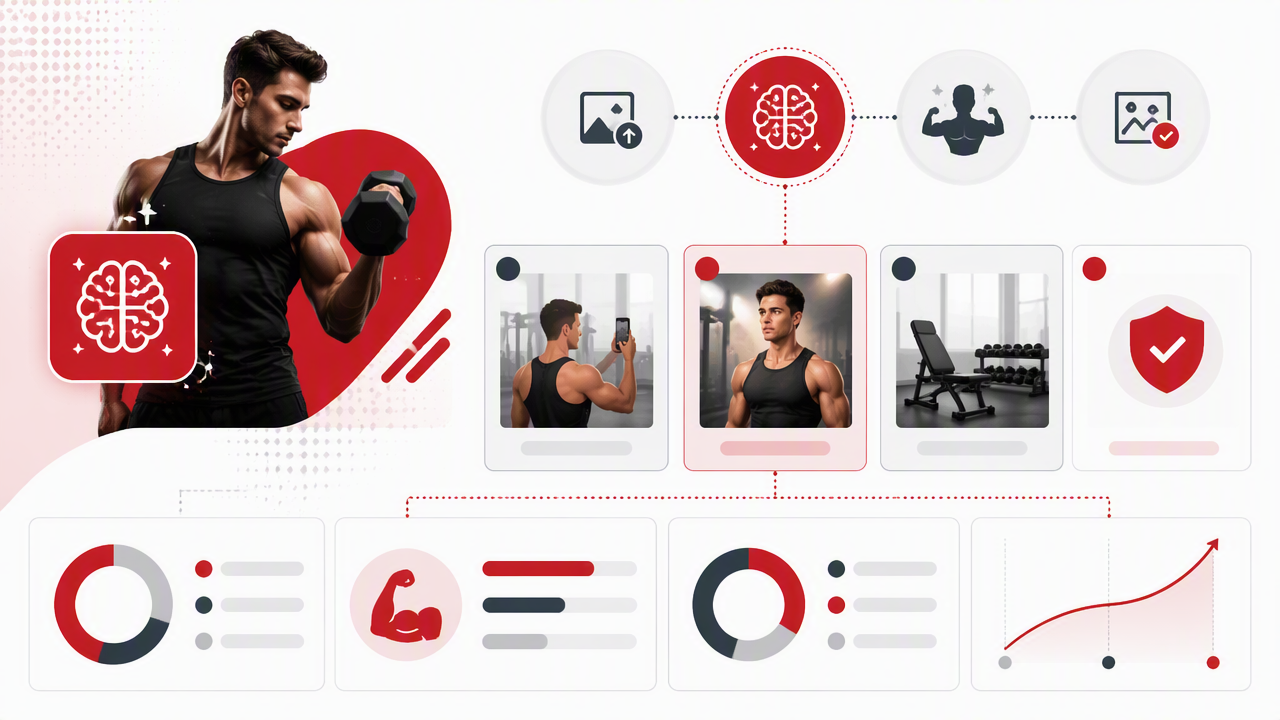
To create better AI gym photos, use clear source images, choose one visual goal, describe the scene precisely, limit body changes, and review the output for face, hand, and equipment errors. The strongest images feel like a styled shoot, not a body swap with better lighting.
- Start with clean face references. Use sharp photos with natural expressions and different angles.
- Pick one style. Choose gym, studio fitness, outdoor runner, yoga, athlete portrait, or lifestyle.
- Describe the outfit. Name the clothing, color, fit, and footwear.
- Control the body edit. Ask for athletic tone, not a totally different physique.
- Specify the lighting. Try "soft side lighting," "golden hour," or "studio rim light."
- Check the details. Look at fingers, teeth, logos, barbell shape, mirrors, and background people.
A useful prompt might be: "Create a realistic athletic portrait of me in a modern gym, wearing a black fitted training shirt and shorts, natural lean muscle tone, soft side lighting, confident relaxed pose, shallow depth of field, realistic skin texture."
A less useful prompt is: "Make me insanely ripped in a gym." That prompt has all the grace of ordering "food" at a restaurant.
How HotphotoAI handles this
The HotphotoAI platform is best used as a style-testing tool: upload strong references, choose a fitness or lifestyle direction, then generate options that keep your identity recognizable while changing the scene, outfit, and mood. I'd use it to compare a clean studio fitness look against a more casual post-workout portrait before picking profile photos.
Which styles work best for profiles and creators?
The best fitness image style depends on where the photo will be used: dating profiles need approachable confidence, trainers need credibility, creators need variety, and professionals need polish without looking like a supplement ad. One style rarely works everywhere.
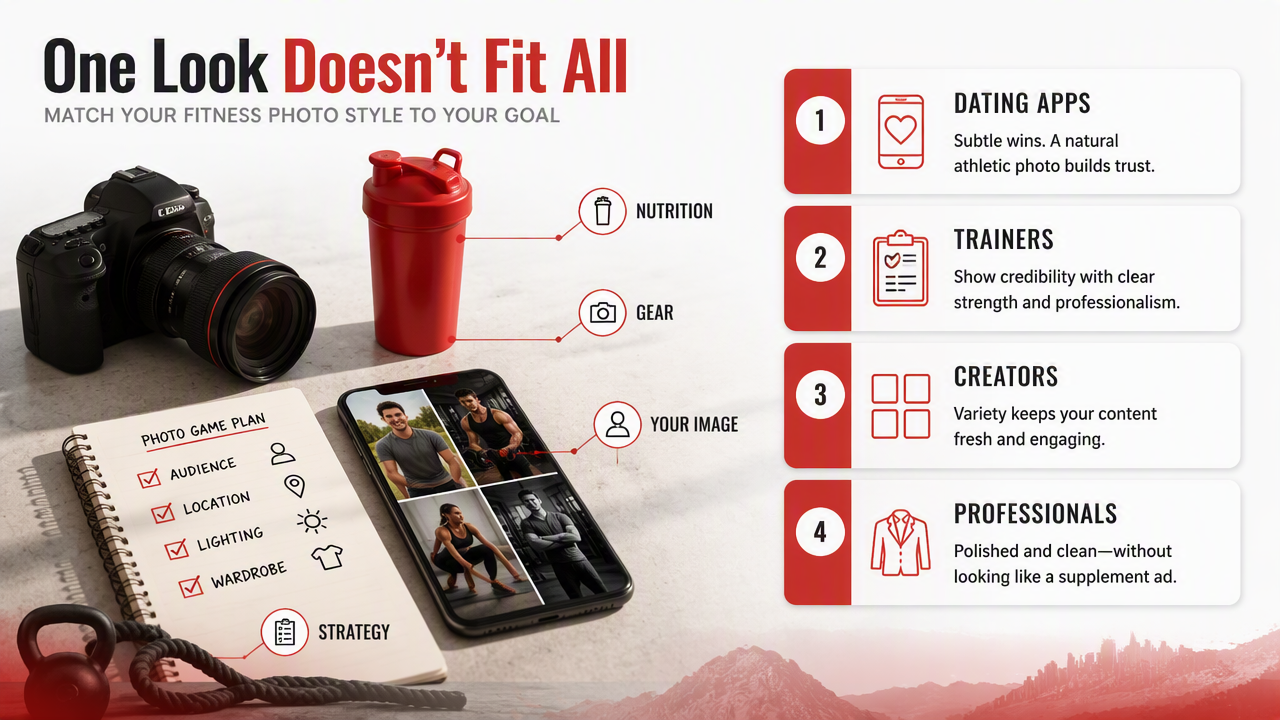
For dating apps, subtle wins. A natural athletic portrait can signal energy, discipline, and confidence, but too much flexing can feel like the photo equivalent of shouting in a small elevator.
For creators, variety matters more. Generate a batch that includes warm-up shots, studio portraits, outdoor movement, mirror-free gym images, and lifestyle photos. Repeating the same pose in different shirts makes the feed look manufactured.
Best fitness photo styles by use case
- Tinder or Hinge: relaxed gym portrait, outdoor run, fitted casual athletic wear.
- Instagram creator: studio fitness set, action pose, recovery-day lifestyle image.
- Personal trainer: clean coaching portrait, gym-floor image, branded but not cluttered background.
- LinkedIn or portfolio: polished athletic lifestyle photo with modest styling.
- Fantasy or model-style portraits: dramatic lighting, cinematic background, bolder outfit choices.
Research on data-driven systems outside photography, such as materials design, shows a broader pattern: better input structure improves output quality in AI-supported workflows (Pollice, Gomes, and Aldeghi, 2021). The same principle applies here. Vague prompts produce vague abs. Specific prompts produce usable portraits.
What should you avoid in AI fitness portraits?
Avoid exaggerated muscles, unrealistic waistlines, warped gym equipment, over-smoothed skin, fake sweat, and poses that your real body could not hold. These mistakes make the image less attractive because they break trust before anyone notices the lighting.
The biggest mistake is changing too much at once. If the face, body, outfit, and setting all shift dramatically, the result may look impressive but not useful. For profile photos, recognition matters more than fantasy.
Also avoid using AI images to imply false professional credentials, fake competition results, or misleading body transformations. A styled portrait is fair game. A fake "before and after" used as proof is not.
Practical rule: enhance the presentation, not the person's entire biology.
Keep your prompt honest: "lean athletic build" is safer than "bodybuilder physique." "Realistic gym lighting" is safer than "ultra-defined every muscle." If you need a photo that gets likes and survives a first date, believable beats heroic.
FAQ about AI fitness photo generators
AI fitness photo tools are useful when you treat them as creative portrait generators, not magic proof of a new body. Use them for style, confidence, branding, and experimentation, while keeping your final images recognizable and honest.
Can I use AI fitness photos on dating apps?
Yes, you can use them if the image still looks like you and does not misrepresent your body in a major way. Dating profile photos work best when they show confidence, style, and personality. If the generated image looks like your stunt double after a protein sponsorship, dial it back.
Do I need gym photos as input?
No, gym photos are helpful but not required. Clear face photos, natural expressions, and different angles usually matter more than the original setting. The generator can change background, clothing, and lighting, but it needs enough facial information to preserve identity across the new fitness-style images.
Can AI make me look more muscular?
Yes, many generators can create a more toned or muscular look, but moderation is the smarter choice. Small changes to posture, lighting, and outfit often look better than extreme body edits. If the shoulders, arms, and torso no longer match your face or frame, the image starts to feel fake.
Are AI fitness photos useful for personal trainers?
Yes, trainers can use them for polished promotional portraits, social posts, website visuals, and content planning. The images should support real expertise, not replace real client results or certifications. A credible trainer image usually looks clean, active, and approachable rather than overly staged.
Conclusion
A strong AI fitness photo generator helps you create athletic portraits that look confident, current, and believable. Start with clear reference photos, choose one style, keep body edits realistic, and inspect every result before posting.
If you want to experiment with gym, lifestyle, glamour, or model-style personal images, try a small batch with HotphotoAI and compare which version feels most like you on your best day. For more options, head to hotphotoai.com and build a set you'd actually be comfortable showing someone in real life.