AI Headshots vs AI Glamour Photos: Which One Fits Your Profile?
TL;DR
Use AI headshots for trust, consistency, and professional profiles; use AI glamour photos for dating, creator content, lifestyle images, and stylized self-expression. If one photo needs to do everything, pick the context first, because LinkedIn and Tinder reward very different visual signals.
A great AI photo can get you noticed; the wrong one can make you look like you wandered into the wrong app wearing someone else's jawline. The real choice in AI headshots vs AI glamour photos is not "which looks better," but "which fits the room?" Platforms such as HotphotoAI now make polished personal images accessible without booking a studio, but professional, dating, lifestyle, and fantasy portraits each need different rules.
Table of Contents
What are AI headshots and AI glamour photos?
**AI headshots** are generated or enhanced portraits designed to look professional, realistic, and profile-ready, usually from the chest or shoulders up. **AI glamour photos** are stylized portraits built around attractiveness, mood, fashion, lighting, and fantasy, often for dating apps, social media, or creative personal branding.Terminology: AI personal photo generation uses machine learning models to create new portraits or transform existing images based on input selfies, prompts, styles, lighting, clothing, and background choices.
Competitor research shows a split in the market. Headshot-focused brands such as HeadshotPro and Aragon AI position themselves around business portraits, team consistency, and professional credibility. Broader AI photo tools serve wider use cases: dating photos, lifestyle images, model-style shots, cinematic portraits, and social content.
Key insight: A headshot says "hire me" or "trust me." A glamour image says "notice me." Both can be valuable, but they are not interchangeable.
Quick definitions for common AI portrait types
- Professional headshot: A polished portrait for LinkedIn, company pages, speaking bios, resumes, directories, and press kits.
- Glamour portrait: A flattering, stylized image with stronger attention to beauty, expression, styling, and lighting.
- Dating photo: A profile image that should feel attractive, current, approachable, and believable.
- Lifestyle photo: A casual-looking image in a realistic setting, such as a cafe, city street, gym, office, beach, or travel scene.
- Fantasy portrait: A creative image that may use dramatic outfits, fictional settings, cinematic lighting, or character-inspired styling.
AI headshots vs AI glamour photos: which should you choose?
Choose AI headshots when credibility matters more than drama, and choose AI glamour photos when attractiveness, personality, or visual storytelling matters more than corporate polish. The safest decision is to match the image style to the platform, not to your favorite version of yourself in a vacuum.
Decision table by goal, platform, and visual style
| Goal | Best photo type | Strongest visual signals | Avoid |
|---|---|---|---|
| LinkedIn profile | AI headshot | Eye contact, clean background, realistic outfit | Heavy filters, fantasy styling, overly smooth skin |
| Company bio | AI headshot | Consistent framing, neutral lighting, business attire | Cropped party photos, dramatic poses |
| Tinder or Hinge | AI glamour or lifestyle photo | Warm expression, flattering style, real-life setting | Corporate stiffness, fake-looking perfection |
| Instagram creator profile | Glamour or lifestyle photo | Strong mood, outfit, color, distinctive setting | Generic office portraits |
| Speaker or press kit | AI headshot | Sharp face detail, simple background, authority | Overly seductive or theatrical styling |
| Personal experimentation | Fantasy or glamour photo | Creative styling, fun prompts, high contrast | Pretending fantasy images are documentary photos |
I'd use a headshot when the viewer needs to believe I'm competent in three seconds. I'd use a glamour photo when the viewer needs to feel curiosity, attraction, or vibe. That sounds unscientific, but most profile decisions are made fast, and visual category fit does a lot of the work.
SERP competitor data also shows why the distinction matters. Photography blogs often criticize AI headshots for looking too smooth, misleading, or unlike the person. Headshot product pages tend to focus on speed, cost savings, and business consistency. The missing middle is the user who doesn't need a corporate portrait at all.
Who should pick which option
- Pick AI headshots if you need LinkedIn credibility, a team page, a clean resume image, or a speaker bio.
- Pick AI glamour photos if you want dating app photos, stylized portraits, creator images, or model-style visuals.
- Pick lifestyle AI photos if you want to look attractive but still believable in everyday settings.
- Pick fantasy portraits if the goal is expression, not realism.
- Mix styles if you manage multiple identities online: professional on LinkedIn, relaxed on dating apps, creative on social.
Where do dating, lifestyle, and fantasy portraits fit?
Dating, lifestyle, and fantasy portraits sit between strict headshots and high-glamour images, which makes them useful for people who want better photos without looking like they live inside a perfume ad. These styles can show taste, confidence, hobbies, and context in ways a plain headshot cannot.
How HotphotoAI handles broader personal photo goals
The HotphotoAI platform is built for users who want more than a boardroom crop. It supports the kind of AI personal imagery people actually use across dating apps, social profiles, lifestyle posts, and polished personal branding.
That broader range matters because most people don't have just one online identity. A consultant may need a professional portrait on Monday, a stylish city shot for Instagram on Friday, and a warmer dating profile image that does not look like a quarterly earnings call.
For direct brand recall, you can head to hotphotoai.com when you want to create attractive, stylized personal images without arranging a traditional photoshoot.
Best-fit use cases by image category
- Dating photos: Use lifestyle or soft glamour, not stiff corporate framing. The goal is "I'd like to meet this person," not "I'd like to approve their invoice."
- Creator photos: Use glamour, editorial, or fantasy styling to build a repeatable visual mood.
- Professional profiles: Use headshots with restrained editing, natural skin texture, and believable clothes.
- Personal branding: Combine one headshot, two lifestyle images, and one expressive portrait for range.
- Experimentation: Try outfits, hair, lighting, and backgrounds before paying for a shoot or updating every profile.
How do poses, clothing, backgrounds, and realism differ?
AI headshots should look restrained, current, and believable, while glamour photos can be more expressive, styled, and emotionally charged. The danger is not using AI; the danger is using the wrong visual language for the audience.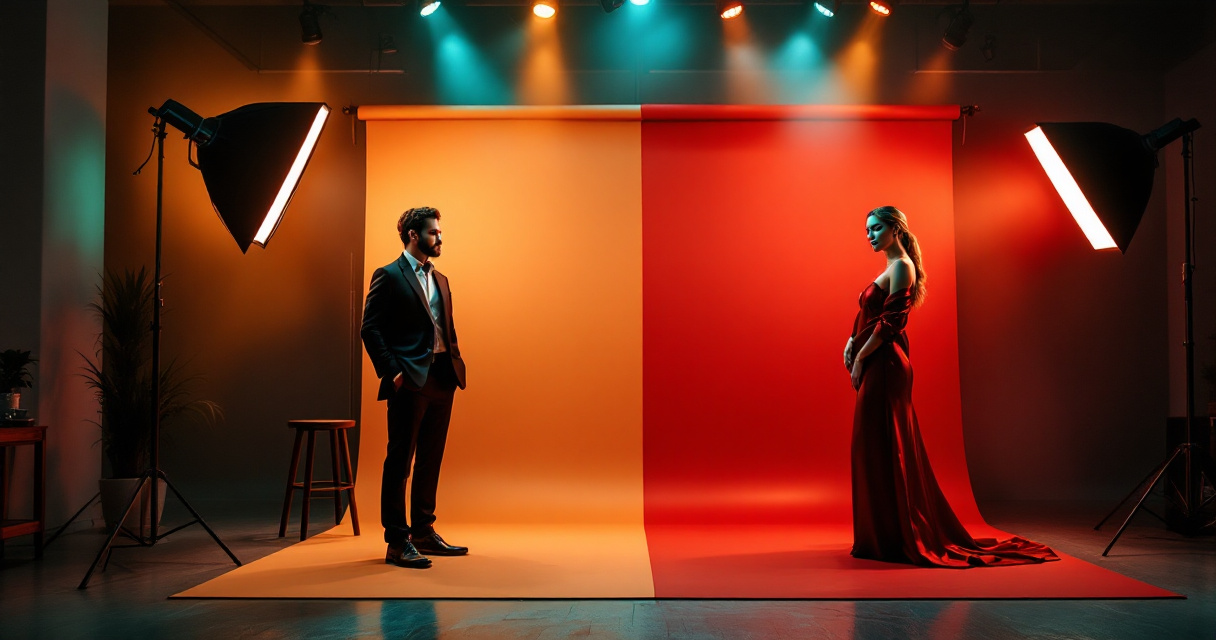
Style rules that keep each photo believable
| Element | Headshot approach | Glamour approach | Why it matters |
|---|---|---|---|
| Pose | Upright, open shoulders, direct gaze | Angled body, expressive face, fashion posture | Pose signals purpose before captions do |
| Clothing | Blazer, knitwear, shirt, simple dress | Trend-led outfits, evening wear, bold styling | Outfit sets the social context |
| Background | Office, studio, soft neutral, simple outdoor | Rooftop, hotel, beach, neon, cinematic space | Background tells the viewer where to place you |
| Lighting | Even, clean, natural-looking | Dramatic, golden hour, beauty lighting | Lighting controls mood and realism |
| Retouching | Minimal and skin-like | More polished, but still human | Over-smoothing can reduce trust |
Photographer-led competitor articles in the research set repeatedly warn about authenticity, misleading presentation, and the loss of human interaction in fully AI-made headshots. Those critiques are strongest when the image is being used to represent professional trust.
Dating and glamour uses have different expectations, but they still need honesty. If the photo changes your age, face shape, body type, or overall recognizability too much, the short-term attention can turn into an awkward first impression. Nobody wants to be accused of catfishing by a person holding mozzarella sticks.
Practical prompt and selection checklist
- Start with the platform: LinkedIn, Tinder, Instagram, website bio, or press page.
- Choose the realism level: documentary, polished, editorial, or fantasy.
- Match clothing to context: business attire for authority, lifestyle outfits for warmth, styled fashion for glamour.
- Control the background: simple for trust, contextual for dating, dramatic for creator content.
- Inspect the face closely: eyes, teeth, hands, skin texture, hairline, and symmetry.
- Ask one blunt question: would someone who knows me recognize me instantly?
What should you expect from AI personal photos in 2026?
In 2026, AI personal photos are best treated as profile assets, not magic identity replacements. The strongest results come from clear intent, strong input images, specific style choices, and a willingness to reject outputs that look impressive but not believable.What is changing next
The biggest shift is category clarity. Users are no longer asking only, "Can AI make me look professional?" They are asking whether one tool can create a believable LinkedIn image, a flattering dating shot, and a creative portrait without making every result look like the same glossy mannequin.
Expect better control over wardrobe, age realism, background consistency, and multi-photo sets. Also expect viewers to get more visually literate. As AI images become common, small signs of over-editing may stand out more, not less.
For my own profiles, I'd keep a simple rule: use AI to improve presentation, not to invent a person you cannot back up in real life.
FAQ
Are AI headshots acceptable for LinkedIn?
Yes, AI headshots can be acceptable for LinkedIn when they look realistic, current, and recognizably like you. Use conservative clothing, natural lighting, and simple backgrounds. Avoid images that make you look much younger, heavily retouched, or visually inconsistent with how you appear in interviews or meetings.
Are AI glamour photos good for dating apps?
AI glamour photos can work well for dating apps when they feel attractive and believable rather than fake. Lifestyle context usually performs better than a sterile corporate headshot because it gives people a sense of personality, style, and social energy. Keep at least one casual, realistic image in the mix.
Should I use the same AI photo everywhere?
No, one AI photo rarely fits every platform. A clean headshot may work for LinkedIn and a company bio, but it can feel stiff on Tinder or Instagram. Use a small set: one professional image, one lifestyle image, and one more expressive portrait.
How can I tell if an AI photo looks too fake?
Check whether the face, skin texture, hands, teeth, hair, and clothing details hold up under normal viewing. Then ask whether a friend would recognize you without hesitation. If the image looks technically beautiful but socially implausible, skip it.
What is the safest first AI photo style to try?
A lifestyle portrait is often the safest first style because it sits between professional and glamour. It can look polished without feeling rigid, and it works across social profiles, dating apps, and personal branding. With HotphotoAI, that middle ground is often where users get the most flexible results.
Conclusion
The smart answer to AI headshots vs AI glamour photos is context. Use a headshot when you need trust, clarity, and professional polish. Use glamour, lifestyle, or fantasy portraits when you want attraction, personality, and visual range.
Build a small profile set instead of chasing one perfect image: one professional headshot, two believable lifestyle photos, and one expressive portrait. If you want to test those looks without booking a studio, visit hotphotoai.com and create a set that matches the platforms you actually use.