AI Mirror Selfie Generator: Make Better Profile Photos Without the Bathroom Gymnastics
TL;DR
AI mirror selfies work best when you start with a clear face photo, choose a believable setting, and keep the reflection, phone pose, lighting, and outfit consistent. Use them for dating profiles, creator posts, model-style portraits, and professional personal branding, but review every image for realism before posting.
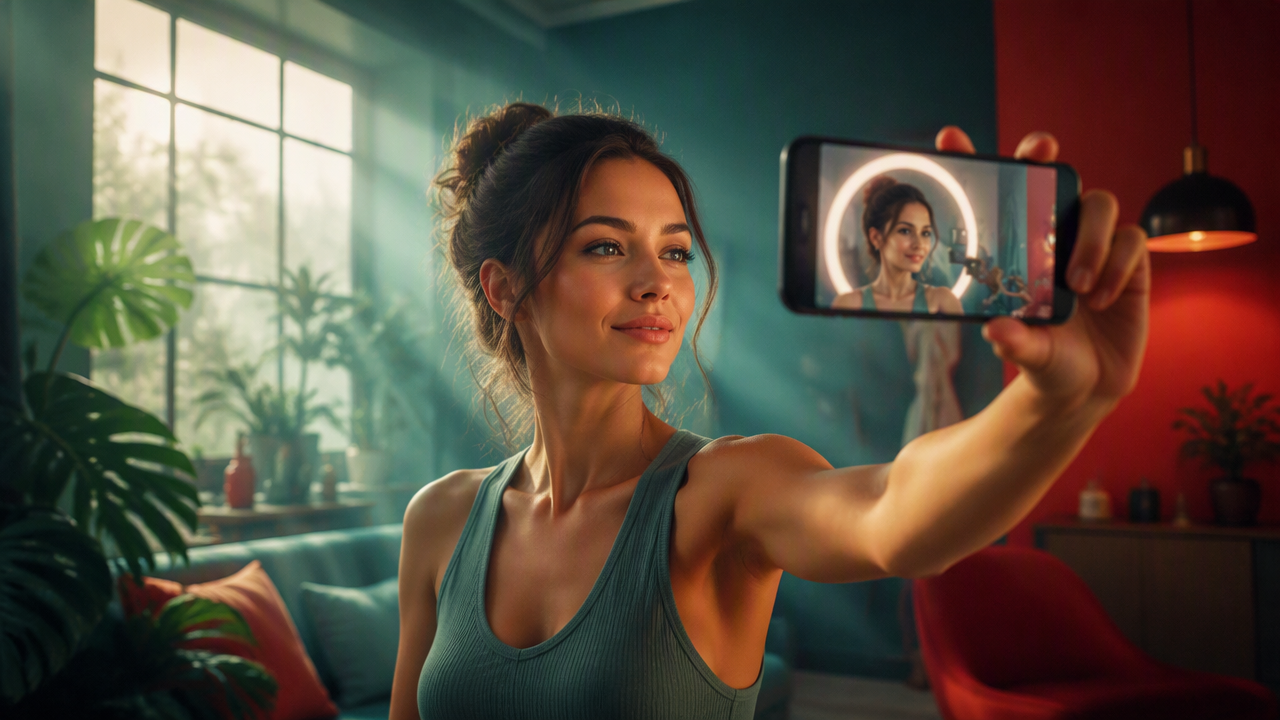
A good mirror selfie should look effortless, which is funny because real ones usually require bad lighting, a smudged mirror, and the arm flexibility of a circus act. An AI mirror selfie generator turns a regular portrait into a mirror-style image with a phone pose, styled outfit, background, and reflection effect. If you want polished dating, social, or creator photos without booking a shoot, HotphotoAI gives you a practical way to create that look from your own images.
Table of Contents
What is an AI mirror selfie generator?
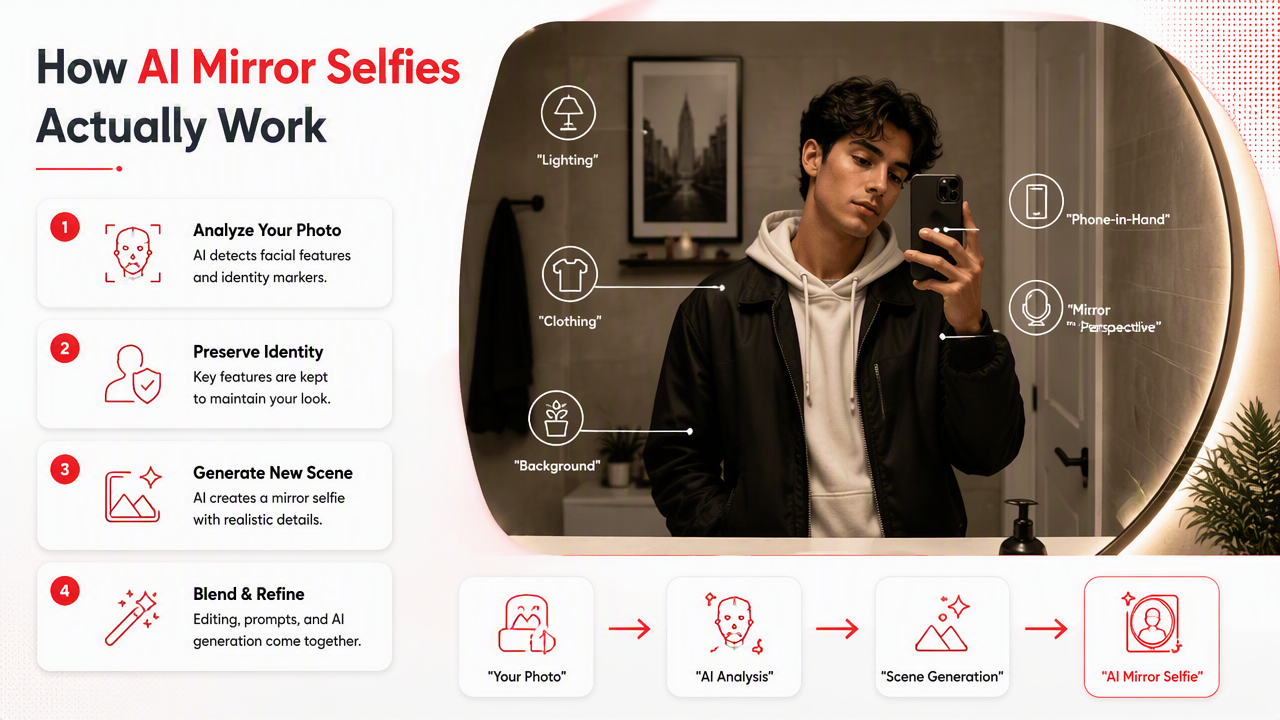
An AI mirror selfie generator is a tool that creates a mirror-style self-portrait from an uploaded image, text prompt, or both, usually adding a phone-in-hand pose, reflection framing, outfit styling, room setting, and flattering light. It is built for people who want the mirror-photo aesthetic without taking a new photo.
Selfie: a self-portrait photo or short video, typically captured with a smartphone or electronic camera held at arm's length or supported by an accessory.
Mirror-style AI portraits sit between photo editing and generative imaging. Traditional editors adjust an existing picture. These generators can reinterpret the scene, so your plain headshot can become a dressing-room photo, apartment mirror snap, gym outfit check, or glossy lifestyle image.
Key terms for clean AI photo prompts
Input photo: the image you upload so the model can preserve face shape, hair, expression, and identity cues.
Prompt: the written instruction that tells the model the setting, outfit, lighting, pose, and mood.
Style reference: an example look, such as fashion editorial, casual bedroom mirror, luxury hotel, streetwear, or soft-glam.
Reflection consistency: the alignment between the person, mirror angle, phone, hand, and background. If this is off, the image feels fake before the viewer knows why.
Key insight: the best AI mirror selfie is not the most dramatic one. It is the one that looks like you caught a lucky angle on a very good day.
Why the format fits 2026 image habits
AI image tools are now part of everyday personal branding, not just novelty edits. Cheng Lu Wang's 2021 editorial on new directions in interactive marketing examined how interactive technology changes consumer engagement, which maps neatly to personalized profile imagery.
Andrew Hoskins' 2024 paper on AI and memory also points to a bigger shift: AI images are becoming part of how people create, store, and reshape personal representation. Translation: your profile photo is no longer just a photo. It is a tiny public-relations department with cheekbones.
How do you create a realistic mirror selfie with AI?
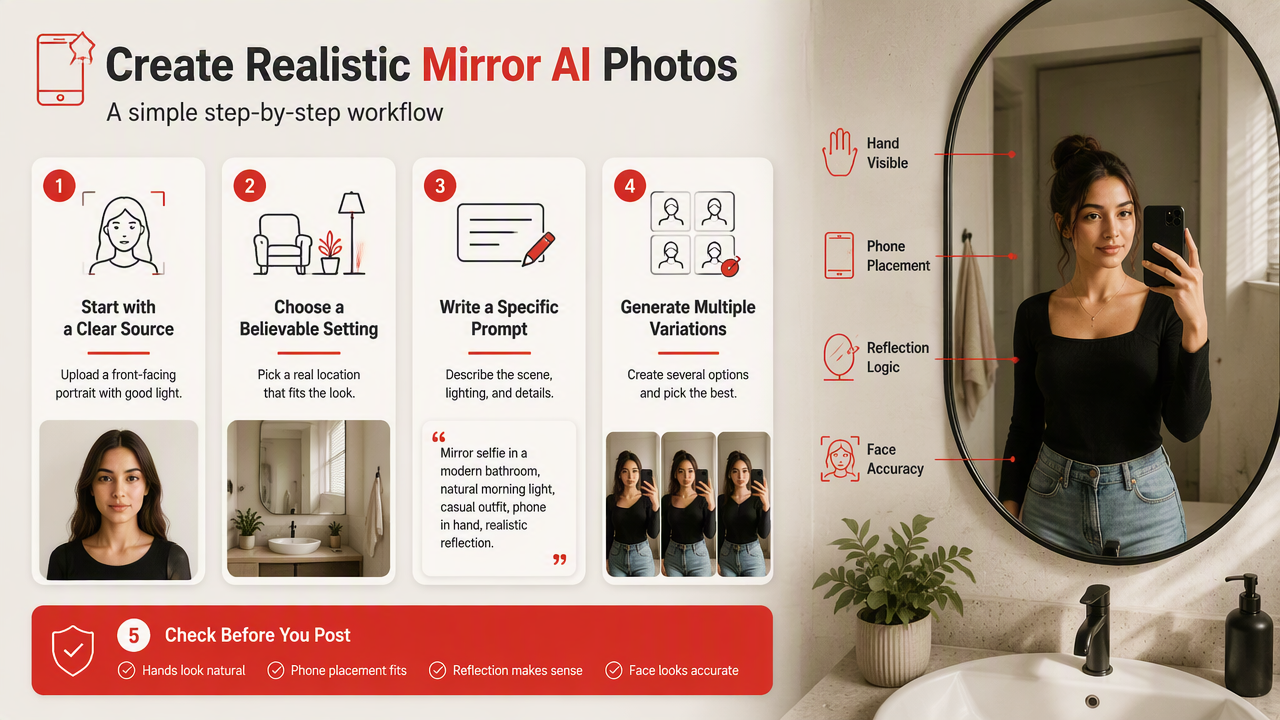
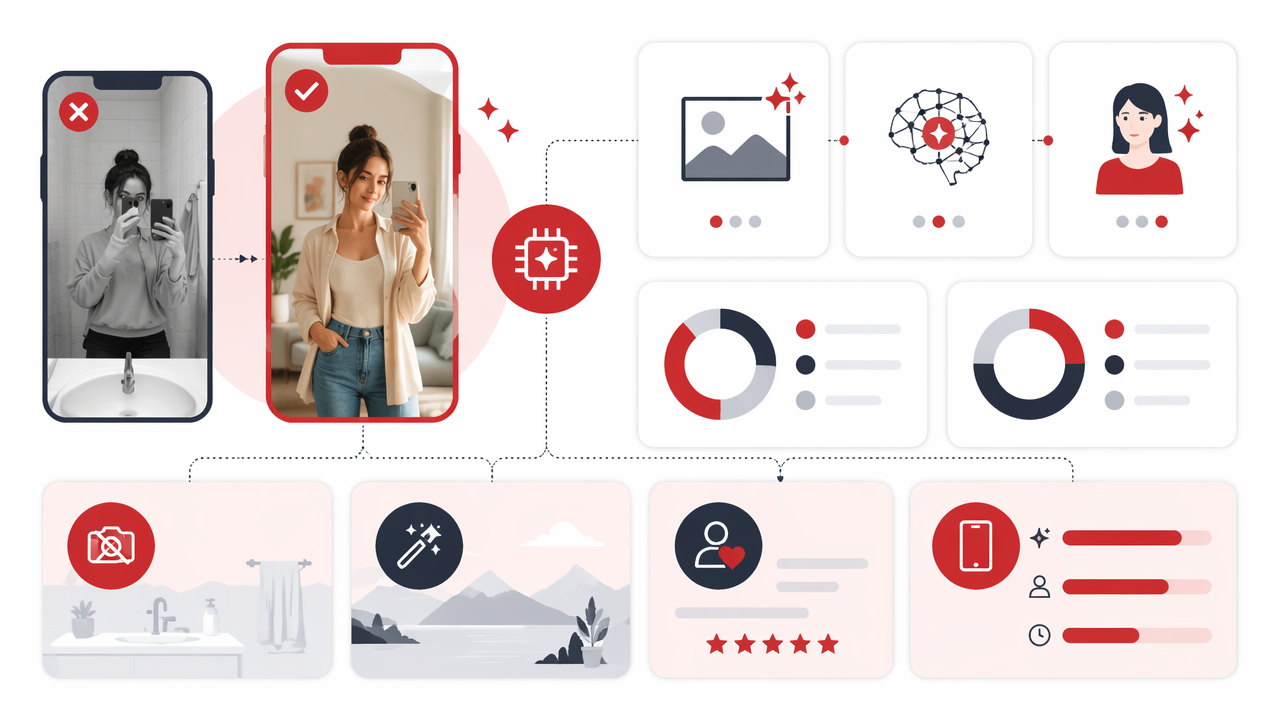
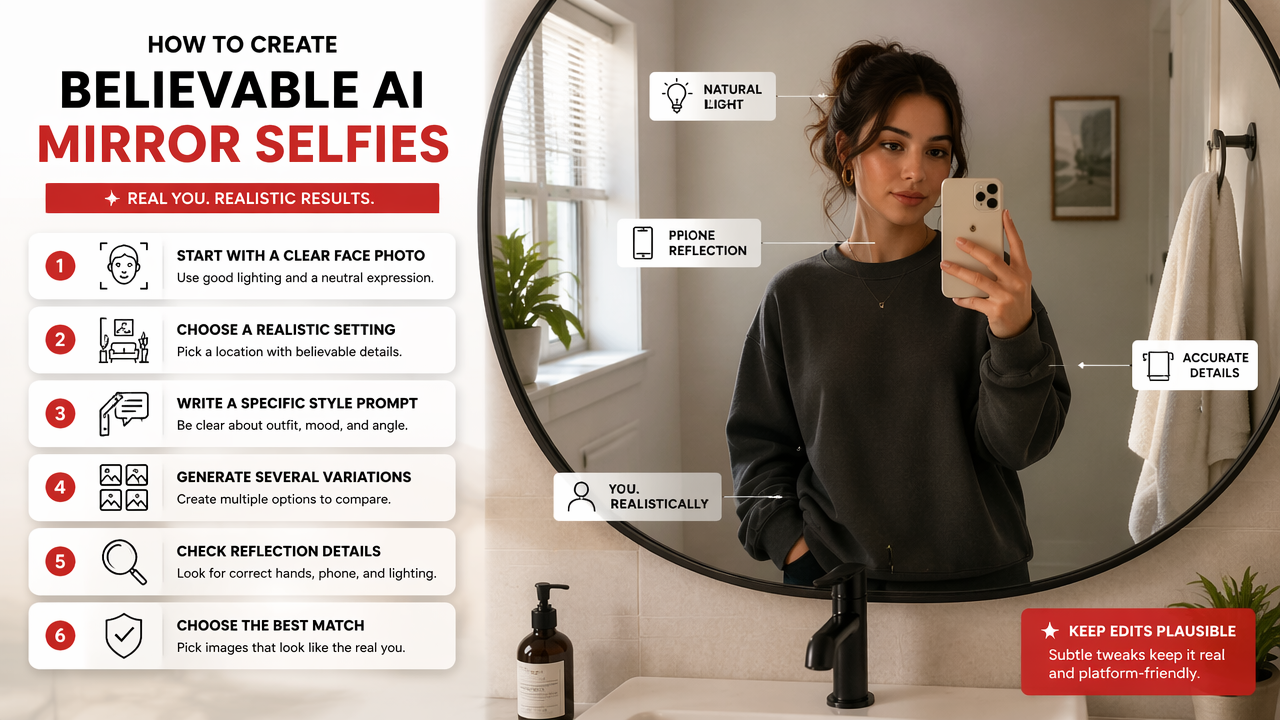
Create a realistic mirror-style AI photo by starting with a clear source image, choosing a believable setting, writing a specific prompt, generating several variations, and checking the final image for hands, phone placement, reflection logic, and face accuracy before you post it.
A simple five-step workflow
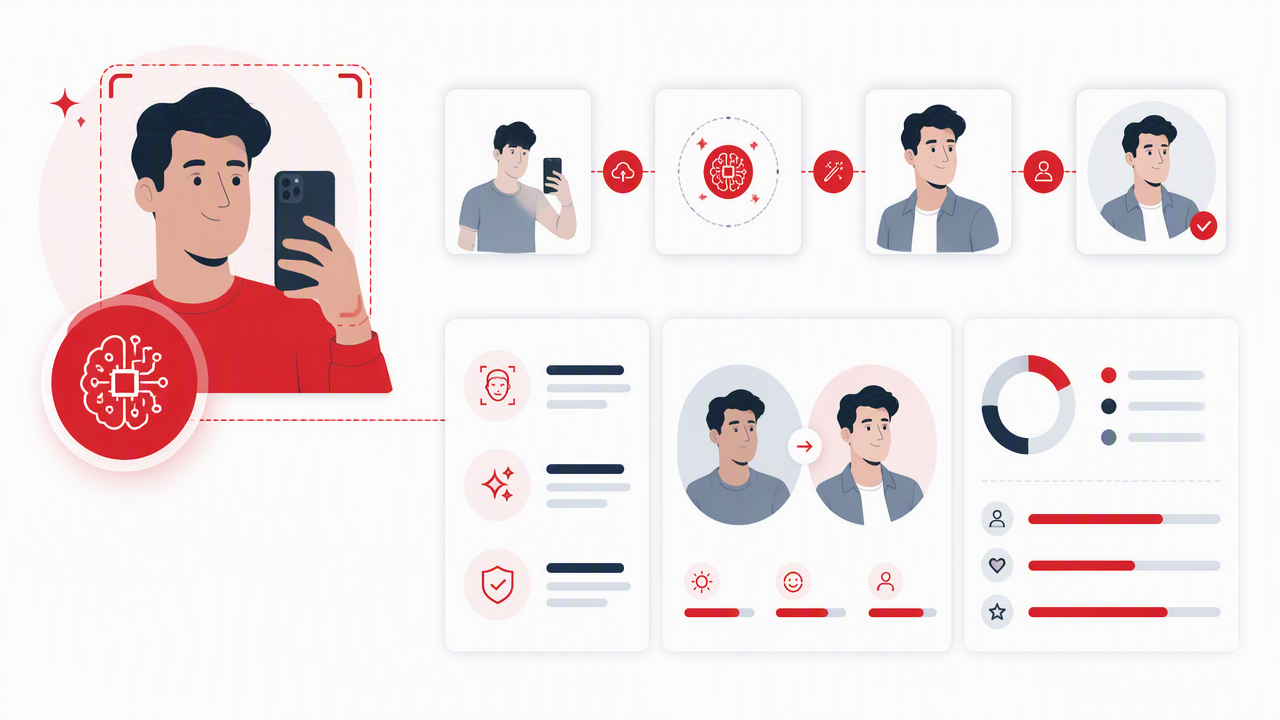
- Upload a clear portrait. Use a front-facing or three-quarter photo with natural expression and visible hairline.
- Pick one scenario. Choose gym mirror, bedroom outfit check, luxury hotel, studio glam, or casual apartment. One scene beats prompt soup.
- Describe the essentials. Include outfit, phone position, lighting, mirror type, camera angle, and background.
- Generate multiple versions. Expect to compare results. The first draft is often the AI clearing its throat.
- Inspect before using. Zoom in on hands, eyes, teeth, logos, phone edges, and warped reflections.
Prompt template you can copy
Use this structure when you want control without writing a small novel:
- Identity anchor: "keep my face, hairstyle, and natural expression recognizable"
- Pose: "standing in front of a full-length mirror, phone partially covering one side of the face"
- Outfit: "black fitted jacket, light denim, clean sneakers"
- Setting: "minimal apartment bedroom with warm lamp light"
- Lighting: "soft natural light, realistic shadows, no over-smoothed skin"
- Style: "modern lifestyle photo, candid but polished"
For creators, I like adding one restraint: "make it look like a real phone photo, not a fashion campaign." That line saves many images from becoming a perfume ad nobody asked for.
Where should you use AI mirror selfies?
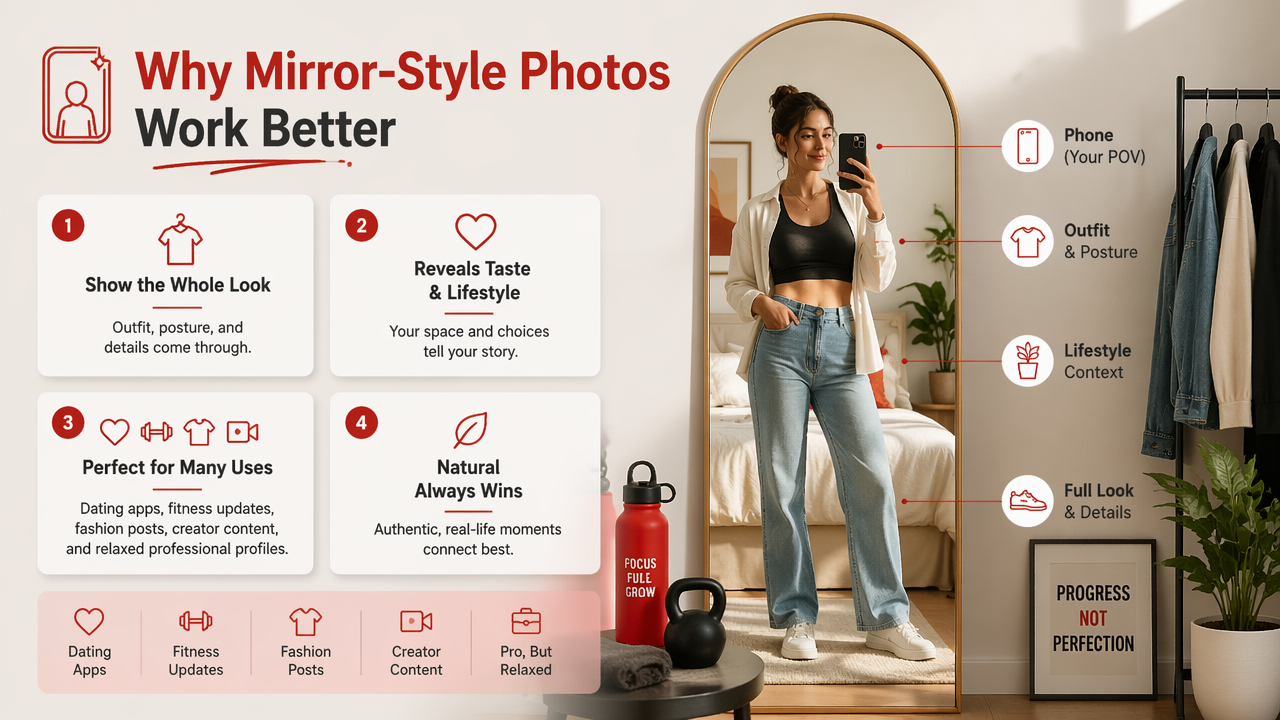
AI-generated mirror selfies are most useful for profiles and content where style, confidence, and setting matter as much as facial clarity. They work especially well for dating apps, Instagram, TikTok thumbnails, creator branding, outfit experiments, fantasy portraits, and polished personal profiles.
Use-case comparison table
| Use case | Best mirror selfie style | What to prioritize | What to avoid |
|---|---|---|---|
| Dating apps | Casual outfit check | Recognizable face, relaxed posture, warm lighting | Over-glam styling that looks unlike you |
| Instagram posts | Lifestyle or fashion mirror | Outfit, background, visual mood | Busy rooms and unreadable details |
| Creator thumbnails | High-contrast styled portrait | Clear silhouette, strong color, phone pose | Tiny facial details that vanish on mobile |
| Professional profiles | Clean studio mirror look | Grooming, neat clothing, soft confidence | Party settings or heavy filters |
| Fantasy portraits | Glamour, model, themed room | Creative styling and visual drama | Using it where realism is expected |
The format works because a mirror photo suggests immediacy. It feels less staged than a studio portrait, even when the styling is carefully planned.
Profile-photo strategy that feels human
A strong profile mix should not be all mirror shots. Use one mirror-style image as a style signal, then balance it with a clear face photo, a social or activity photo, and one full-body image.
For dating apps, I'd use a generated mirror photo as the second or third image, not the lead photo. Your first image still needs instant facial clarity. The mirror shot can then say, "Yes, I own clothes that are not laundry-day sweatpants."
What makes a generated mirror selfie look real?
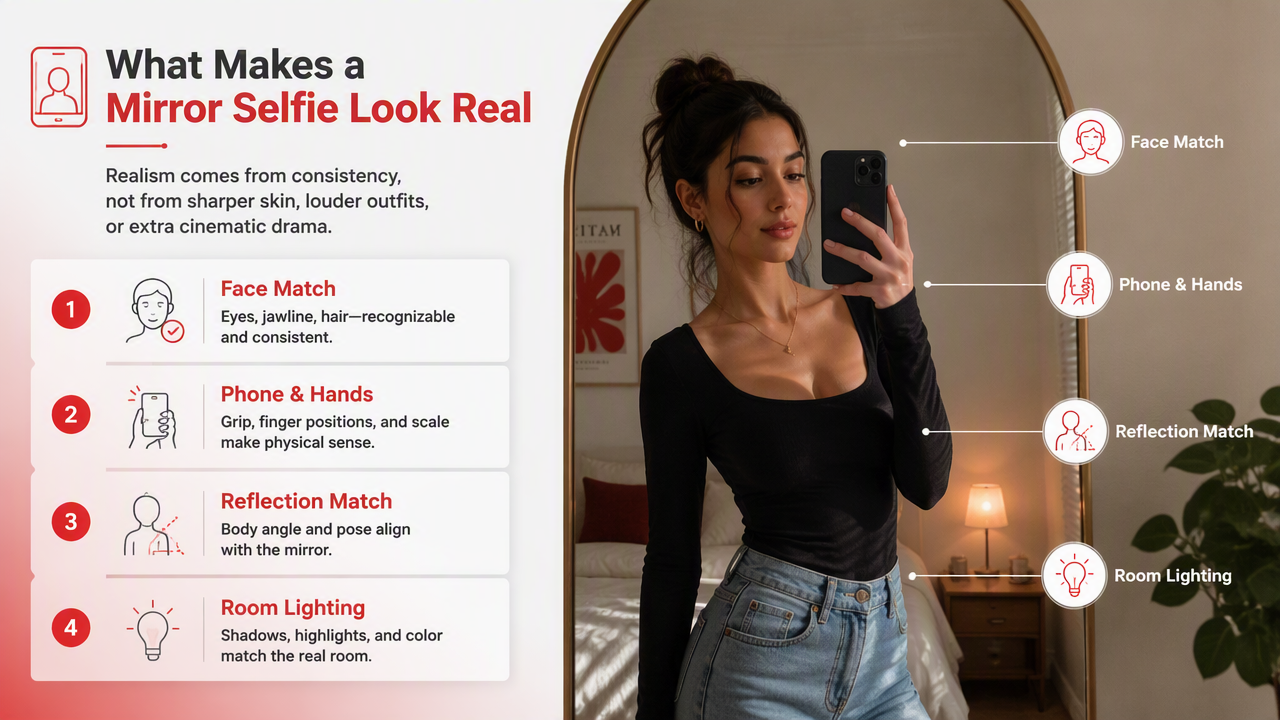
A generated mirror selfie looks real when the face stays recognizable, the phone and hands make physical sense, the reflection matches the body angle, and the lighting belongs to the room. Realism comes from consistency, not from sharper skin, louder outfits, or extra cinematic drama.
Realism checklist before posting
- Face match: eyes, jawline, hair, and expression still look like you.
- Hand logic: fingers wrap around the phone naturally, with no melted knuckles.
- Phone placement: the phone blocks part of the face only if the pose supports it.
- Mirror physics: reflection angle, room depth, and body position agree.
- Lighting: shadows fall in one direction and match lamps or windows.
- Skin texture: polished is fine; plastic is suspicious.
- Background: the room supports the vibe instead of fighting it.
Small flaws matter more in mirror images because viewers already know the format. Everyone has seen a bathroom mirror. Nobody has seen a five-fingered thumb.
Common mistakes that make images feel fake
Avoid prompts that ask for too many upgrades at once. "Luxury penthouse, celebrity model, viral aesthetic, cinematic 8K, perfect body, dramatic lens flare" is how you get an image that looks expensive and completely unusable.
Also watch for identity drift. Some tools beautify so aggressively that the final person looks like your confident cousin, not you. That may win a scroll, but it can backfire on dating apps or professional profiles where recognition matters.
Which tool should you use for mirror-style portraits?
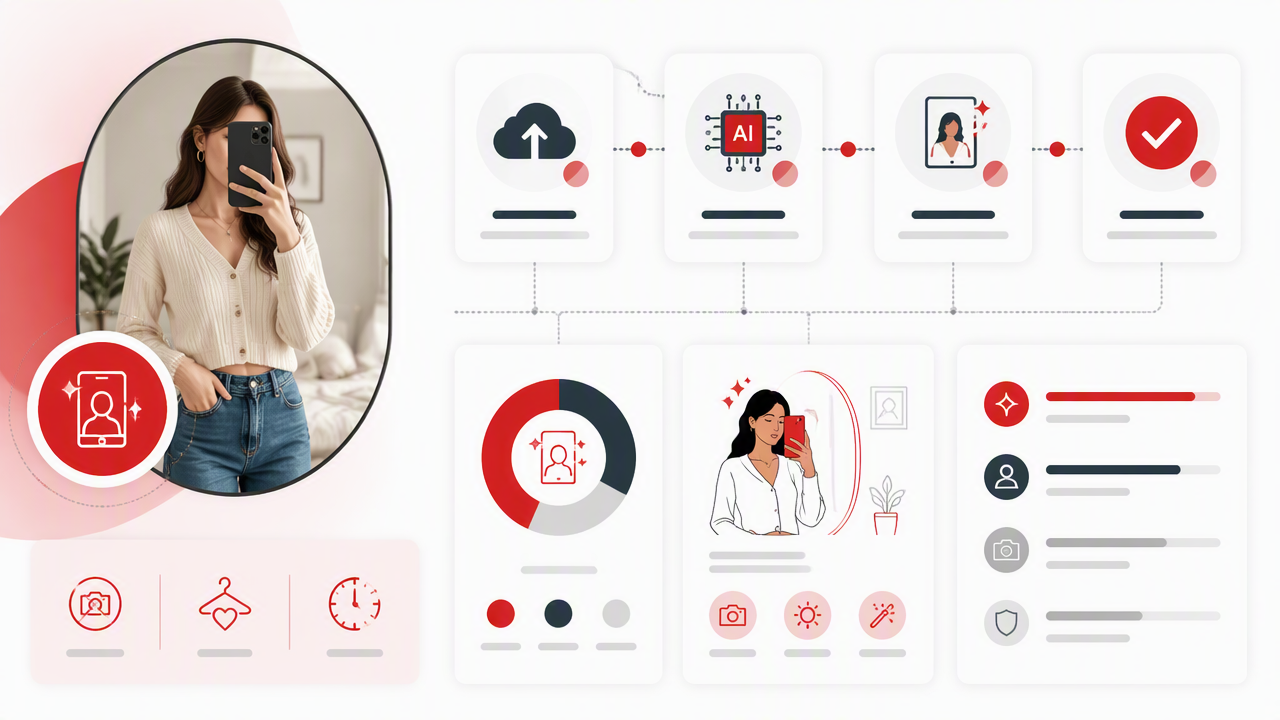
Choose a mirror-style portrait tool based on how much identity control, styling control, and editing effort you want. Dedicated AI portrait platforms are best for profile-ready personal images, while prompt-only tools are better for experimentation and design editors are better for manual finishing.
How HotphotoAI handles this
HotphotoAI is a strong fit when your goal is not just a cool effect, but a usable personal image for dating, social media, glamour portraits, or polished online profiles. The HotphotoAI platform focuses on turning your own photos into stylized portraits, so you can test outfits, lighting, and scenes without renting a studio or learning prompt engineering like it is a second job.
For best results with HotphotoAI, upload photos where your face is clear and your expression feels natural. Then choose a mirror-friendly look that matches how you actually want to present yourself, such as stylish casual, model-style, nightlife, lifestyle, or fantasy portrait.
Tool-type comparison table
| Tool type | Best for | Strength | Tradeoff |
|---|---|---|---|
| HotphotoAI | Profile-ready personal portraits | Attractive styles, identity-led results, practical profile use | Best results still depend on clear input photos |
| Prompt-only generators | Fast trend experiments | Flexible scene creation | More trial and error with realism |
| Design editors like Picsart | Manual edits and templates | Layer-based control, templates, video and image tools | Less automatic portrait direction |
| General AI chat image tools | Custom prompt exploration | Broad creative range | Results may need more review and re-generation |
Picsart, for context, is a cross-platform design and editing platform with web and mobile tools for images, videos, templates, layered editing, and generative AI features. That makes it broader than a dedicated portrait workflow, which can be helpful if you enjoy hands-on editing.
FAQ: AI mirror selfies in 2026
AI mirror selfies in 2026 are best treated as styled personal images, not magic identity replacements. Use them to improve presentation, test aesthetics, and create profile variety while keeping your face recognizable and the scene believable.
Can I use an AI mirror selfie on Tinder?
Yes, you can use one on Tinder if it still looks like you and fits your real-life style. I recommend using it as a supporting photo rather than your first image. Lead with a clear face photo, then use the mirror shot to show fashion sense, confidence, or lifestyle.
Do I need a mirror photo as the input?
No. Most mirror-style tools can start from a regular portrait and generate the mirror framing around it. A good input image matters more than an actual mirror source. Clear lighting, visible facial features, and a natural expression give the model better identity cues.
What prompt makes the most realistic result?
The most realistic prompt describes a normal setting, a specific outfit, natural lighting, and a believable phone pose. Avoid stacking too many luxury or cinematic terms. A simple bedroom mirror, clean outfit, soft daylight, and recognizable face usually beats a maximalist prompt with twelve adjectives wearing sunglasses.
Are AI mirror selfies good for professional profiles?
They can be useful for creative, creator, and personal-brand profiles, but keep the styling restrained. Choose clean clothing, simple backgrounds, and soft light. For conservative industries, use a polished headshot first and save mirror-style images for social platforms or portfolio pages.
Conclusion
A great AI mirror selfie generator should help you look like yourself on a very photogenic day, not like an escaped perfume billboard. Start with a clear photo, choose one believable setting, keep the prompt specific, and review the final image like a skeptical friend with zoom enabled. If you want to create profile-ready mirror portraits without planning a shoot, try HotphotoAI and head to hotphotoai.com to test a few styles today.