AI Photos for Hinge Profile: The 6-Photo Lineup That Looks Real
TL;DR
Use AI photos for a Hinge profile to fill specific gaps, not to reinvent your face. The best setup is a six-photo mix: clear face, lifestyle, hobby, polished portrait, full-body, and conversation-starter image, all kept realistic enough to survive the first date.
Your Hinge photos are not just proof that you own a face; they're bait for a conversation. AI photos for Hinge profile can help when your camera roll is 90% blurry group shots and one suspicious gym mirror picture. Used well, AI fills missing scenes, outfits, and lighting without turning you into a luxury watch ad with cheekbones. For realistic, profile-ready image sets, HotphotoAI is built around polished personal photos for dating, social, and professional profiles.
Table of Contents
What are AI photos for a Hinge profile?
AI photos for a Hinge profile: realistic, AI-generated or AI-enhanced personal images designed to show your face, lifestyle, body type, interests, and personality in a dating-app format.
AI photos for a Hinge profile should look like strong versions of real pictures you could plausibly have taken, not fantasy edits. Hinge, described by Wikipedia as an online dating app that shows potential matches one at a time and lets users respond to specific profile information, rewards photos that invite a reply.
That matters because Hinge is slower and more context-heavy than swipe-first apps. A model-style portrait may earn attention, but a cooking photo, bookstore shot, climbing image, or well-lit café picture gives someone an opening line.
Key insight: On Hinge, the best photo is not always the hottest one. It's the one that makes replying feel easy.
A useful way to think about Hinge photos is personalized presentation. A 2024 paper by Krahmer, Clouth, and Hommes examined automated, data-driven personalized information presentation in a medical context, not dating, but the broader point is relevant: the way options are presented shapes how people evaluate them source.
What photos should you use on Hinge?
A strong Hinge profile uses six distinct photos that answer six different questions: what you look like, how you live, what you enjoy, how you dress, what your body type is, and what someone can ask you about. Repetition is the silent match killer, especially when every photo says "I stood near a wall."
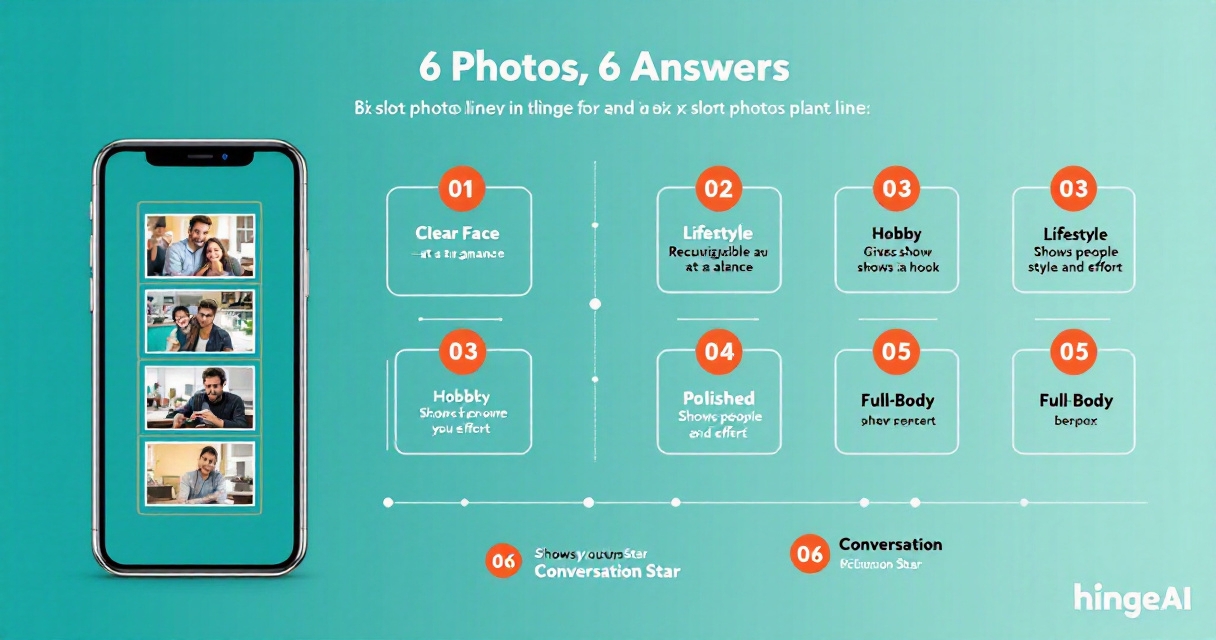
The six-photo Hinge lineup
| Slot | Photo type | What it proves | AI can help by |
|---|---|---|---|
| 1 | Clear face photo | You're recognizable | Improving lighting, background, and sharpness |
| 2 | Lifestyle image | You have a life outside the app | Creating café, street, travel, or home scenes |
| 3 | Hobby photo | You do things people can ask about | Showing music, cooking, hiking, pets, books, or sport |
| 4 | Polished portrait | You clean up well | Testing outfits, grooming, and flattering light |
| 5 | Full-body photo | You're honest about appearance | Making a natural standing or walking scene |
| 6 | Conversation-starter | You have taste, humor, or curiosity | Adding an unusual but believable setting |
I'd avoid using six AI portraits with the same smile, same angle, and same suspiciously perfect skin. That looks less like a dating profile and more like a tech demo that learned charisma from a perfume billboard.
Use this quick order:
- Lead with your most accurate face photo.
- Add one photo that shows movement or activity.
- Include one full-body image with normal clothes.
- Use one polished image for attraction.
- Add one specific interest.
- End with something easy to comment on.
How do you make AI Hinge photos look authentic?
Make AI Hinge photos look authentic by keeping your face consistent, choosing normal settings, limiting glamour edits, and matching your real clothes, age, build, and social style. The goal is not to catfish; it's to replace bad lighting, boring backgrounds, and missing lifestyle shots with better evidence.
Authenticity checklist before uploading
- Face match: Your eyes, nose, jaw, smile, and hairline should look like you on a normal day.
- Age match: Don't smooth your skin into a different decade.
- Body match: Full-body images should reflect your real build.
- Style match: Wear clothes you'd actually own, not "private yacht villain" cosplay.
- Scene match: Pick places you might realistically visit.
- Photo mix: Combine AI images with at least one real candid if possible.
Research outside dating reinforces the value of checking generated outputs against real-world constraints. A 2024 Sensors review on additive manufacturing discusses digital production workflows where input quality and validation affect final results source. Dating images need the same boring but useful discipline: good inputs, clear goals, and a final human review.
Common mistakes to avoid:
- Overly glossy skin with no texture
- Fake travel scenes you can't talk about
- Hands that look like they negotiated with a blender
- Luxury props that don't fit your actual life
- Six photos from the same AI session with identical lighting
If your date wouldn't recognize you in the first three seconds, the photo is doing too much.
How can HotphotoAI fit into your Hinge photo workflow?
HotphotoAI fits best as a profile-photo planning tool: use it to create realistic variations for missing Hinge slots, then choose images that still look like you. The strongest use case is controlled variety, such as testing outfits, backgrounds, lighting, and portrait styles without booking a full photoshoot.
A practical workflow for better results
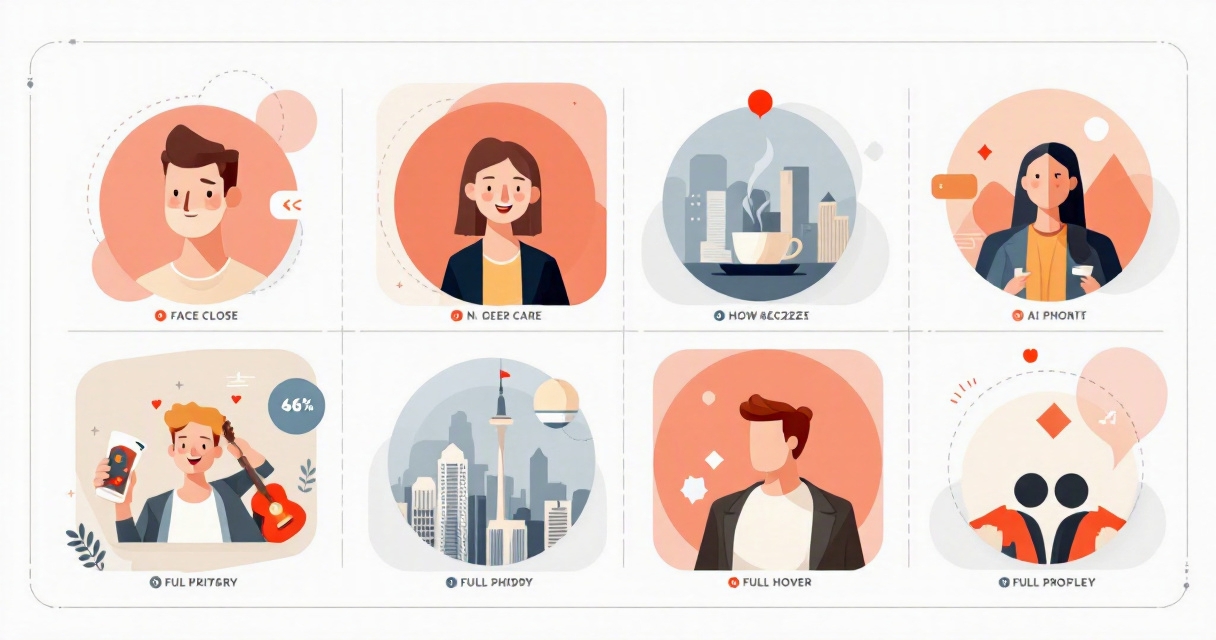
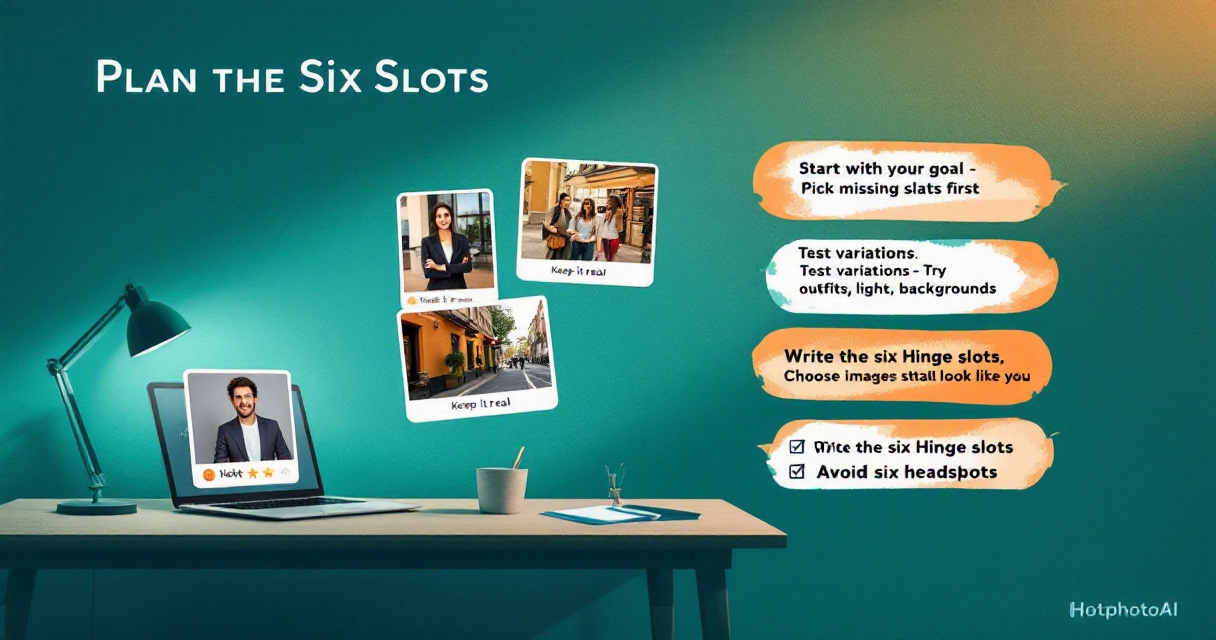
Start with your goal before generating anything. I recommend writing the six Hinge slots first, then creating only the images you're missing. That keeps the profile balanced and stops you from choosing six versions of the same flattering headshot.
Use the HotphotoAI platform for scenes where a traditional photoshoot would be annoying or expensive: a polished portrait, a clean full-body shot, a stylish city image, or a lifestyle scene with better lighting. If you're building from scratch, visit hotphotoai.com and plan the set like a tiny editorial shoot, minus the photographer asking you to "act natural" while you forget how arms work.
A simple workflow:
- Pick your six-photo lineup.
- Upload strong reference images with accurate face angles.
- Generate one slot at a time.
- Reject anything that changes your identity.
- Keep the most natural 2 to 4 outputs.
- Test them on Hinge, then rotate based on replies.
For 2026 profiles, I'd rather see two believable AI-assisted photos than a whole profile that screams synthetic. Better photos should make you easier to understand, not harder to trust.
What should Hinge users expect from AI photos in 2027?
By 2027, AI dating photos will likely become more normal, but authenticity signals will matter more, not less. As image generation improves, users will get better at spotting photos that feel too polished, too vague, or emotionally empty.
The next trust signals
Expect stronger demand for mixed profiles: real candids, realistic AI-assisted portraits, prompt answers, voice notes, and eventually more verification cues. The winning profile will feel coherent across every element.
A 2024 review on green nanoparticles by Osman, Zhang, and Farghali is not about dating, but it shows how fast AI-adjacent research and applied technologies move across industries source. Dating apps will keep adapting too.
What I'd prepare for:
- More app-level guidance about synthetic images
- More user suspicion of overly perfect photos
- Better AI tools for realistic lighting and body consistency
- Higher value placed on specific hobbies and normal settings
- More importance on matching photos to prompts
FAQ about AI photos for Hinge
Are AI photos allowed on Hinge?
Hinge's public positioning emphasizes authenticity, so AI photos should represent your real appearance and lifestyle. Use them as improved personal photos, not as a new identity. If an image changes your face, age, body type, or life story, don't use it.
How many AI photos should I use on Hinge?
Most users should use 1 to 3 AI-assisted photos in a six-photo profile, especially if they also have accurate real candids. A fully synthetic profile can feel too staged. Mix polished images with natural ones so your profile feels attractive and believable.
What is the best first photo for Hinge?
The best first Hinge photo is a clear, well-lit face photo where you look like yourself and the background doesn't compete for attention. Skip sunglasses, heavy filters, group shots, and extreme angles. Your first photo should answer one question fast: "Who am I looking at?"
Can AI photos actually improve Hinge matches?
AI photos can improve your profile if they fix real problems: poor lighting, no full-body shot, weak variety, or no conversation-starter images. They won't fix a profile that feels dishonest, generic, or disconnected from your prompts. Better photos create openings; they don't replace personality.
Conclusion
AI photos for Hinge profile work best when they make your real life easier to see. Build the six-photo lineup first, generate only what's missing, and reject anything that looks cooler than it is truthful. If you want realistic dating, lifestyle, or polished portrait options, try HotphotoAI, then head to hotphotoai.com to create a set that looks like you on your best-lit day.