AI Seductive Photo Generator From Selfies: A 2026 Guide
TL;DR
AI seductive portrait tools work best when you start with clear selfies, choose a specific visual style, and keep the result recognizable. Use them for dating profiles, creator images, and polished lifestyle shots, but avoid over-editing, misleading identity changes, or uploading photos you do not have rights to use.
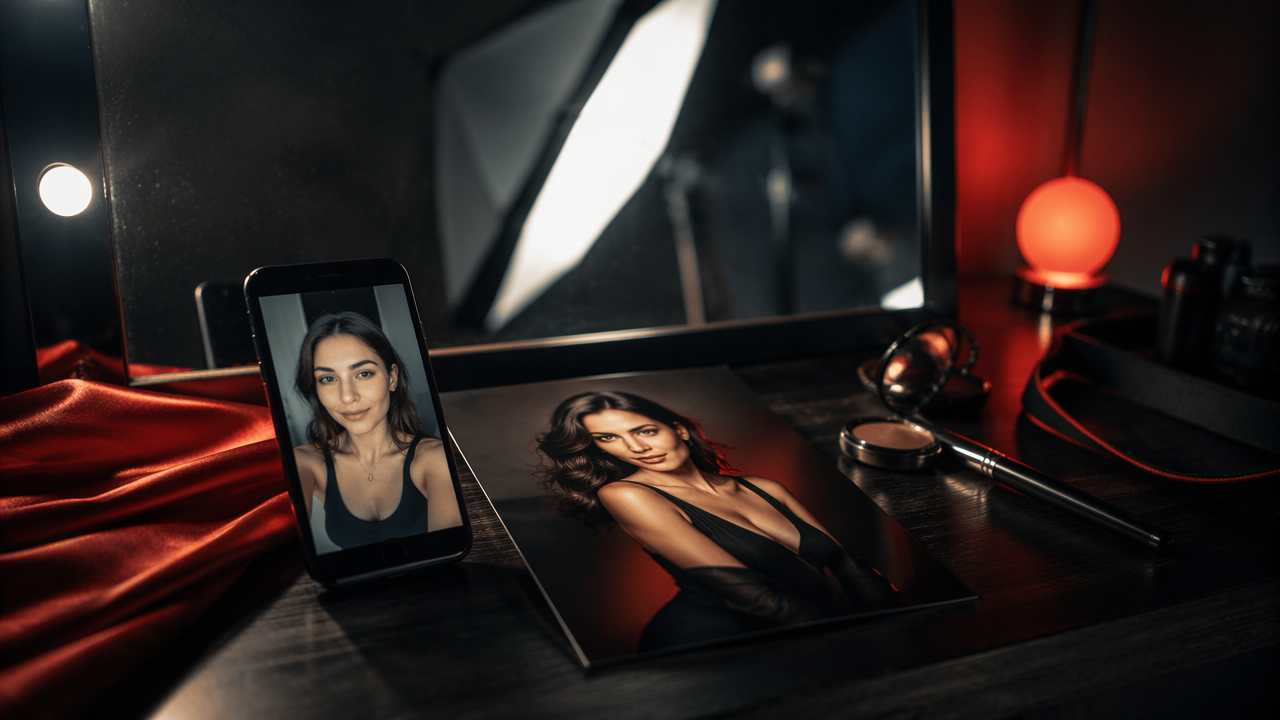
A single bathroom selfie can now become a studio-style portrait, a cinematic dating-app shot, or a soft glamour image before your coffee gets cold. An AI seductive photo generator from selfies uses image-to-image AI to preserve your facial identity while changing lighting, pose, outfit, background, and mood. For users who want attractive but believable results, HotphotoAI is built around that exact use case: personal photos that look intentional, not like a wax museum intern had a nervous day.
Table of Contents
What is an AI seductive photo generator from selfies?
An AI seductive photo generator from selfies is a tool that turns uploaded selfies into more attractive, stylized portraits by changing visual elements such as lighting, clothing, expression, pose, body framing, and background while keeping the subject recognizable.
AI seductive portrait generator: software that uses generative image models to create alluring, polished personal portraits from a real selfie, usually for dating profiles, social media, creator branding, or fantasy-style images.
Most tools in this category combine face reference matching with prompt-based or preset-based editing. The user supplies a selfie, then chooses a style such as glamour, boudoir-inspired, editorial, nightlife, fitness, luxury, or cinematic lifestyle.
Key insight: the best result is not the hottest possible image. It is the most believable attractive image of you.
Core inputs and outputs
- Input selfie: a clear front-facing or three-quarter photo with visible facial features.
- Style direction: mood, clothing, setting, lighting, and level of polish.
- Generated output: a new portrait that may look like a professional shoot, a dating profile image, or stylized creator content.
- Review step: the user rejects uncanny, over-smoothed, or identity-shifting results.
The technology sits between a photo editor and a photoshoot simulator. A normal editor improves what exists. A generative portrait tool can create a new scene around your face.
How do you create seductive AI portraits from selfies?
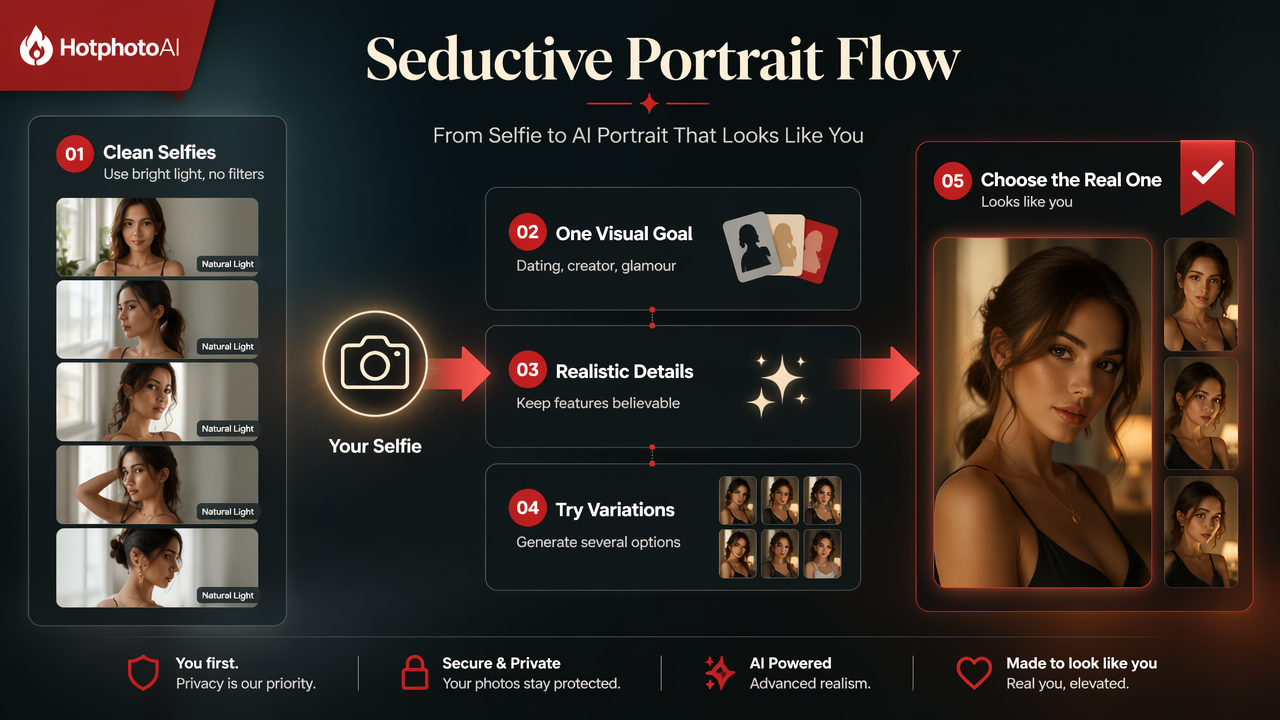
To create seductive AI portraits from selfies, upload clear photos, choose a specific style, keep prompts realistic, generate several variations, and select the image that still looks like you. The more honest your starting photo and direction are, the more useful the final image will be.
A practical five-step workflow
- Start with 5 to 10 clean selfies. Use bright, natural light and avoid sunglasses, heavy filters, or extreme angles.
- Pick one visual goal. Dating profile, creator banner, glamour portrait, fantasy character, or professional lifestyle image all need different styling.
- Choose realistic details. A fitted black dress, rooftop bar, soft flash, or beach sunset works better than asking for every attractive thing at once.
- Generate multiple versions. AI is part stylist, part slot machine. Run a few variations.
- Keep the most believable image. If your friends would ask when you did the shoot, good. If they would ask what happened to your skeleton, delete it.
With HotphotoAI, I'd start with a natural selfie and test two or three styles before pushing into bolder looks. That gives you a clean baseline, then room to experiment without turning the result into science fiction.
Style choices that usually work
- Dating app polish: warm lighting, confident eye contact, clean background, natural smile.
- Glamour portrait: soft shadows, elegant outfit, balanced skin texture, editorial framing.
- Lifestyle luxury: hotel lounge, city night, beach resort, cocktail-bar lighting.
- Fantasy or cosplay: stronger outfit changes, dramatic color, stylized background.
Small details do a lot of work. A better neckline, nicer lighting, or tidier background often improves a profile more than an extreme body change.
Which features matter most in a selfie-to-portrait tool?
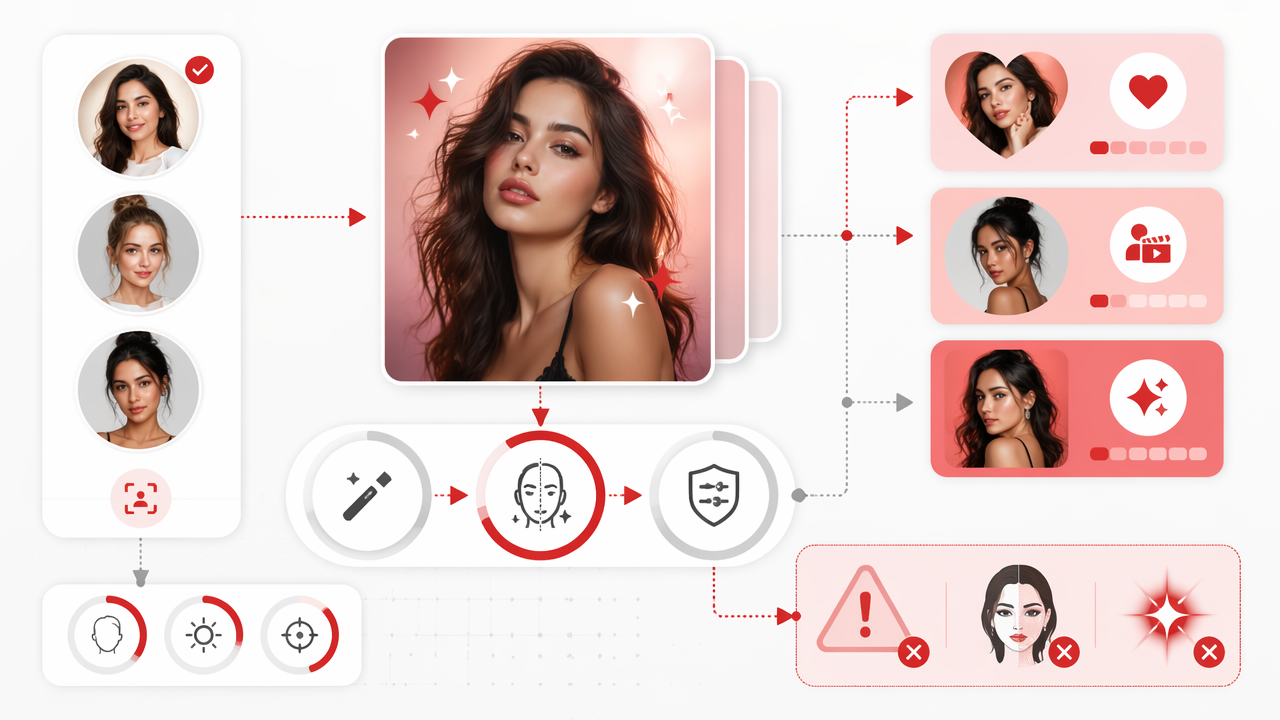
The most useful AI portrait tools preserve identity, offer style control, generate realistic lighting, protect user consent, and make it easy to reject weak outputs. A pretty interface is nice, but face consistency and believable styling are what decide whether the photo is usable.
Feature checklist for better results
| Feature | Why it matters | What to look for |
|---|---|---|
| Face consistency | Keeps the image recognizably you | Similar eyes, nose, smile, and facial structure |
| Style presets | Speeds up creative direction | Glamour, dating, model, lifestyle, fantasy |
| Prompt control | Adds specificity | Outfit, lighting, background, camera mood |
| Realism controls | Avoids plastic-looking images | Natural skin texture and believable anatomy |
| Variation generation | Gives you options | Multiple outputs from one selfie set |
| Privacy handling | Protects sensitive photos | Clear upload and deletion expectations |
A 2023 paper by Elizabeth Edenberg and Alexandra Wood, Disambiguating Algorithmic Bias: From Neutrality to Justice, examined how algorithmic systems should be assessed beyond simple claims of neutrality. That matters here because beauty, attractiveness, age presentation, gender styling, and skin rendering can all be shaped by model behavior.
The HotphotoAI platform is most relevant when you want attractive, stylized personal images without booking a photographer, buying outfits, or pretending your bedroom wall is a luxury loft. The sweet spot is confident, polished portrait creation from your own selfies.
What should you avoid when generating seductive AI selfies?
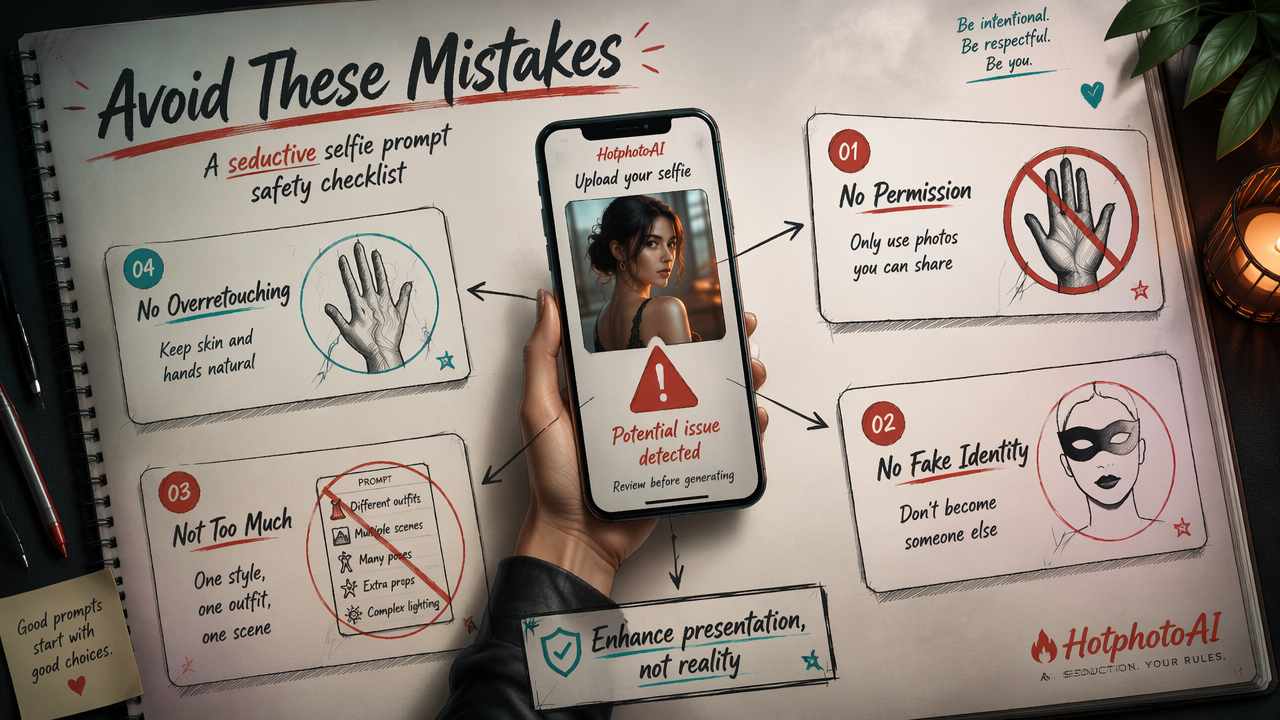
You should avoid uploading photos without permission, generating deceptive identity changes, oversexualizing professional images, and using outputs that look visibly fake. Seductive portraits work best when they enhance presentation, not when they create a version of you that cannot survive a first date or a reverse image search.
Common mistakes that weaken the final image
- Using blurry selfies: the model has less facial detail to preserve.
- Overloading the prompt: ten outfit changes, three lighting styles, and a yacht will confuse the result.
- Choosing extreme retouching: over-smoothed skin and warped hands make the image feel cheap.
- Ignoring context: a sultry club portrait may work for Instagram but not for LinkedIn.
- Using someone else's face: consent is not optional, even if the tool makes it easy.
There is also a social risk. If a dating profile photo looks wildly different from real life, it may attract more taps but fewer good conversations. The win is not catfishing with better lighting. The win is showing your best plausible self.
A seductive AI photo should raise interest, not suspicion.
A quick ethics and safety filter
Before posting, ask three questions:
- Is the face mine or used with clear permission? If not, stop.
- Would I be comfortable explaining how this was made? If not, edit less.
- Does the image fit the platform? Dating apps, creator pages, and professional bios have different expectations.
For public profiles, I prefer using one AI-enhanced image alongside real candid photos. That mix keeps the profile attractive and grounded.
FAQ: AI selfie glamour images
Can AI seductive portraits be used on Tinder or dating apps?
Yes, AI-enhanced portraits can work on Tinder, Bumble, Hinge, and other dating apps if they still look like you. Use them as polished profile photos, not total identity makeovers. A strong approach is to pair one stylized portrait with several natural photos that show your real face, body type, hobbies, and social context.
Do I need professional selfies to get good AI portraits?
No, but better inputs create better outputs. Use bright lighting, a clean lens, and a relaxed expression. Avoid heavy filters because they hide the facial details the model needs. Three to ten clear selfies from slightly different angles usually give an AI tool more useful information than one perfect-but-processed photo.
Are AI glamour photos suitable for professional profiles?
They can be, if the style is restrained. For LinkedIn, portfolio pages, speaker bios, or consulting profiles, choose polished lighting, neat clothing, and a clean background instead of overtly seductive styling. The goal should be confidence and approachability. Save dramatic glamour, fantasy, or nightlife looks for social and dating contexts.
What will change in AI portrait tools in 2027?
Expect more precise control over pose, expression, outfit, and identity consistency. Tools will likely keep moving from broad prompts toward guided workflows where users choose camera angle, wardrobe, body framing, and platform-specific formats. Verification and consent controls should also become more visible as personal image generation becomes more common.
Conclusion
An AI seductive photo generator from selfies is most useful when you treat it like a virtual photoshoot, not a magic disguise. Start with clear selfies, pick one visual goal, generate several versions, and keep the portrait that looks attractive, believable, and platform-appropriate.
If you want to experiment with model-style, dating, glamour, or lifestyle portraits, head to hotphotoai.com and try a few controlled styles before going bolder. Your best AI photo should look like you had great lighting, great styling, and unusually cooperative cheekbones.