AI TikTok Profile Picture Generator: Make a PFP People Recognize Fast
TL;DR
A strong TikTok profile picture should be readable at tiny size: bold contrast, an expressive face, a clean crop, and one recognizable style cue. Use AI to test looks quickly, then pick the image that still looks like you when it shrinks to a circle.
Your TikTok profile picture has one job: be recognized before the thumb keeps scrolling. An AI TikTok profile picture generator can help you test outfits, lighting, backgrounds, and avatar styles without booking a shoot or turning your bedroom into a lighting lab. I'd use a creator-focused tool like HotphotoAI when you want polished, stylized portraits that still feel personal, not like a wax figure got Wi-Fi.
Table of Contents
What is an AI TikTok profile picture generator?
An AI TikTok profile picture generator is a tool that creates or restyles profile images for TikTok using prompts, uploaded selfies, or both. It can produce realistic headshots, avatar looks, glamour portraits, fantasy edits, and creator-brand images sized for a circular profile crop.
AI TikTok profile picture generator: software that uses generative artificial intelligence to create TikTok-ready profile images from text prompts, selfies, or style presets.
TikTok: a short-form video platform where profile images help users recognize creators across comments, search results, lives, and follower lists.
Avatar: a graphical representation of a person, character, or persona used online.
AI slop: AI-made digital content that feels low-effort, low-quality, or meaningless. For profile photos, that usually means plastic skin, random accessories, strange eyes, or a style that says "generated before coffee."
Research by Hyunjin Kang and Chen Lou (2022) examined human-AI interaction on TikTok and user engagement, which matters because creator identity is not just visual polish. It's also how the audience reads agency, authenticity, and intent.
Key takeaway: the best AI PFP does not hide who you are. It sharpens the version of you your audience should remember.
What makes a TikTok profile picture work in 2026?
A TikTok profile picture works when it stays clear, expressive, and distinct at small circular sizes. The winning formula is simple: face-first composition, strong contrast, clean edges, a readable expression, and one visual signature that matches your content niche.
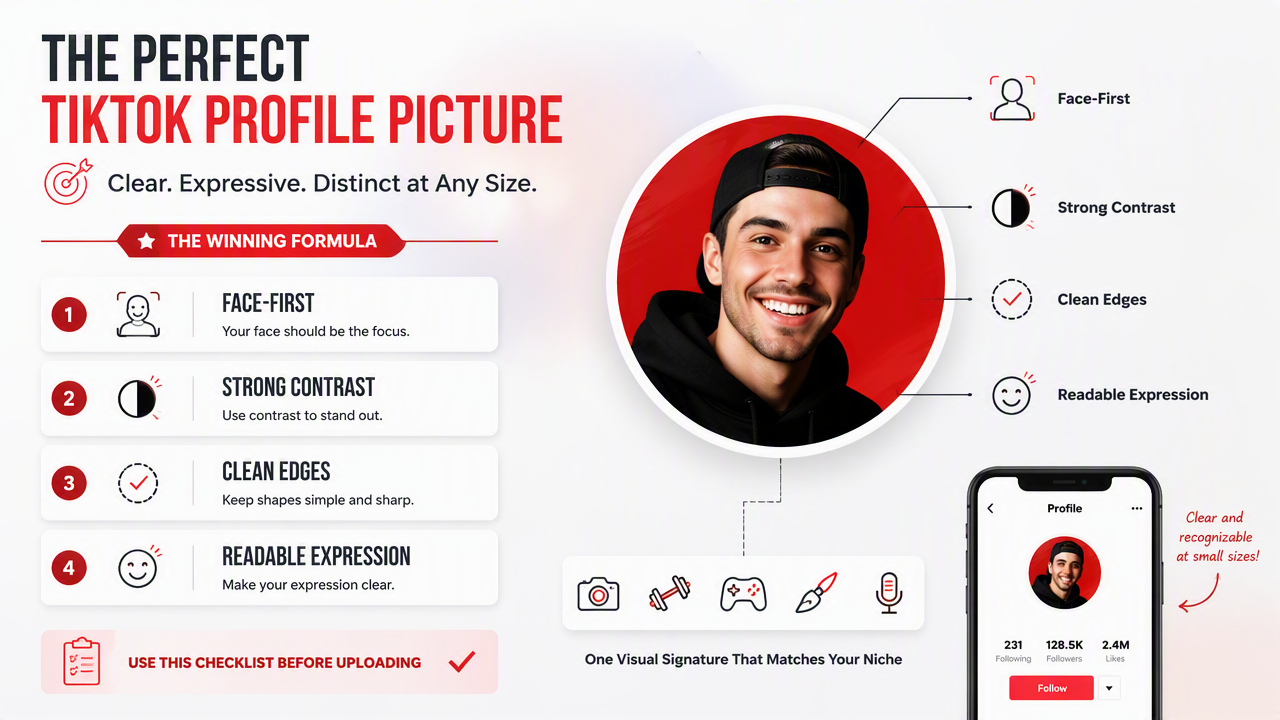
TikTok PFP best-practice checklist
Use this checklist before uploading any AI-generated or edited image:
- Face takes up most of the frame: Your eyes and expression should be readable in a tiny circle.
- High contrast background: Dark hair on a dark wall vanishes. Pick separation.
- Clean crop: Keep important details away from the circle edge.
- Expressive face: A raised eyebrow beats a passport stare.
- Consistent personal style: Match your niche, such as beauty, gaming, fitness, comedy, fashion, music, or business.
- One focal prop at most: Sunglasses, mic, camera, or headset can work. Three props becomes a yard sale.
- Avoid tiny text: It becomes decorative fuzz on mobile.
Profile photo elements that matter most
| Element | Why it matters on TikTok | Better AI direction |
|---|---|---|
| Face visibility | TikTok icons appear small in comments and search | Close-up portrait, sharp eyes, simple crop |
| Contrast | Separates you from the background | Neon rim light, bright wall, clean studio backdrop |
| Expression | Signals personality before viewers tap | Confident smile, playful smirk, focused creator look |
| Style cue | Makes the image memorable | Signature color, outfit, lighting, prop, or niche theme |
| Authenticity | Helps avoid generic AI sameness | Preserve facial structure, skin texture, and real hairstyle |
A 2023 IEEE survey by Yuntao Wang, Yanghe Pan, and Miao Yan reviewed AI-generated content challenges and solutions. For TikTok photos, the practical lesson is clear: polish helps, but unchecked generation can create artifacts and sameness that weaken trust.
How do you make a better TikTok PFP with AI?
To make a better TikTok PFP with AI, start with clear selfies, choose one creator identity, generate multiple styles, test the circular crop, and compare the final image at thumbnail size before posting. The goal is not the fanciest image. The goal is instant recognition.
A practical 5-step workflow
- Upload strong source selfies: Use front-facing photos with clear lighting, no heavy filters, and different angles.
- Pick one identity lane: Decide if the profile should feel funny, glamorous, professional, mysterious, sporty, or artsy.
- Generate 12 to 30 variations: Test backgrounds, lighting, wardrobe, and expressions.
- Crop as a circle: TikTok displays your image in a circle, so preview it that way before saving.
- Ask one brutal question: Would a follower recognize this in a comment thread?
The HotphotoAI platform fits this workflow well when you want model-style, lifestyle, fantasy, or polished social images without staging a traditional shoot. For creators testing several visual identities, generating batches is faster than changing outfits, lights, and locations in real life.
Size and crop guidance
TikTok profile images are displayed as small circles across the app, so composition beats megapixel worship. Keep your face centered, leave a little space around the head, and avoid placing logos or text near the edge.
If you create a square image first, export a high-quality version and preview it on your phone. Desktop previews can flatter a weak crop. Mobile is the referee, and mobile is wonderfully rude.
Which prompts and styles work best?
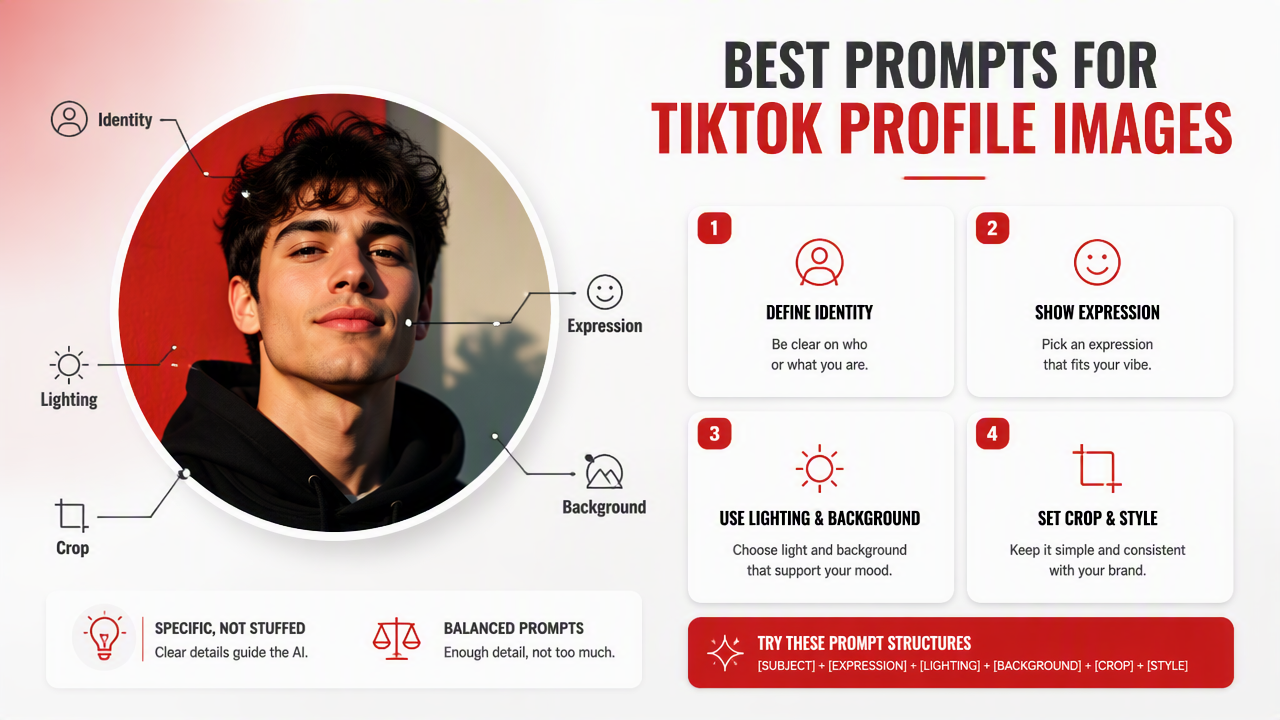
The best prompts for TikTok profile images combine identity, expression, lighting, background, crop, and style constraints. Strong prompts are specific enough to guide the AI, but not so stuffed with details that the final image looks like a costume closet exploded.
Prompt templates you can copy
Try these prompt structures and replace the bracketed details:
- Clean creator portrait: "Close-up portrait of [person], confident smile, bright solid background, soft studio light, sharp eyes, modern TikTok creator profile photo, circular crop friendly."
- Fashion creator: "Stylish portrait of [person] wearing [outfit], editorial lighting, high contrast background, beauty photography, expressive pose, realistic skin texture."
- Gaming avatar: "Energetic gaming creator avatar based on [person], neon rim light, dark background, headset, sharp face detail, bold color contrast, not cartoonish."
- Music profile: "Moody artist portrait of [person], microphone shadow, cinematic lighting, clean background, intense eye contact, album-cover feel."
- Professional creator: "Polished headshot of [person], relaxed expression, neutral background, premium lighting, approachable expert, social media profile picture."
Style examples by creator goal
| Creator goal | Best visual style | Prompt detail to include |
|---|---|---|
| Get noticed in comments | Bold, high-contrast close-up | Bright background, sharp eyes, centered face |
| Look premium | Glamour or editorial portrait | Soft studio lighting, styled hair, clean wardrobe |
| Signal niche fast | Themed lifestyle image | Camera, gym, mic, headset, sketchbook, kitchen |
| Build mystery | Cinematic shadow portrait | Rim light, dark backdrop, controlled expression |
| Stay approachable | Natural lifestyle headshot | Warm light, real skin texture, slight smile |
If you're experimenting with glamour or stylized portraits, HotphotoAI can help you compare several polished looks before choosing the one that fits your TikTok niche. For direct access later, head to hotphotoai.com and keep your best prompt notes handy.
What should you avoid when using AI profile photos?
Avoid AI profile photos that look over-smoothed, over-styled, unrecognizable, or disconnected from your actual TikTok content. A profile image can be aspirational, but if viewers feel tricked after tapping through, the photo has become packaging for the wrong product.
Common mistakes that weaken a PFP
- Changing your face too much: If friends need a detective board to identify you, pull back.
- Using busy backgrounds: Tiny icons punish clutter.
- Adding fake luxury signals: Random sports cars, mansions, and red carpets can look try-hard.
- Ignoring your niche: A corporate headshot may not fit a comedy account, and a cyberpunk warrior may not fit a tax advice page.
- Posting the first decent result: Generate options, then compare them at thumbnail size.
AI can also flatten personality when everyone picks the same glossy styles. W. Holmes and Ilkka Tuomi's 2022 work on AI in education is not about profile pictures specifically, but it reflects a broader point relevant to generative tools: human judgment still matters when AI shapes outputs.
What to expect in 2027
TikTok profile visuals will likely become more dynamic, personalized, and identity-aware. Expect more AI tools to generate matching profile images, cover graphics, video intros, and live-stream visuals from the same creator style.
The smarter move now is to build a recognizable visual system, not just one pretty icon. Pick colors, lighting, wardrobe, and expressions that can repeat across your profile, thumbnails, and posts. If you want to test that system quickly, visit hotphotoai.com after you've defined your style direction.
FAQ
TikTok creators usually ask three practical questions before changing their profile photo: will people recognize me, will the image fit the app, and will it look too artificial? These answers keep the decision simple.
Can I use an AI-generated image as my TikTok profile picture?
Yes, you can use an AI-generated image as your TikTok profile picture, as long as it follows TikTok's platform rules and does not impersonate someone else. The safest choice is an image based on your own likeness, with realistic details and a style that matches your actual content.
Should my TikTok PFP be realistic or an avatar?
Choose realistic if your face, expertise, beauty style, fitness progress, or personality drives the account. Choose an avatar if your brand is gaming, commentary, animation, fantasy, or anonymous entertainment. The best test is recognition: followers should connect the image with your videos without needing your username.
How often should I change my TikTok profile picture?
Change your profile picture when your niche, hairstyle, brand colors, or creator identity changes. Avoid switching too often if followers recognize you by your icon in comments and live chats. For most creators, seasonal refreshes or campaign-based updates work better than weekly makeovers.
Conclusion
A strong AI-made TikTok PFP is not about looking unrealistically perfect. It's about being instantly readable, recognizably you, and visually aligned with the content people will find after they tap. Start with clear selfies, choose one style direction, generate variations, preview the circular crop, and pick the version that survives thumbnail size. If you want a fast way to create polished social portraits, try an AI TikTok profile picture generator like HotphotoAI and build a look your audience can spot before the next scroll.