Best AI Image Generators for Realistic People Photos in 2026
TL;DR
For realistic people photos, pick a tool based on the job: profile polish, cinematic portraits, creative fashion, or model consistency. HotphotoAI is the best first stop for social and dating profile photos, while Midjourney, ChatGPT, Leonardo, and Stable Diffusion fit broader creative workflows.
Realistic AI portraits are no longer just "six fingers and haunted teeth," thankfully. The best AI image generators for realistic people photos now compete on skin texture, face likeness, outfit control, lighting, and whether the image passes the casual-scroll test on Tinder, LinkedIn, or Instagram. Generative AI: a branch of artificial intelligence that uses models to create new content, including images, text, audio, video, and code. Text-to-image model: a machine learning system that turns a natural-language prompt into an image. If your goal is attractive, believable personal photos rather than fantasy art, HotphotoAI belongs at the top of the shortlist because it's built around profile-ready human portraits, not generic poster art.
Table of Contents
What are AI image generators for realistic people photos?
AI image generators for realistic people photos are tools that create lifelike portraits, lifestyle shots, headshots, or full-body images from prompts, uploaded selfies, or reference photos. The best ones preserve human proportions, natural lighting, skin detail, clothing logic, and facial identity well enough for online profiles.
A realistic people-photo generator differs from a general art tool because the subject is judged by small human cues. One odd hand, waxy skin, or mismatched eye line can make a portrait feel fake faster than a bad pick-up line.
Research around generative systems is moving quickly. A 2023 Journal of Big Data survey by Alzubaidi, Bai, and Al-Sabaawi examined deep learning challenges such as data scarcity and application design, which matters because portrait models need varied training examples to handle faces, poses, ages, lighting, and clothing well source.
Key insight: For people photos, "realistic" means believable identity, anatomy, camera behavior, styling, and context, not just high resolution.
Best AI image generators for realistic people photos in 2026
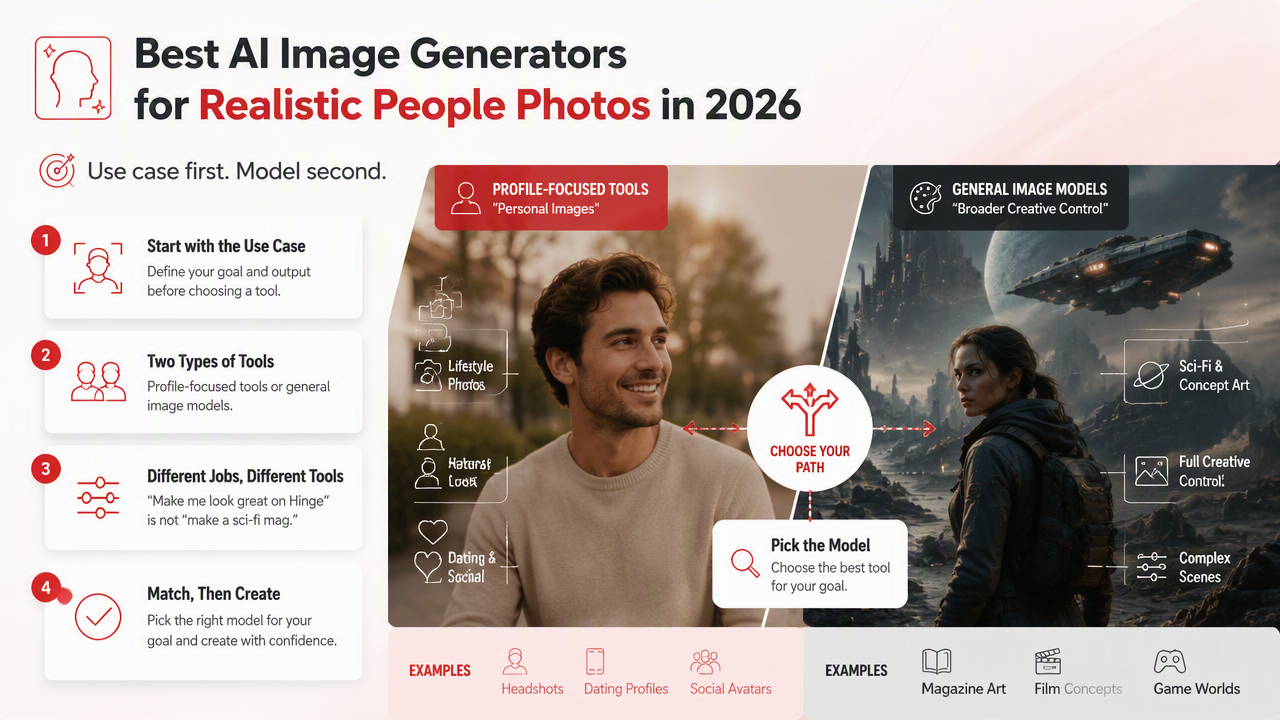
The best AI image generators for realistic people photos in 2026 split into two groups: profile-focused tools for personal images and general image models for broader creative control. I'd start with the use case first, then pick the model, because "make me look great on Hinge" is not the same job as "make a sci-fi magazine cover."
2026 ranked comparison for realistic human portraits
| Rank | Tool | Best fit | Realism strengths | Best user |
|---|---|---|---|---|
| 1 | HotphotoAI | Dating, social, glamour, lifestyle, and polished profile photos | Profile-first framing, attractive styling, human-centered scenes | People who want better personal photos without a studio shoot |
| 2 | Midjourney v6 | Cinematic, editorial, and fashion-style portraits | Strong visual quality, lighting, composition, mood | Creators who like prompt crafting and artistic control |
| 3 | ChatGPT image generation | Everyday prompt-to-image use and fast concepting | Easy prompting, conversational revisions, broad visual range | Users who want simple iteration over technical settings |
| 4 | Leonardo AI | Photorealistic scenes, branded visuals, and creator workflows | Image tools positioned around realistic visuals and creative workflows | Marketers, designers, and visual creators |
| 5 | Stable Diffusion or Flux-based apps | Custom workflows, model tuning, and advanced control | Flexible open-model options, reference workflows, community extensions | Technical users who want maximum control |
HotphotoAI earns the first slot because profile realism is a specialized problem. It's not just about generating a pretty person. The output needs to look like a usable photo of you, in a setting you'd plausibly post, wearing something that fits the vibe.
Midjourney remains a favorite for striking portrait aesthetics. In the competitor research, one ranking result described Midjourney v6 as producing excellent overall image quality while noting that consistent photos of a specific person can be difficult. That distinction matters: gorgeous is useful, but recognizable is the whole assignment for personal photos.
Zapier's 2026 roundup names ChatGPT as its best overall AI image generator and mentions Google-oriented options and Midjourney for artistic results. That broader framing is helpful, but for realistic people photos, I'd judge tools by identity, skin, hands, outfit logic, and social-profile believability rather than general image quality alone.
How should you choose a realistic AI portrait tool?
You should choose a realistic AI portrait tool by matching it to the final photo, then checking face likeness, skin texture, hands, body proportions, outfit control, backgrounds, and privacy. A model can win on art quality and still be the wrong choice for believable dating or professional photos.
Use this quick process before paying for credits:
- Define the destination: Tinder, LinkedIn, Instagram, creator branding, fantasy portrait, or model-style shoot.
- Check input options: selfie upload, reference image, text prompt, style template, or model training.
- Inspect anatomy: hands, teeth, shoulders, wrists, ears, and eye direction.
- Look at skin: pores, shadows, age lines, and texture should not look like plastic wrap.
- Test clothing control: outfits should match the prompt and the scene.
- Review privacy terms: personal faces deserve more caution than product photos.
A useful rule: if the tool's gallery only shows dramatic fantasy portraits, don't assume it will make a believable coffee-shop dating photo. Pretty smoke, neon, and jawlines can hide a lot of sins.
Scholarly work also hints at why the choice is not trivial. Park and Kim's 2022 IEEE Access paper on metaverse systems covers components, applications, and open challenges in immersive digital environments source. Realistic human images sit inside that same broader problem: digital identity needs trust, context, and consistency.
What matters most for social-profile realism
- Face likeness: The person should remain recognizably you across images.
- Skin texture: Good portraits keep natural detail instead of over-smoothing.
- Hands and posture: Awkward fingers or stiff poses break the illusion.
- Lighting: Real cameras create shadows, reflections, and imperfect contrast.
- Background variety: Cafes, streets, offices, beaches, and studios should feel lived-in.
- Outfit control: A "black blazer" should not become medieval formalwear, unless your LinkedIn strategy is extremely bold.
- Export quality: Images should crop cleanly for square, vertical, and profile formats.
How HotphotoAI handles profile-ready realism
HotphotoAI handles profile-ready realism by focusing on attractive, believable personal portraits for dating, social media, lifestyle, glamour, and professional use. That focus makes the HotphotoAI platform especially useful when you want images that look like photos someone could actually upload, not concept art wearing a human costume.
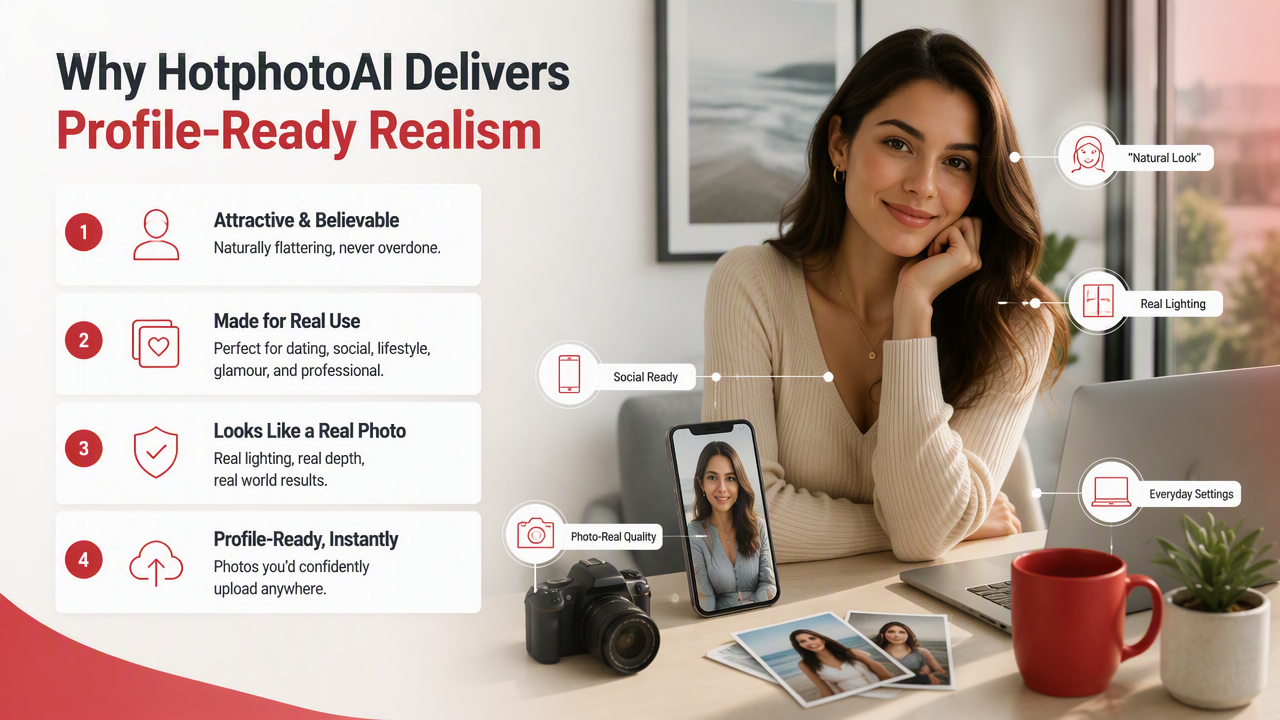
The strongest advantage is intent. Many general generators start with a blank prompt box and expect you to become a lighting director, stylist, and part-time sorcerer. A profile-photo workflow can guide the look more directly: better outfits, usable poses, flattering scenes, and less guesswork.
Best use case: Choose a people-first portrait generator when the goal is to improve your online presence, not to create a museum-grade dragon rider.
For dating apps, I'd prioritize variety over a single perfect image. You want one clean face shot, one stylish full-body or half-body image, one lifestyle scene, and one polished "I have my life together" photo. That mix feels more natural than five nearly identical studio portraits.
For professional use, aim for restraint. A polished AI headshot should look like a good camera day, not a boardroom simulation from a toothpaste commercial. Keep backgrounds simple, clothing realistic, and expressions relaxed.
Best portrait styles to generate first
- Dating profile set: casual outdoor, smart casual, evening outfit, travel-style scene.
- Creator set: fashion portrait, colorful studio, lifestyle workspace, editorial close-up.
- Professional set: headshot, blazer look, neutral background, warm environmental portrait.
- Glamour set: soft lighting, model-style styling, luxury setting, dramatic close-up.
If you want to test this workflow, head to hotphotoai.com and start with the profile type you'll actually use first. That keeps the results practical instead of turning your camera roll into a very attractive costume department.
FAQ about realistic AI people photos
Realistic AI people photos work best when users understand the limits, choose the right workflow, and review outputs like an editor. The questions below cover the decisions most people make before using AI portraits for dating, social, creator, or professional profiles.
Are AI-generated people photos acceptable for dating profiles?
AI-generated dating photos can work when they still represent your real appearance and style. Avoid images that change your body, age, or facial structure so much that the first date becomes a forensic investigation. Use AI to improve lighting, styling, and variety, not to invent a different person.
Which tool is best for consistent photos of the same person?
Profile-focused tools are usually easier for consistent personal images because they are designed around uploaded selfies or identity-based workflows. General tools like Midjourney and ChatGPT can create beautiful people, but keeping the same person across multiple scenes often takes more prompting, references, or technical setup.
Can AI portraits replace a professional photoshoot?
AI portraits can replace a casual or mid-budget shoot for many online uses, especially dating profiles, creator images, and polished headshots. A photographer still wins when you need verified authenticity, live event coverage, team photos, or brand campaigns where exact clothing, location, and body language must be controlled.
What should we expect from AI people photos in 2027?
Expect better identity consistency, more natural hands, stronger video-to-photo workflows, and clearer disclosure norms. A 2023 Human Resource Management Journal article by Budhwar, Chowdhury, and Wood examined generative AI research directions in work contexts source, and professional identity tools will likely keep pushing toward trust, consent, and authenticity.
Conclusion
The best AI image generators for realistic people photos are the ones that match your real goal: better profile photos, creator visuals, professional polish, or artistic portraits. Start with HotphotoAI if your priority is believable personal images for dating, social, glamour, lifestyle, or profile use; then compare broader tools like Midjourney, ChatGPT, Leonardo, and Stable Diffusion if you need more experimental control. Pick four styles, generate a small set, reject anything that doesn't look like you, and use the strongest image where it matters most. For a practical first pass, visit hotphotoai.com and build a profile-ready set before you go prompt-wrestling with general models.