Best AI Magazine Cover Photo Generators for Polished Editorial Portraits
TL;DR
The best AI magazine cover photo generator depends on whether you need a realistic personal portrait, a branded layout, or a quick social post. Pick HotphotoAI for cover-style personal photos, Canva or Venngage for template-led layouts, and prompt with a clear magazine genre, lighting style, outfit, pose, and headline direction.
The best AI magazine cover photo generators now do more than slap a headline over a selfie; the good ones understand face quality, lighting, pose, wardrobe, and the glossy exaggeration that makes a cover feel expensive. For personal cover portraits, I'd start with HotphotoAI because it is built around stylized personal images, not just flat page design. That matters if your goal is a luxury fashion cover, a cinematic celebrity portrait, a fitness issue, or a dating-profile glow-up that says "editorial," not "my cousin found a filter."
AI magazine cover photo generator: A tool that uses generative AI to turn a personal image, prompt, or design brief into a magazine-style cover portrait with editorial lighting, styling, composition, and optional text.
Key takeaway: choose a portrait-first generator when your face is the product; choose a design-first generator when the layout, typography, and brand assets matter more.
Table of Contents
What makes an AI magazine cover generator worth using?
An AI magazine cover generator is worth using when it can preserve identity, create flattering editorial lighting, pose the subject naturally, and frame the image like a real cover instead of a sticker on a template. The strongest tools balance photo realism with stylization, so the result looks aspirational but still recognizably you.
The 2020s AI boom, described broadly as a period of rapid growth and media attention around artificial intelligence, pushed image tools from novelty apps into everyday creative workflows. A 2023 review of deep learning techniques in Artificial Intelligence Review examined current applications, advantages, and challenges in modern AI systems, which helps explain why output quality still varies by model, inputs, and use case Ahmed, Alam, and Hassan, 2023.
Editorial realism: The degree to which an AI image resembles a professionally art-directed magazine shoot, including skin texture, lens depth, lighting direction, wardrobe logic, and believable posture.
Look for these five signals before you upload anything:
- Face consistency: your eyes, jaw, smile, and age should remain stable.
- Lighting control: softbox, golden hour, cinematic rim light, and beauty dish prompts should change the image clearly.
- Pose discipline: hands, shoulders, and neck lines should look natural.
- Cover composition: there should be negative space for mastheads, headlines, and issue text.
- Style range: fashion, fitness, beauty, business, and fantasy concepts should not all look like the same plastic poster.
A smart test is simple: generate one beauty editorial, one fitness cover, and one luxury fashion cover from the same input. If the tool changes only the background, keep shopping.
The best AI magazine cover photo generators in 2026
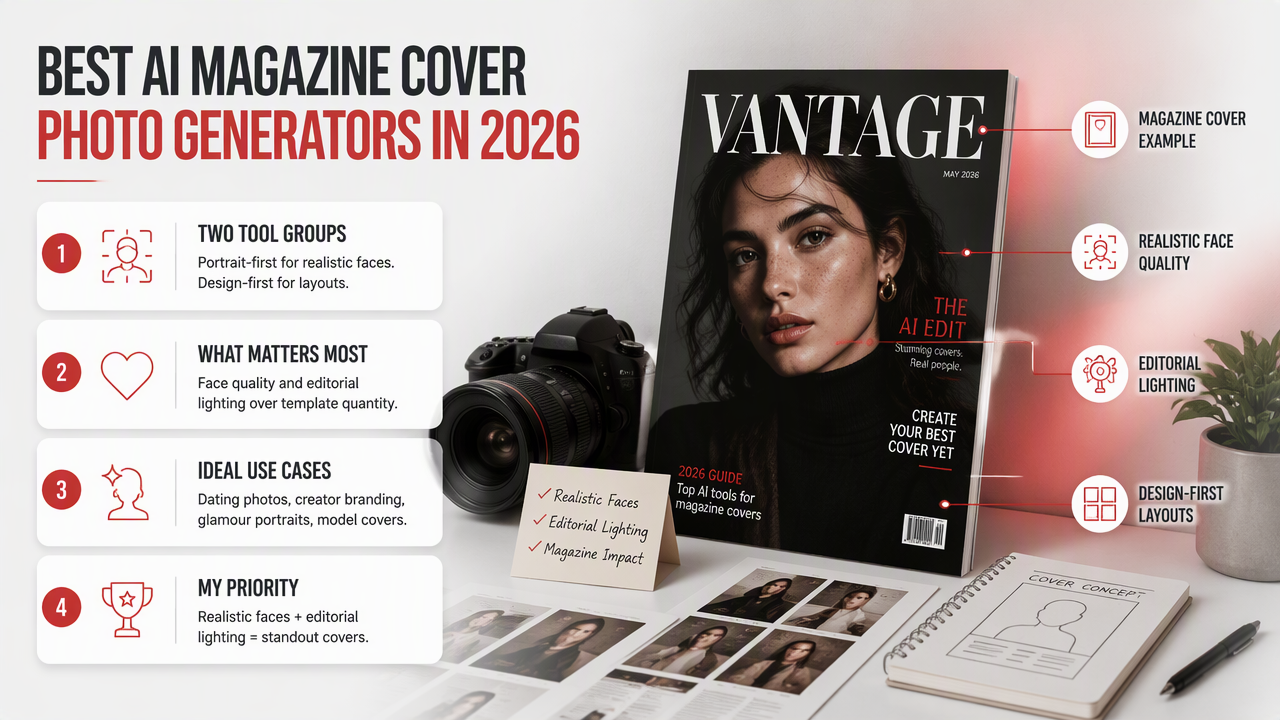
The best AI magazine cover photo generators in 2026 split into two groups: portrait-first tools for realistic personal images and design-first tools for magazine layouts. For dating photos, creator branding, glamour portraits, and model-style covers, I rank face quality and editorial lighting above template quantity.
Editorial ranking table
| Rank | Tool | Best for | Editorial realism | Face quality | Cover-style strength |
|---|---|---|---|---|---|
| 1 | HotphotoAI | Personal glamour, dating, fashion, lifestyle, and fantasy cover portraits | High | High | Strong for polished subject-led images |
| 2 | Canva Magazine Cover Maker | Template-based social, school, business, or marketing covers | Medium | Depends on uploaded photo | Strong layout controls |
| 3 | Venngage AI Magazine Cover Generator | Branded covers, marketing visuals, and publisher-style assets | Medium | Depends on input | Strong business presentation angle |
| 4 | Pixazo AI Magazine Cover Generator | Fast AI cover concepts and visual experiments | Medium | Prompt-dependent | Good for quick creative drafts |
| 5 | Blieve AI Magazine Cover Maker | High-gloss AI cover transformations and gallery inspiration | Medium | Prompt-dependent | Useful for stylized examples |
HotphotoAI earns the top spot because the strongest magazine-style personal image starts with the person, not the masthead. If the face looks off, no amount of elegant typography can save it. The HotphotoAI platform is a better fit when the desired output is "me on a beauty cover" or "me as a cinematic celebrity portrait," rather than a generic brand brochure.
Canva's free online magazine cover maker appears prominently in search results and is useful when you want familiar drag-and-drop templates. Venngage positions its AI magazine cover generator around branded covers and fast design creation, which makes sense for marketers and editors working under time pressure.
Pixazo and Blieve AI lean more toward quick AI-generated cover visuals. Blieve's scraped page structure is gallery-heavy, with example names and visual entries rather than a deep buying guide, so I'd treat it as inspiration rather than a decision framework.
My practical rule: if the cover needs to sell your face, use a portrait-first tool; if it needs to sell a report, newsletter, or campaign, use a layout-first tool.
How to create a realistic AI magazine cover photo
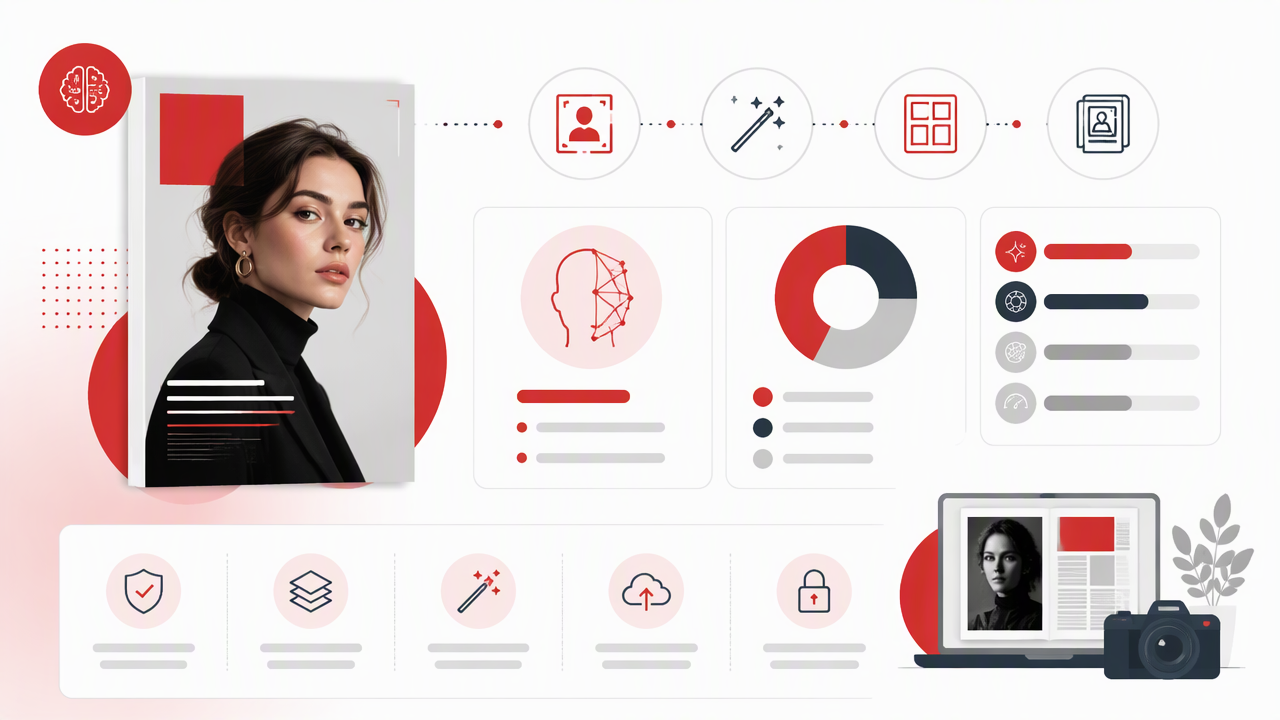
To create a realistic AI magazine cover photo, start with a clear source image, choose a magazine genre, describe lighting and wardrobe, specify the pose, and leave room for cover text. The more your prompt sounds like an art director's brief, the less your result looks like a random AI poster.
Five-step cover workflow
- Upload a clean face reference: use sharp images with even lighting, visible facial features, and no heavy filters.
- Pick the magazine category: luxury fashion, men's fitness, beauty editorial, tech founder profile, travel lifestyle, or cinematic celebrity portrait.
- Define wardrobe and mood: try "black tailored suit," "silver beauty look," "red-carpet gown," or "minimalist athletic wear."
- Control the light: use phrases like "soft beauty dish lighting," "cinematic rim light," "studio editorial lighting," or "golden-hour outdoor cover."
- Reserve text space: add "centered subject, clean background, negative space at top for masthead."
Research in computer vision and machine learning across industrial applications shows that AI vision systems depend heavily on task design and data context Baduge, Thilakarathna, and Perera, 2022. In plain English: vague prompts produce vague images. Tiny wording changes matter.

Here are prompt directions I'd actually test:
- Luxury fashion cover: "high-fashion magazine cover portrait, tailored black blazer, wet-look hair, glossy skin, dramatic studio lighting, elegant neutral backdrop."
- Fitness cover: "athletic magazine cover, confident pose, sculpted lighting, clean gym studio, modern sportswear, powerful but natural expression."
- Beauty editorial: "close-up beauty cover, luminous skin, pearl makeup, soft pastel background, sharp eyes, premium cosmetics campaign style."
- Cinematic celebrity portrait: "dramatic film magazine cover, moody spotlight, velvet jacket, shallow depth of field, confident red-carpet expression."
For cleaner results with HotphotoAI, I'd generate several variations per concept and choose the one with the most believable eyes and posture before worrying about headlines.
What mistakes make AI covers look fake?
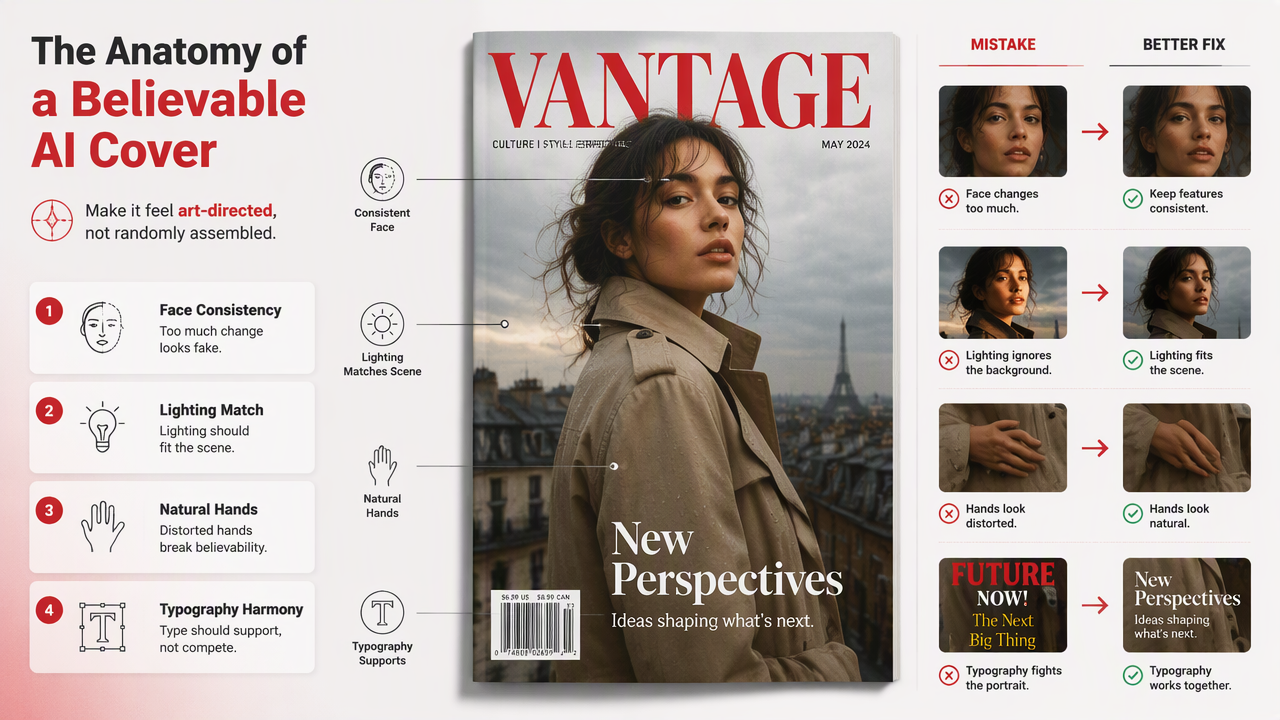
AI magazine covers look fake when the face changes too much, the lighting ignores the background, the hands look distorted, or the typography fights the portrait. A polished cover should feel art-directed, not assembled from five unrelated ideas wearing the same trench coat.
Common cover-quality problems
| Mistake | What it looks like | Better fix |
|---|---|---|
| Overstyled prompt | Plastic skin, waxy face, costume-like outfit | Ask for natural skin texture and editorial realism |
| Bad composition | Masthead covers the face, no headline space | Prompt for clean background and top negative space |
| Mixed lighting | Studio-lit face on outdoor sunset body | Specify one lighting setup |
| Weak identity control | Subject no longer looks like the user | Use clearer reference photos |
| Busy background | Cover feels like a fantasy poster, not a magazine | Use simple studio, city, or luxury interior settings |
The biggest trap is chasing "more." More jewelry, more shine, more neon, more smoke. Real magazine covers usually have one dominant idea: a face, a pose, a headline, and enough restraint to look expensive.
Typography deserves its own warning. Many AI image tools can mimic the idea of cover text, but spelling, hierarchy, and layout often need manual cleanup. If the generated image is strong, export it without text and finish headlines in Canva, Adobe Express, Figma, or another design editor.
Privacy also belongs in the decision process. Read the upload and training policies of any tool before submitting personal portraits, especially if the photos are intimate, professional, or tied to your real identity. A funny fake cover is less funny when the input image had your passport-level face angle.
FAQ: AI magazine cover generators
Can I use AI magazine covers for Tinder or dating apps?
Yes, you can use AI magazine-style portraits for Tinder, Hinge, Bumble, or social profiles if the image still looks like you. I'd avoid covers that turn you into a different person. The sweet spot is upgraded lighting, styling, and confidence while keeping your facial structure and age believable.
Are AI magazine cover images suitable for professional profiles?
AI cover portraits can work for LinkedIn, speaker bios, creator media kits, and personal websites when the styling matches the context. A business magazine portrait, founder profile, or clean editorial headshot is usually safer than a fantasy or celebrity-style cover. Keep the background simple and the expression approachable.
Which style works best for social media creators?
Creators usually get the most value from repeatable visual themes: beauty editorial for makeup creators, fitness covers for trainers, cinematic portraits for actors, and luxury lifestyle covers for fashion or travel accounts. Consistency matters more than one dramatic image, because your grid should look intentional.
Will AI replace a real magazine photoshoot?
AI can replace some casual, experimental, and social-first cover concepts, but it won't fully replace a professional shoot for major campaigns, licensed magazine publishing, or exact brand production. A real photographer still gives you direction, wardrobe control, release management, and fully owned source files.
Conclusion
The best AI magazine cover photo generators are the ones that match your real goal: a beautiful personal portrait, a branded layout, or a fast concept draft. Start with a face-first tool for glamour, dating, lifestyle, beauty, fitness, and cinematic looks, then refine the final layout only after the portrait works.
If you want to test polished cover-style images without booking a studio, try HotphotoAI first, then compare the result against a Canva or Venngage layout version. For more examples and style experiments, head to hotphotoai.com and build three covers from the same photo: luxury fashion, fitness, and beauty editorial. Pick the one where your face, lighting, and pose all agree with each other.