Best AI Photo Generator for Women in 2026: Realistic, Stylish, Profile-Ready Picks
TL;DR
For most women who want realistic dating, social, glamour, or professional photos, choose a generator built for personal portraits, not a general art tool. Prioritize likeness control, outfit variety, privacy, and natural lighting over flashy fantasy styles.
The best AI photo generator for women is no longer just the tool that makes the prettiest face; it's the one that creates believable, useful images you'd actually post. For profile photos, dating apps, creator content, or polished personal branding, HotphotoAI is a strong first stop because it focuses on stylized personal portraits instead of making you wrestle with a blank prompt box like it owes you money.
Table of Contents
What is the best AI photo generator for women in 2026?
The best AI photo generator for women in 2026 is a portrait-focused tool that can create realistic, flattering, and style-specific images while preserving a believable personal identity. The right choice depends on your goal: dating photos, professional headshots, glamour portraits, fantasy looks, or creator content.
Generative AI: Generative artificial intelligence is a subfield of AI that uses generative models to create images, text, video, audio, code, and other digital outputs, based on the Wikipedia definition supplied in the research data.
For women's portraits, the "best" tool is rarely the most famous image generator. Broad tools like Midjourney, Leonardo, Adobe Firefly, Stable Diffusion, and GPT Image 2 can make impressive visuals, and Zapier's 2026 roundup notes GPT Image 2 as especially easy to use. Still, personal-photo quality needs more than attractive pixels.
A good portrait generator should handle identity, skin texture, hair detail, body proportions, clothing, background, and camera style without turning every image into a perfume ad. Reddit-style search intent also shows a common complaint: some tools make every woman look like a model, which is flattering but not always believable.
Key insight: If the image looks amazing but doesn't look like you, it's art, not a useful profile photo.
How should women choose an AI portrait generator?
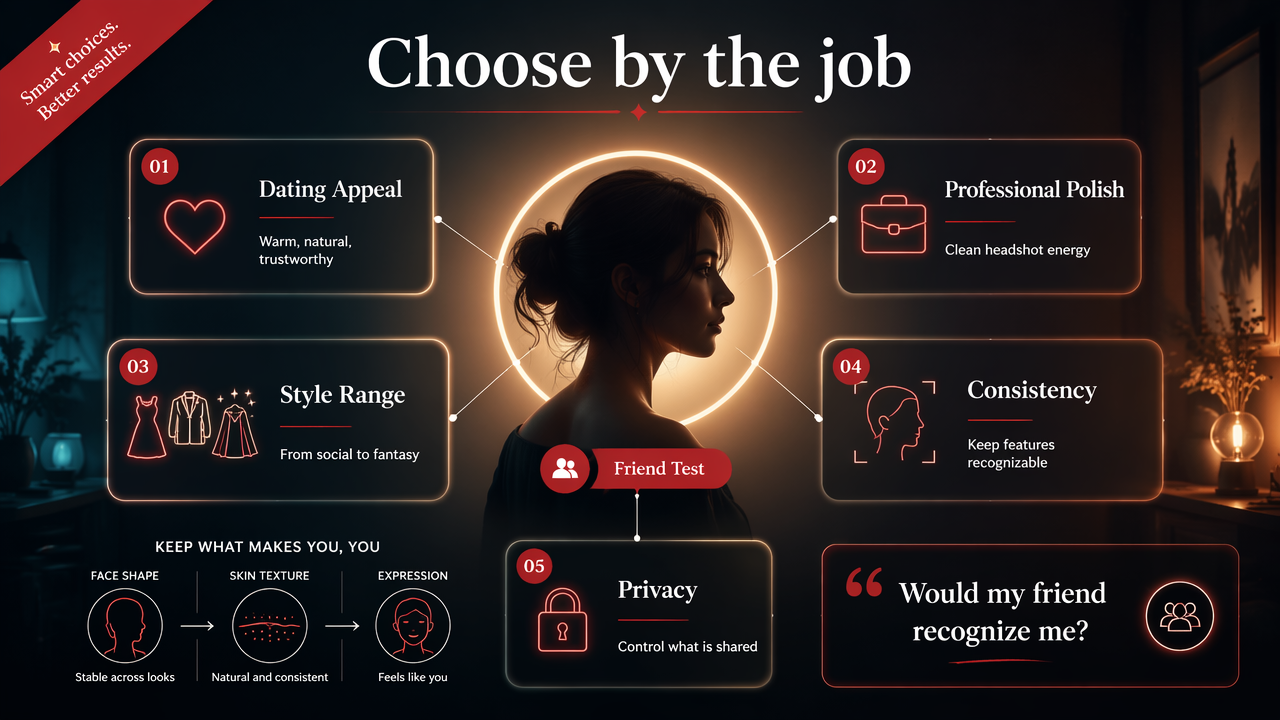
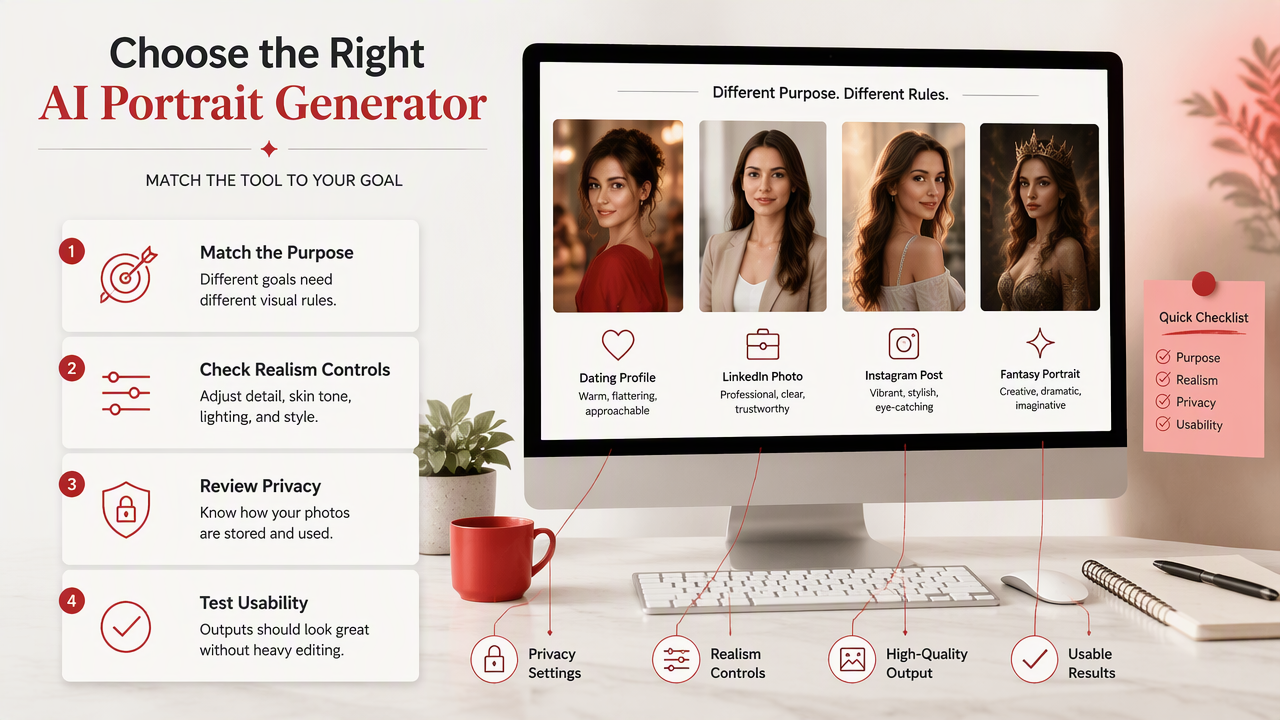
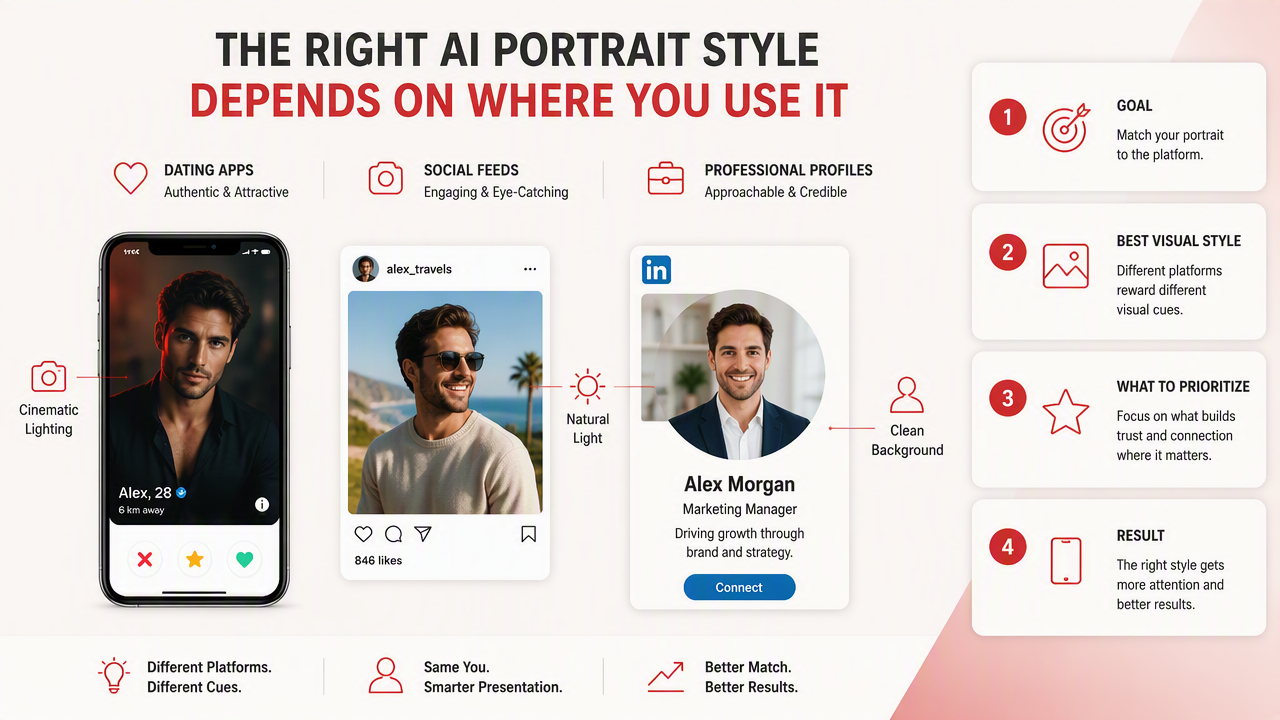
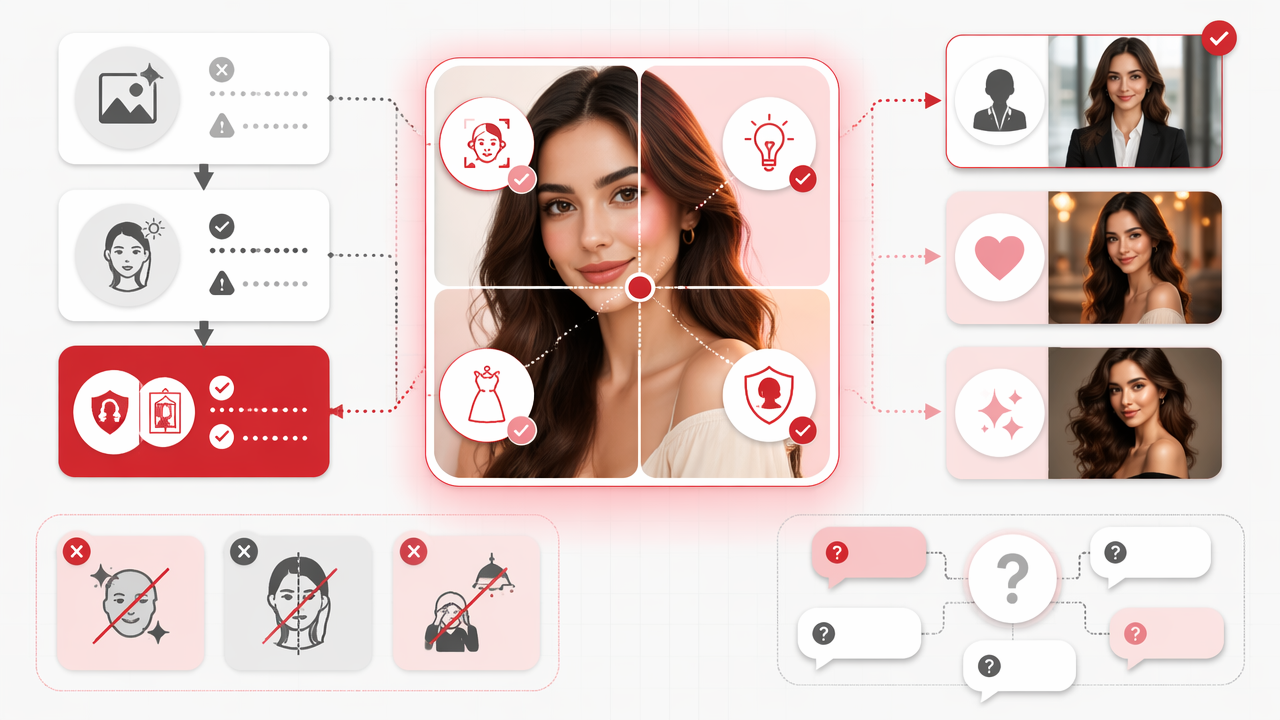
Women should choose an AI portrait generator by matching the tool to the photo's purpose, checking realism controls, reviewing privacy expectations, and testing whether outputs look usable without heavy editing. A dating profile, LinkedIn photo, Instagram post, and fantasy portrait all need different visual rules.
Use this quick selection checklist
Start with the outcome, not the tool name. I'd rather see one believable café photo than ten glossy images that scream "AI made my cheekbones sign an NDA."
- Define the use case: Tinder, Bumble, Instagram, LinkedIn, portfolio, cosplay, glamour, or fantasy.
- Pick the realism level: Natural lifestyle, editorial, cinematic, anime, or model-style.
- Check likeness control: The tool should keep facial identity consistent across outfits and scenes.
- Look for female-focused styling: Hair, makeup, wardrobe, poses, and lighting matter.
- Review privacy expectations: Personal images deserve careful handling.
- Test output variety: You need usable options, not the same face in twelve hats.
Research on deep learning explains why these systems can be powerful but hard to interpret. Samek, Montavon, and Lapuschkin's 2021 review of explainability methods covers how deep neural networks often need tools that make their decisions easier to understand (Proceedings of the IEEE). That matters because image generators can produce odd details even when the prompt sounds clear.
For personal photos, you don't need to understand the model architecture. You do need a repeatable workflow: upload good inputs, choose a style, generate batches, discard uncanny shots, and keep the images that feel like an enhanced version of you.
Which AI photo tools fit different women's portrait goals?
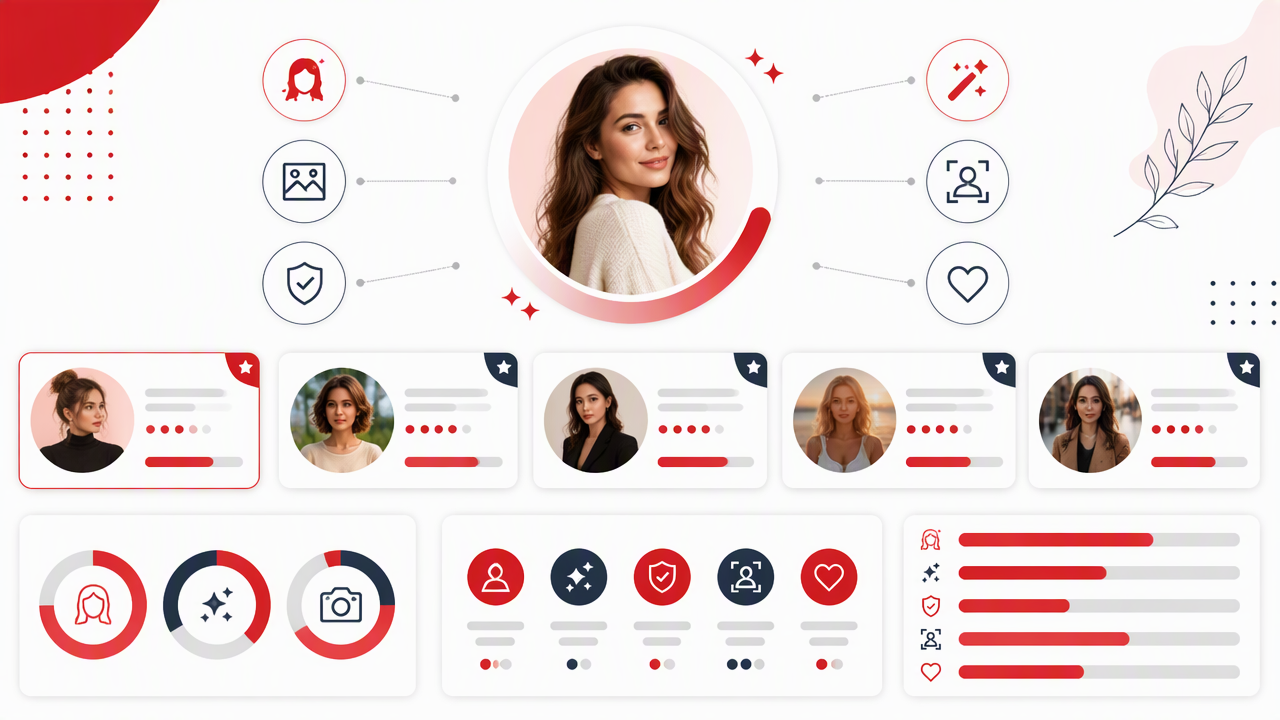
Different AI photo tools fit different women's portrait goals: portrait-first platforms are better for dating and social profiles, while general image generators are better for art direction, fantasy scenes, and experimental visuals. The safest pick is the one designed around your actual photo use case.
Comparison table for 2026 portrait use cases
| Tool type | Best for | Strength | Watch for |
|---|---|---|---|
| HotphotoAI | Dating, glamour, lifestyle, and stylized personal portraits | Purpose-built personal photo styles with a simple workflow | Best when you want profile-ready images, not general art creation |
| GPT Image 2 or ChatGPT image tools | Fast prompt-based images | Easy natural-language prompting, as noted in 2026 AI image generator coverage | May need careful prompting for consistent identity |
| Midjourney | Editorial, cinematic, and highly stylized visuals | Strong artistic composition and mood | Less beginner-friendly for personal photo consistency |
| Leonardo AI | Creative assets and refined image generation | Broad creative controls and scaling features | Can feel broad if you only need profile photos |
| Adobe Firefly | Brand-safe creative work and design workflows | Fits Adobe-style editing and content creation | Better for design users than casual dating-photo users |
| Stable Diffusion or SDXL tools | Advanced customization | Flexible open model workflows | Requires more setup and prompt skill |
HotphotoAI deserves the first comparison spot for this specific search because women looking for personal, attractive, profile-ready photos usually don't want to become prompt engineers. The HotphotoAI platform is aimed at portraits, outfits, lighting, and styles people can actually use online.
General tools are still useful. If you want a surreal goddess portrait, a magazine-cover concept, or a fantasy scene with impossible lighting, Midjourney or Leonardo may give you more creative range. If you want "me, but better lit, better styled, and not photographed in my kitchen at 11 p.m.," a dedicated portrait workflow is the cleaner route.
How can you get realistic AI photos instead of obvious AI images?
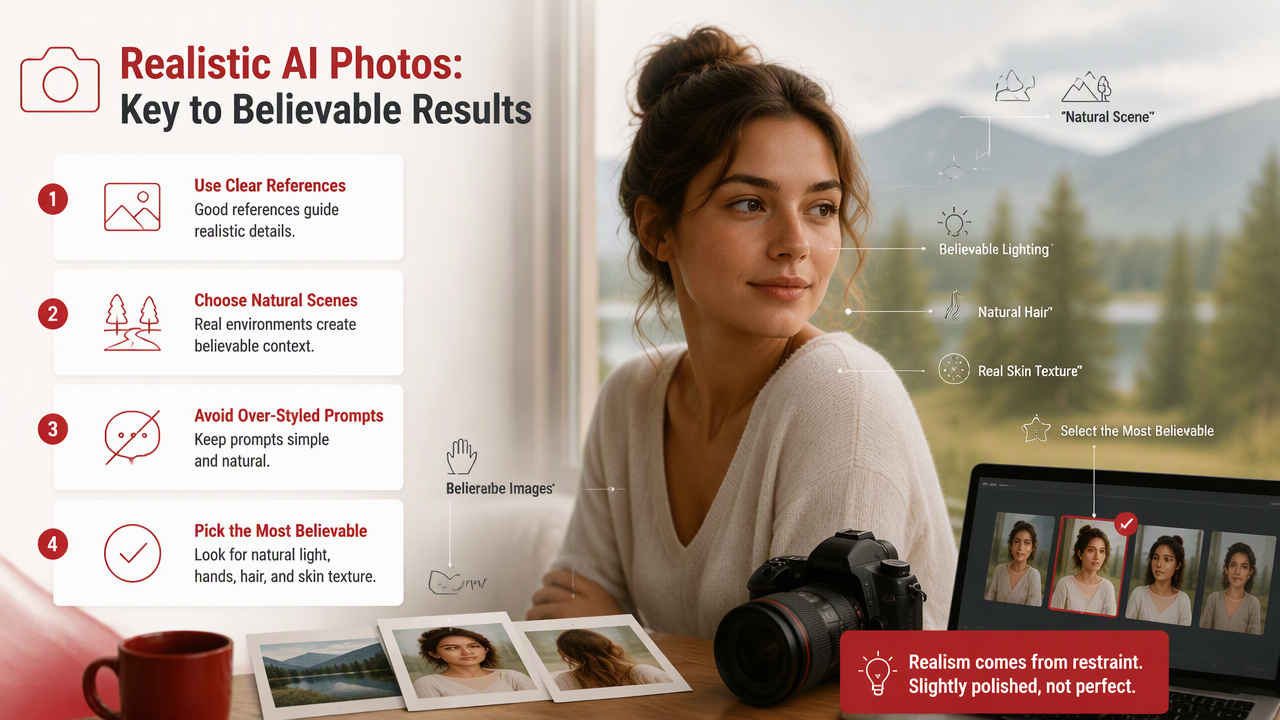
You can get realistic AI photos by using clear reference images, choosing natural scenes, avoiding over-styled prompts, and selecting outputs with believable lighting, hands, hair, and facial texture. Realism comes from restraint; the most convincing AI portraits usually look slightly polished, not perfect.
Prompt and style rules that work
The fastest way to ruin a good portrait is to ask for everything at once. "Luxury cinematic ultra-realistic fashion model goddess, 8K, perfect skin, viral Instagram" is not a prompt; it's a confetti cannon.
Use grounded details instead:
- Scene: rooftop brunch, soft studio headshot, bookstore, beach walk, office lobby.
- Lighting: golden hour, window light, soft flash, overcast daylight.
- Wardrobe: black blazer, red evening dress, casual denim, satin blouse.
- Camera feel: 50mm portrait, candid lifestyle, editorial close-up.
- Mood: confident, warm, playful, elegant, relaxed.
Realistic AI photos usually have one strong idea: a clear outfit, a believable location, and lighting that could exist in real life.
Medical imaging research is not about dating photos, but it does show why image AI needs scrutiny. A 2022 review by van der Velden, Kuijf, and Gilhuijs examined explainable AI in deep learning-based medical image analysis (Medical Image Analysis). The broader lesson applies here: visual AI can be impressive, but users still need to inspect outputs carefully.
Check for small tells before posting: mismatched earrings, warped fingers, strange teeth, blurred logos, over-smoothed skin, or hair that melts into the background. Nobody wants a profile picture where the necklace has developed its own mythology.
What should women expect from AI photo generators in 2027?
Women should expect AI photo generators in 2027 to offer better identity consistency, safer personal-image controls, more realistic body and hair rendering, and easier editing from a single reference set. The biggest shift will be from one-off image creation to managed personal photo libraries.
The next wave of profile-photo creation
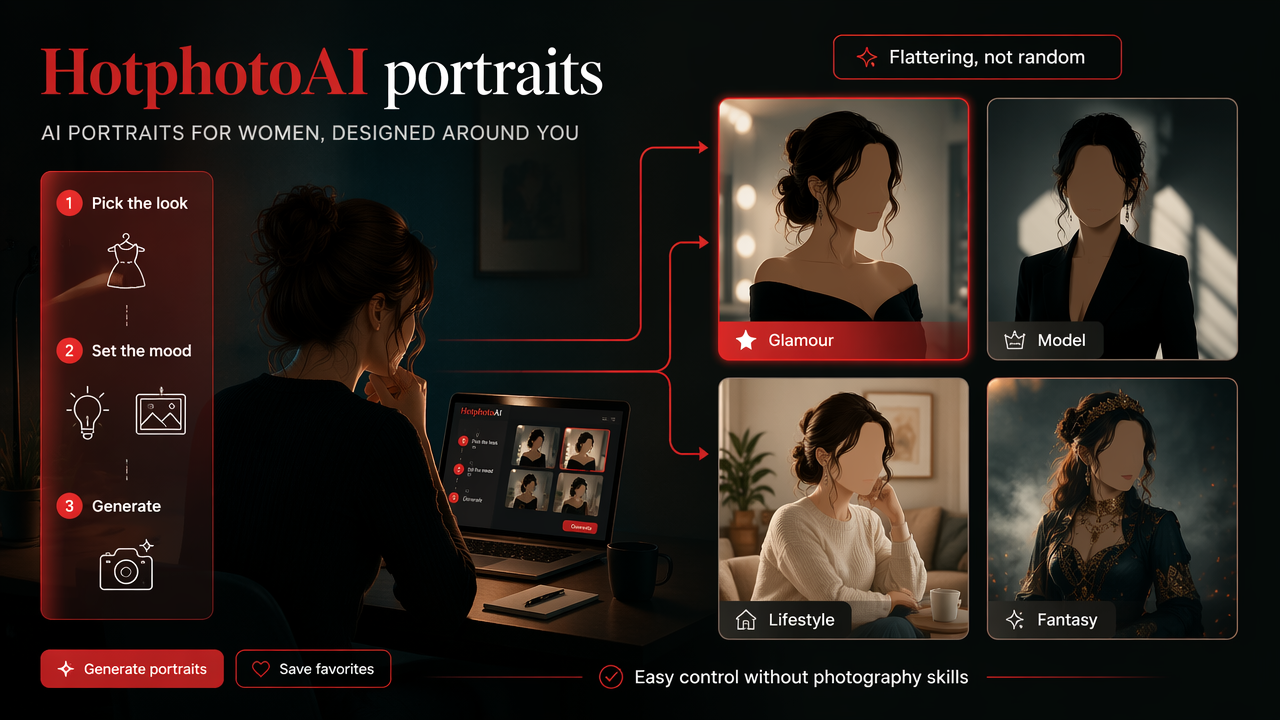
AI portrait tools are moving toward guided workflows. Instead of writing long prompts, users will likely choose scenarios: "first-date outfit," "founder headshot," "vacation lifestyle," "fitness photo," or "editorial glamour." That shift helps normal people get better results without learning model jargon.
Expect more control over:
- Identity lock: keeping your face consistent across many styles.
- Wardrobe swaps: changing outfits without changing your features.
- Background control: moving from studio to city to beach without a full reshoot.
- Expression editing: choosing softer smiles, stronger eye contact, or candid looks.
- Platform fit: crops optimized for Tinder, Instagram, LinkedIn, and creator profiles.
A 2023 review by Ahmed, Alam, and Hassan summarized current progress, uses, advantages, and challenges in deep learning models (Artificial Intelligence Review). For consumers, the practical takeaway is simple: image quality will keep improving, but control, consent, and realism will matter more than novelty.
If you're experimenting now, save your best prompts and style choices. Good AI photos are becoming less about luck and more about repeatable taste.
FAQ
What is the best AI photo generator for women's dating profiles?
The best choice for dating profiles is a portrait-focused generator that creates natural, confident lifestyle photos rather than overly polished model shots. Look for realistic lighting, varied outfits, and images that still look like you. Dating photos should feel approachable, not like a perfume campaign escaped into your camera roll.
Can AI make professional headshots for women?
Yes, AI can create professional-looking headshots for women when the tool supports clean backgrounds, business clothing, natural facial detail, and consistent identity. For LinkedIn or work profiles, choose simple styling: blazer, neutral background, soft light, and a direct expression. Avoid heavy glamour effects for formal uses.
Are AI-generated glamour photos realistic enough to post?
Many AI glamour photos are realistic enough to post if you choose restrained styles and inspect the details before sharing. The best outputs look like a polished photoshoot, not a plastic doll. Check hands, jewelry, hair edges, skin texture, and background objects before using them publicly.
How many AI photos should I generate before choosing one?
Generate enough images to compare variety across outfits, backgrounds, and expressions, then select only the strongest few. I'd rather use three believable photos than twenty almost-right ones. Quality control matters because small AI artifacts become obvious when someone zooms in, screenshots, or compares multiple images.
Conclusion
The best AI photo generator for women is the one that helps you create images with purpose: a better dating profile, a sharper professional presence, a stylish social feed, or a fantasy portrait that still feels intentional. Start with one use case, choose three styles, generate a batch, and keep only photos that pass the "would I actually post this?" test. If you want a portrait-first workflow, try HotphotoAI and head to hotphotoai.com to create a focused set of profile-ready images without booking a studio or bribing a friend with coffee.