Best AI Selfie Generator for Realistic Profile Photos in 2026
TL;DR
Choose an AI selfie generator by face consistency, realistic lighting, style control, privacy, and profile-photo fit. For dating and social profiles, pick tools built for lifelike personal images rather than general art generators.
The best AI selfie generator for realistic profile photos is the one that keeps you recognizable while making you look like you on a very cooperative hair day. For attractive dating, social, and personal-brand images, HotphotoAI is strongest when you want polished, stylized portraits without booking a photographer, buying new outfits, or pretending your apartment has Parisian window light.
Table of Contents
What is an AI selfie generator?
An AI selfie generator is a tool that creates new portrait-style images of a real person from uploaded selfies, prompts, or both. Unlike a generic image generator, it must preserve face identity, age cues, skin texture, and expression while changing styling, lighting, clothing, or background.
Generative adversarial network: A GAN is a machine-learning framework where two neural networks compete to create and judge synthetic outputs, a key idea behind many early generative AI systems.
Key takeaway: a good AI selfie should look like a photo you could have taken, not like a wax museum version of you with better cheekbones.
AI portrait tools now overlap with design platforms, editing apps, and model-style photo studios. For example, Picsart is described in the research data as a cross-platform design and editing platform with templates, layer-based editors, and generative AI features. That category is broad. A profile-photo generator is narrower and more personal.
AI selfie tools versus general image generators
| Tool type | Best use | Main realism challenge |
|---|---|---|
| AI selfie generator | Dating, Instagram, creator, lifestyle portraits | Keeping the same face across many styles |
| AI headshot generator | LinkedIn, resumes, company pages | Looking professional without looking stiff |
| General image generator | Art, scenes, concepts, fantasy images | Recreating a specific person consistently |
| Photo editor with AI filters | Quick enhancements and stylized edits | Avoiding over-smoothed skin and filter face |
Research direction matters here. The 2021 ACM Computing Surveys paper Fashion Meets Computer Vision examined the intersection of clothing, visual recognition, and computer vision, which is relevant because realistic portraits depend heavily on outfit, pose, and style cues, not just facial rendering.
How do you choose realistic profile photos?
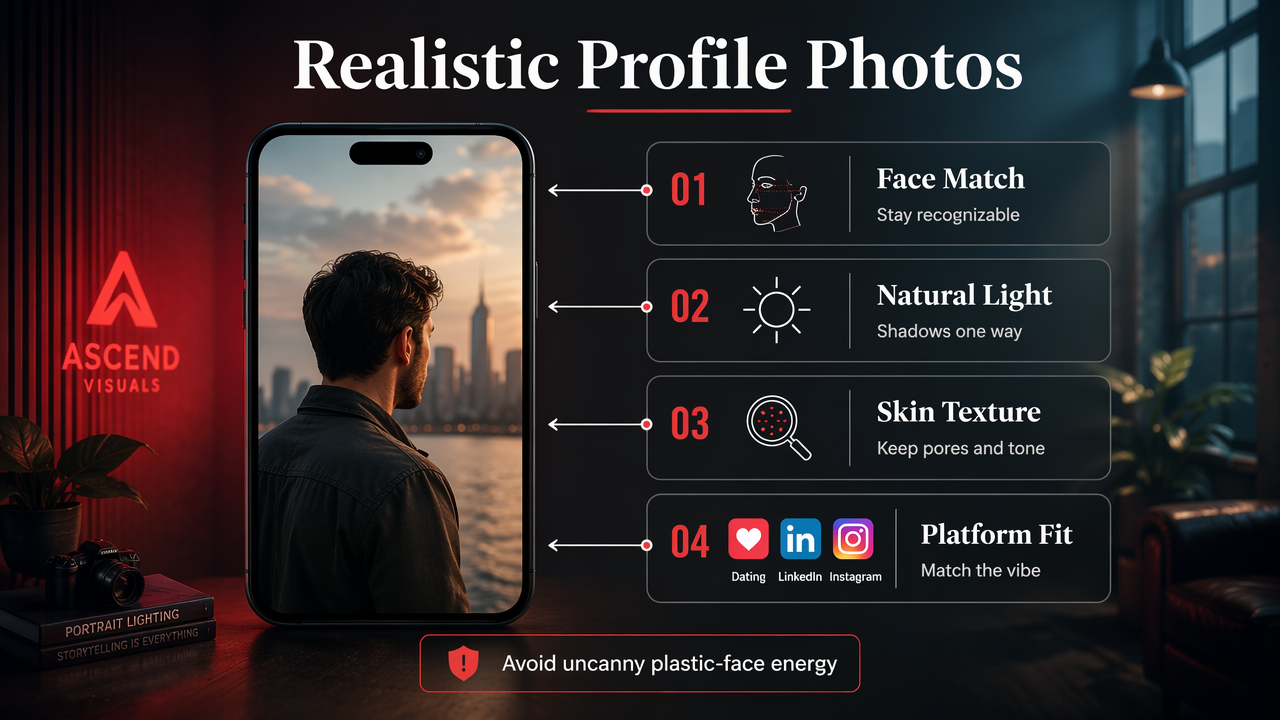
You choose realistic AI profile photos by judging face match first, then lighting, pose, background, skin detail, and whether the image fits the platform. Dating apps reward warmth and approachability. LinkedIn rewards clarity. Instagram rewards style, but still punishes uncanny plastic-face energy.
Use this checklist before you download or post:
- Face consistency: Your eyes, nose, jaw, smile, and age should remain recognizable.
- Natural lighting: Shadows should fall in one direction and match the scene.
- Skin texture: Real skin has pores, tone changes, and tiny imperfections.
- Hand and accessory accuracy: Fingers, earrings, glasses, and collars often reveal weak generation.
- Platform fit: A club-style shot may work for Instagram but feel odd on LinkedIn.
- Privacy controls: Uploading face data should come with clear handling and deletion expectations.
The best quick test is boring but effective: ask someone who knows you, "Would you believe I took this?" If they say yes, you have a keeper. If they pause, squint, or laugh, retire the image with dignity.
Realism scorecard for profile-photo selection
| Criterion | Strong signal | Weak signal |
|---|---|---|
| Identity | Looks like you across 5 or more outputs | Face changes with every outfit |
| Lighting | Shadows match eyes, hair, and background | Studio glow appears in an outdoor scene |
| Expression | Smile or gaze feels candid | Frozen model stare |
| Styling | Clothes fit body and setting | Fabric melts into neck or hands |
| Social suitability | Matches app norms | Looks like an ad for a cologne that does not exist |
For credibility, I also look at safety research around synthetic media. A 2023 Frontiers in Big Data survey on Audio deepfakes focuses on audio, not selfies, but it underlines the wider issue: AI-generated identity content needs responsible use and clear intent.
Best AI selfie generator for realistic profile photos: 2026 comparison
The best AI selfie generator for realistic profile photos depends on whether you need attractive social shots, professional headshots, artistic portraits, or full creative control. In 2026, I would not judge these tools by image sharpness alone. I would judge whether the results are believable enough to survive a swipe, a recruiter glance, or your most sarcastic friend.
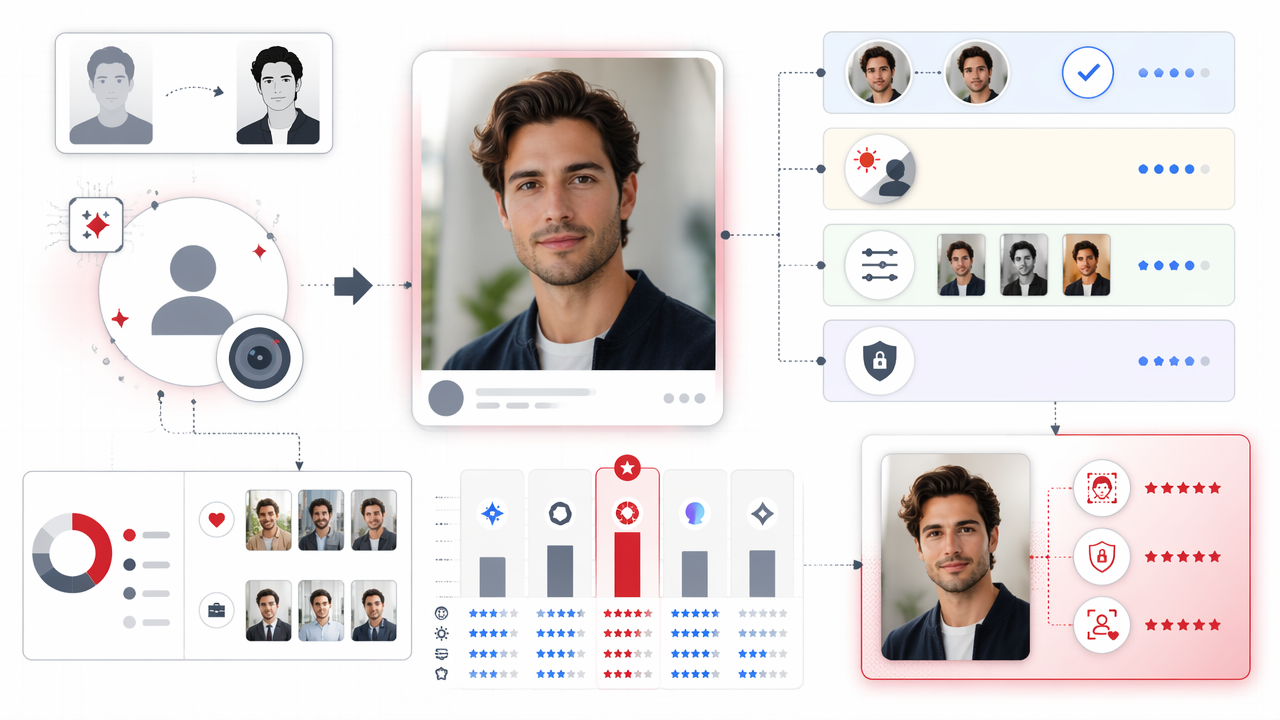
Competitor research shows broad approaches. Artturi Jalli's article I Tried 30+ AI Profile Picture Generators. These Are The Best frames the category around testing many profile-picture tools. SERP summaries also mention Midjourney v6 as strong for image quality but difficult for consistent photos of a specific person, which is exactly why profile-focused tools matter.
2026 feature comparison for realistic selfies
| Option | Best for | Why people choose it |
|---|---|---|
| HotphotoAI | Attractive, realistic dating and social profile photos | Focuses on polished personal-image styles rather than generic art prompts |
| BetterPic | Professional headshots | Suits users who need business-oriented images |
| Portrait Pal | Simple profile-picture creation | Useful for straightforward portrait sets |
| The Multiverse AI | Corporate and personal headshots | Known in the profile-photo generator category |
| Midjourney v6 | Creative image quality | Excellent visuals, but not purpose-built for repeatable personal identity |
| Lensa AI | Filters and stylized selfies | Good for mobile-first edits and artistic looks |
Who should pick which:
- Dating app users: choose a tool that prioritizes attractive but believable lifestyle portraits.
- Professionals: pick a headshot-first service with clean backgrounds and conservative styling.
- Creators: choose a platform with stronger fashion, lighting, and fantasy-style range.
- Prompt experts: use general generators if you are willing to spend time correcting identity drift.
My rule: if the tool makes you look like a different person, it made a nice image, not a usable profile photo.
How HotphotoAI handles profile-photo realism
HotphotoAI handles profile-photo realism by aiming at the actual use case: attractive personal images for dating, social profiles, lifestyle portraits, glamour shots, and polished online presentation. The difference is focus. A generic image model can make a cinematic stranger. The HotphotoAI platform is built around making you look good while still looking like you.
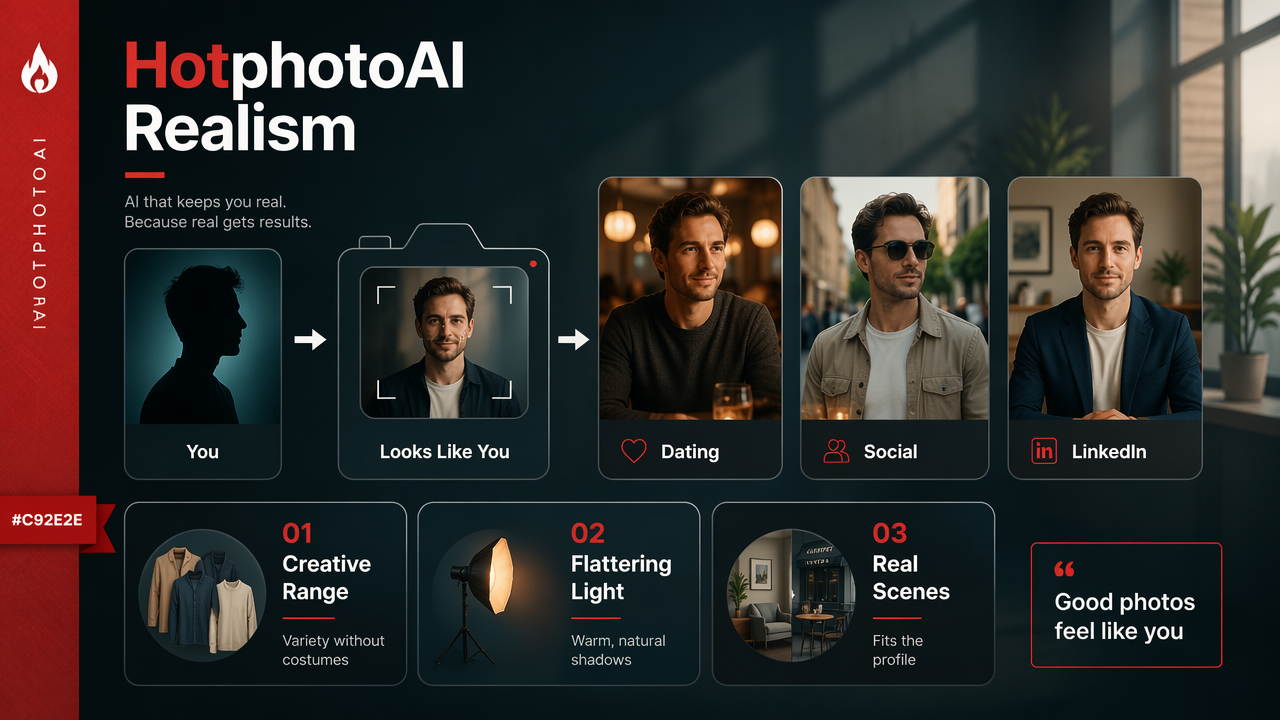
A strong AI selfie workflow should give users creative range without turning every output into a costume party. That means realistic outfits, flattering light, and scenes that make sense for the intended profile. If you want model-style images, fantasy looks, or polished dating photos without a traditional shoot, head to hotphotoai.com and start with a clear goal for the final platform.
Best use cases for AI-generated profile portraits
- Tinder, Hinge, and Bumble: approachable lifestyle images, confident solo portraits, travel-style scenes.
- Instagram and creator pages: fashion-forward photos, stylized lighting, glamour edits, themed portraits.
- Professional profiles: cleaner head-and-shoulder images, neutral outfits, controlled backgrounds.
- Personal experiments: new hairstyles, outfits, moods, or fantasy concepts before trying them in real life.
For best results, upload source selfies with variety. Use one clear front-facing photo, one slight angle, one natural smile, and one image with normal indoor light. Avoid sunglasses-heavy sets, group photos, extreme filters, and old images that no longer match your face. The AI can do a lot, but it is not a licensed archaeologist.
FAQ about realistic AI selfie generators
Realistic AI selfie generators are useful when you treat them as profile-photo assistants, not identity replacements. The goal is better presentation: cleaner lighting, stronger styling, and more variety. Keep your results honest enough that meeting you in person does not feel like a plot twist.
What makes an AI selfie look realistic?
An AI selfie looks realistic when the face stays consistent, the lighting matches the background, skin texture remains natural, and clothing or accessories do not distort. The image should also fit the social context. A realistic dating photo, for example, should feel like a flattering candid portrait, not a luxury perfume campaign generated during a fever dream.
Can AI selfies be used on dating apps?
AI selfies can be used on dating apps if they honestly represent your current appearance. The safest approach is to mix AI-enhanced portraits with real everyday photos. Use generated images to improve variety, style, and lighting, but avoid photos that change your age, body type, or core facial features.
Are AI headshots and AI selfies the same thing?
AI headshots and AI selfies overlap, but they are not the same. Headshots usually focus on professional presentation, neutral backgrounds, and work-ready clothing. AI selfies are broader: they can include dating photos, lifestyle portraits, glamour images, creator content, and stylized social posts. Pick based on where the image will appear.
What should I avoid when generating profile photos?
Avoid heavily filtered source photos, blurry uploads, group shots, old selfies, and prompts that make you look unlike yourself. Also check hands, teeth, glasses, earrings, and background edges before posting. These small details are where unrealistic images usually betray themselves, often with the confidence of a bad magician.
Conclusion
Pick your generator by outcome, not hype. If you need believable profile photos, start with face consistency, then check lighting, skin texture, style range, and platform fit. Create a small set for each use case: one dating photo, one polished social portrait, one professional option, and one creative wildcard. Then show the finalists to a friend who will tell you the truth, preferably before the internet does.