Can You Use AI Generated Photos on Dating Apps? Rules, Ethics, and Better Matches
TL;DR
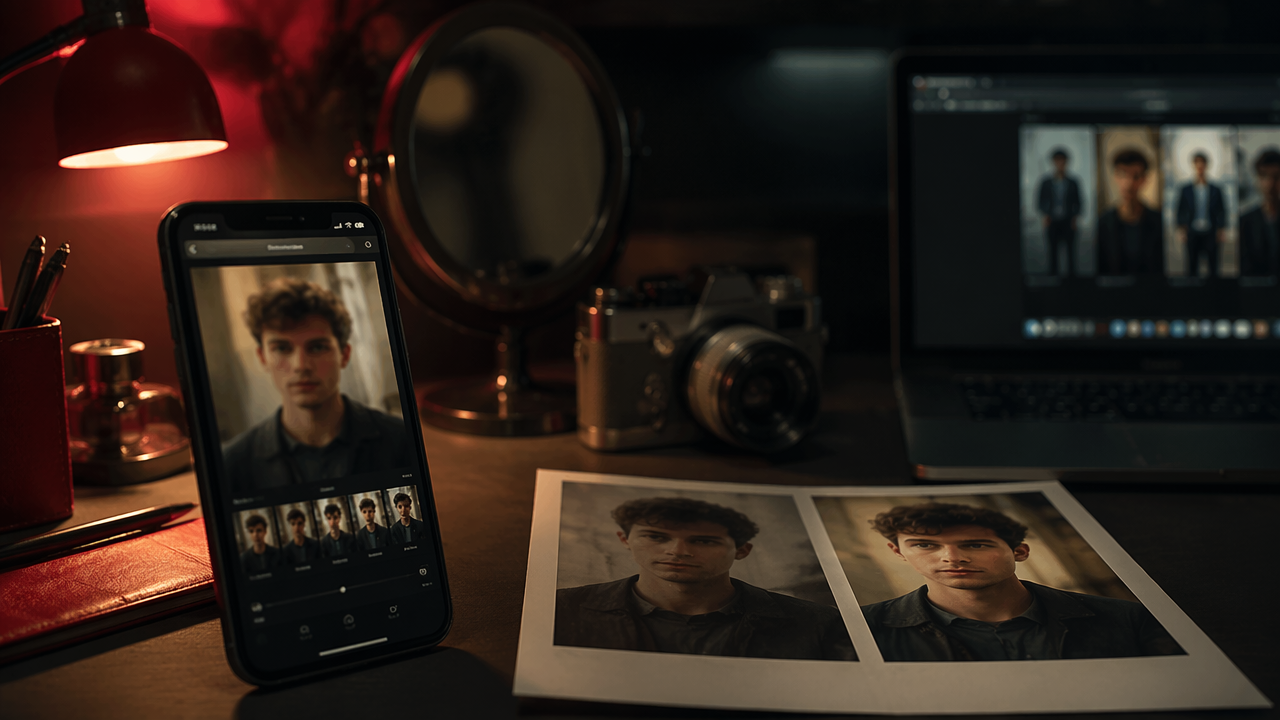
Yes, you can usually use AI generated photos on dating apps if they still look like you, but overly fake, deceptive, or identity-misrepresenting images can hurt trust fast. Use AI to improve lighting, outfits, settings, and polish, not to invent a different face, body, age, or lifestyle.
Can you use AI generated photos on dating apps without getting banned, roasted, or quietly left-swiped into oblivion? Usually, yes, but the real question is whether the photo honestly represents you. A dating app is a mobile online dating service that often uses profiles, photos, messaging, and location features to help people meet. AI generated dating photos: images created or enhanced by artificial intelligence to show a person in different lighting, outfits, backgrounds, or styles. Tools like HotphotoAI are useful when the goal is a polished version of you, not a suspiciously perfect cousin from another timeline.
Table of Contents
Can you use AI generated photos on dating apps in 2026?
Yes, you can use AI generated photos on dating apps in many cases, but you should treat them like edited photos: acceptable when accurate, risky when deceptive, and damaging when they create a false identity. Tinder, Bumble, Hinge, Match, OkCupid, and similar apps mainly care about authenticity, safety, and user trust.
Most dating platforms do not publish a simple universal rule that says "AI photos allowed" or "AI photos banned." The practical standard is clearer: your photos should show the person someone will actually meet. If an image changes your facial structure, age, body shape, or lifestyle beyond recognition, it crosses from enhancement into catfishing territory.
Key insight: AI dating photos work best when they solve a photo problem, not a truth problem.
Generative AI is now part of mainstream media creation. John V. Pavlik's 2023 work on generative AI in journalism and media education examined how tools like ChatGPT affect content creation, verification, and media practice. Dating profiles face a similar tension: better creation tools are useful, but verification and trust still matter.
What counts as acceptable AI use?
Acceptable AI use keeps your identity intact while improving presentation. Think better lighting, cleaner backgrounds, outfit variation, and professional-looking composition.
Good uses include:
- Creating a lifestyle-style portrait from real selfies
- Testing outfits, colors, or locations you might actually choose
- Fixing poor lighting or awkward framing
- Making a sharper profile photo for Tinder, Bumble, Hinge, or social media
- Producing a polished headshot that still looks like you on a normal Tuesday
The HotphotoAI platform is built around that practical sweet spot: improving profile appeal while keeping the subject recognizable.
When do AI dating photos become misleading?
AI dating photos become misleading when they change the facts a match uses to decide whether to meet you. That includes altering your face, age, body, height cues, hairline, disability, relationship status, or lifestyle in a way that would surprise someone in person.
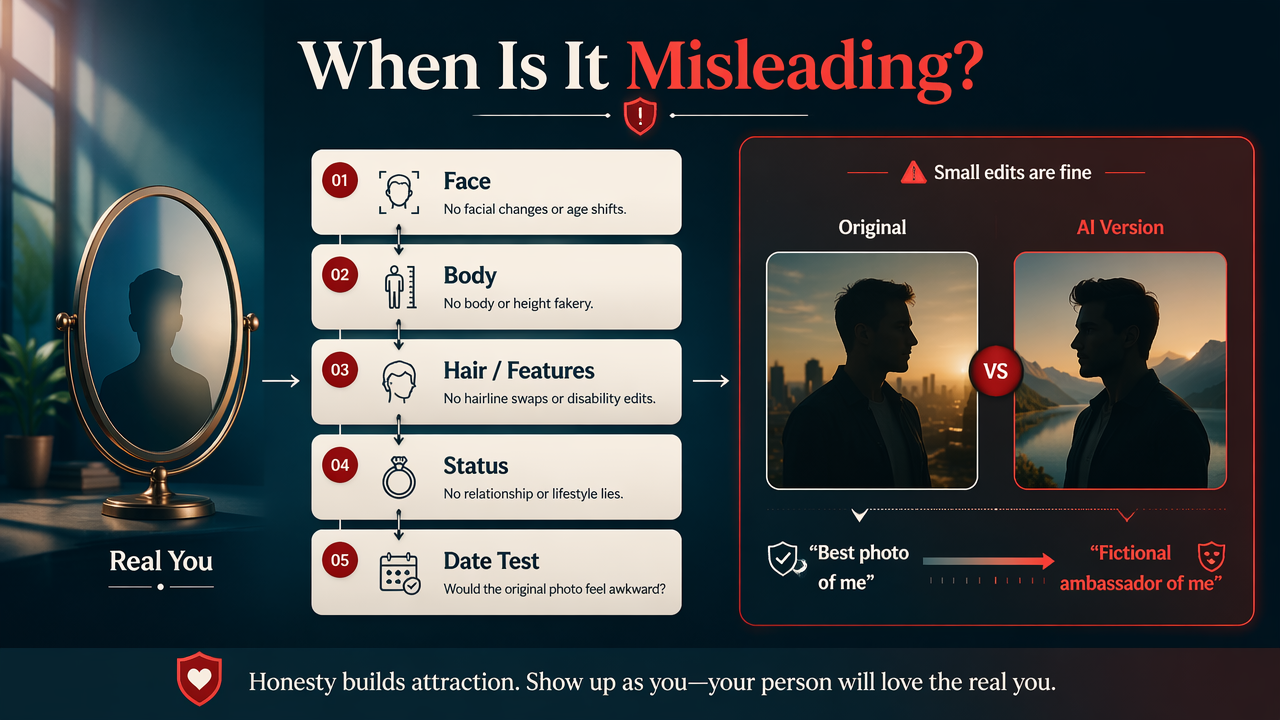
Small edits are normal. Everyone understands flattering light, a good angle, and a decent shirt can perform minor miracles. The problem starts when AI turns "best photo of me" into "fictional ambassador of me."
A simple test helps: would you feel awkward if your date saw the original input photo next to the AI version? If yes, dial it back.
AI dating photo risk table
| AI photo choice | Usually okay? | Why it matters |
|---|---|---|
| Better lighting and sharper image | Yes | Improves quality without changing identity |
| New outfit or realistic background | Yes | Shows style options while keeping you recognizable |
| Slimmer body or altered jawline | Risky | Changes physical traits a match expects in person |
| Younger-looking skin or removed age signs | Risky | Can misrepresent age and appearance |
| Luxury cars, private jets, fake travel scenes | No | Signals a lifestyle that may not exist |
| Fully synthetic person based on you | No | Creates identity confusion and trust issues |
The safest AI photo looks like something a talented photographer could have captured on a good day. The riskiest one looks like a perfume ad escaped and joined Hinge.
Why trust matters more than polish
Dating apps are not portfolio sites. They are trust machines with flirting attached. A great photo may earn the first tap, but the first date audits the profile in real time.
Research by Pawan Budhwar and coauthors on generative AI in human resource management discusses how AI changes evaluation, decision-making, and trust in professional settings. Dating is less formal, thankfully, but the same principle applies: people react badly when AI makes evaluation feel manipulated.
How should you use AI photos without hurting matches?
Use AI photos on dating apps by keeping them realistic, mixing them with candid images, and avoiding anything that invents a fake identity. The best profile feels upgraded, not manufactured. I'd use AI for the lead image or one styled shot, then support it with real-life photos that prove range and authenticity.
A safe 5-step profile photo method
- Start with real images of your face. Use clear selfies or existing portraits where you look like yourself.
- Choose realistic styles. Pick outfits, lighting, and backgrounds that match your actual taste.
- Reject identity-changing outputs. Skip photos with different facial proportions, body size, or age cues.
- Use one or two AI images max. Balance them with candid photos, hobbies, friends, pets, or travel.
- Check with a blunt friend. Ask, "Would you recognize me from this at a coffee shop?"
For most users, this method gives the benefits of AI without making the profile feel like a suspicious software demo.
Best places to use AI images in a dating profile
Your first photo should be clear, warm, and recognizable. An AI-enhanced portrait can work well here if it looks natural. A second styled photo can show personality, such as a city night look, clean studio portrait, or smart casual scene.
Avoid using AI for every slot. A full grid of glossy images can feel less like romance and more like a LinkedIn keynote with cheekbones.
A balanced profile might include:
- 1 AI-enhanced headshot
- 1 full-body candid photo
- 1 hobby or activity photo
- 1 social or outdoor photo
- 1 relaxed everyday image
If you want to create polished but believable images, head to hotphotoai.com and start with photos that already resemble how you look in real life.
How do Tinder, Bumble, and Hinge users judge AI photos?
Dating app users judge AI photos by realism, consistency, and emotional honesty, not by whether AI was involved at all. If the photo looks like you and fits the rest of the profile, many people won't care. If it looks too perfect, inconsistent, or fake, suspicion arrives before chemistry does.
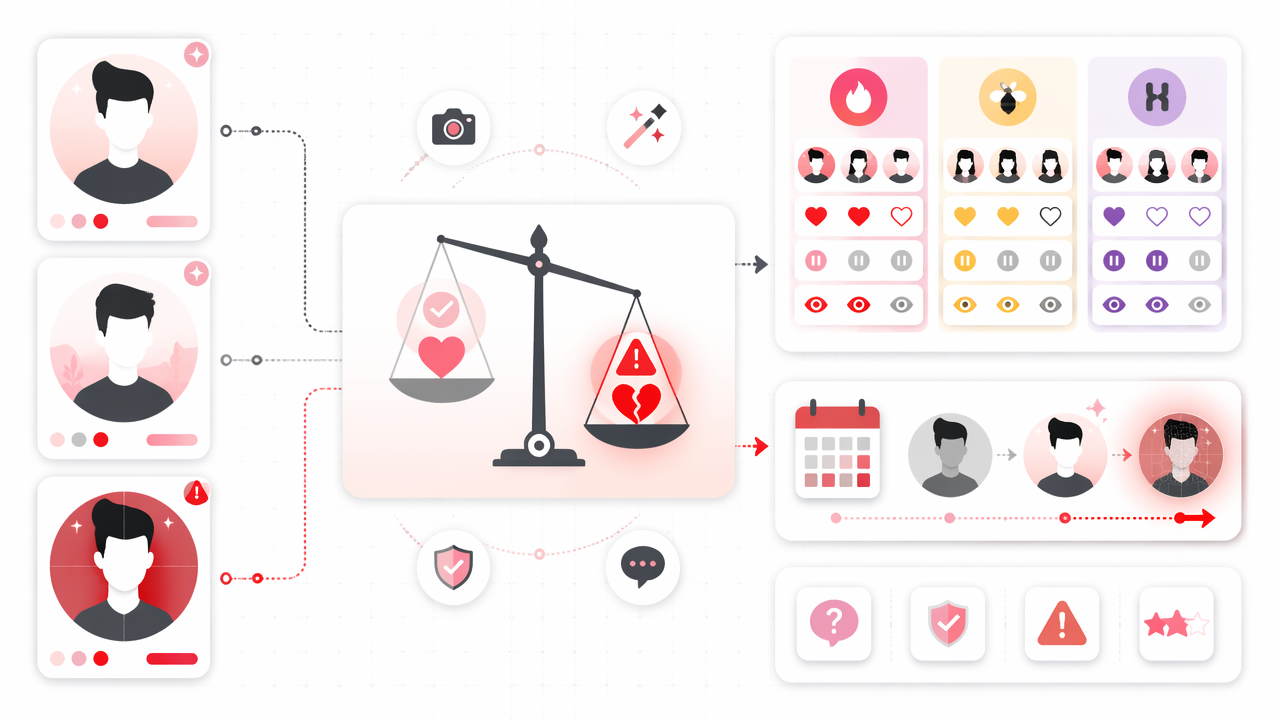
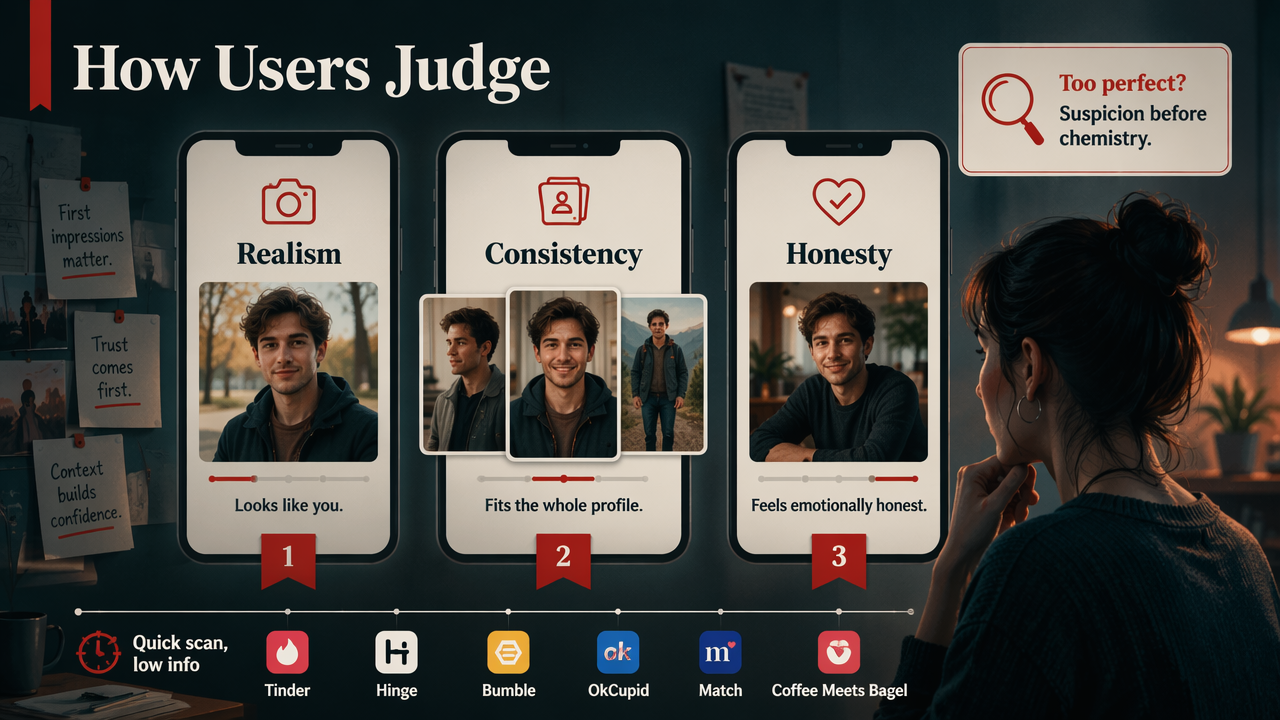
Bumble, launched in 2014 by Whitney Wolfe Herd, helped make profile presentation central to mobile dating culture. Tinder, Hinge, Bumble, OkCupid, Match, and Coffee Meets Bagel all rely heavily on photos because users make quick judgments under low-information conditions.
What users tend to notice first
People rarely analyze AI artifacts like a forensic lab. They notice vibes. Hands may look odd, skin may seem too waxy, backgrounds may feel staged, or every image may have the same model-like expression.
Watch for these profile credibility signals:
- Your face looks consistent across all photos
- Skin texture still looks human
- Teeth, fingers, glasses, and jewelry are not warped
- The setting matches your real lifestyle
- Your bio sounds like the same person in the pictures
Practical rule: If your profile photo says "villa in Monaco" but your bio says "mostly laundry and tacos," the tacos are probably more believable.
Should you disclose AI photos?
You do not always need a formal disclosure for lightly enhanced images. People usually do not disclose portrait lighting, acne removal, or color correction either. Still, disclosure is smart if the image is heavily stylized or fantasy-based.
A casual line works better than a legal disclaimer. Try: "One photo is AI-styled, but yes, that is actually my face." That sentence does two things at once: it removes suspicion and shows you have a sense of humor, an underrated dating technology.
What will change for AI dating photos in 2027?
AI dating photos will likely face more labeling, verification, and authenticity checks in 2027 as dating platforms respond to synthetic media. The trend is not "AI disappears." The trend is "AI becomes normal, but fake identity gets harder to hide."
Expect more apps to separate enhancement from deception. Verification badges, selfie checks, and media authenticity signals may become more common. The strongest profiles will use AI as a creative layer while still proving there is a real person behind the pixels.
What to expect next
Likely shifts include:
- More profile verification prompts
- Better detection of synthetic faces and altered media
- User preferences for "verified recent photos"
- More AI-assisted photo tools built into dating workflows
- Greater tolerance for stylized images when clearly realistic
Creators, professionals, and dating app users will still want better images. That demand is not going anywhere. The winners will be the people who use AI with taste, restraint, and a healthy fear of looking like a wax museum influencer.
With HotphotoAI, the better strategy is simple: make images that increase confidence before the match and still feel honest after the meetup.
FAQ about AI generated photos on dating apps
AI dating photos raise the same core question from different angles: how much polish is fair before it becomes misrepresentation? These answers cover the practical edge cases people run into most often.
Can dating apps ban you for AI generated photos?
A dating app may take action if AI images violate authenticity, impersonation, nudity, scam, or safety policies. A realistic image based on your own face is far less risky than a synthetic identity or fake lifestyle scene. Always check the current rules of the app you use, because policies can change.
Are AI photos catfishing?
AI photos are not automatically catfishing. They become catfishing when they make you look like a different person or create expectations you cannot honestly meet. Better lighting, styling, and backgrounds are usually presentation choices. A different face, body, age, or life story is deception.
How many AI photos should I use on Tinder or Hinge?
Use one or two AI-enhanced photos, then add candid, recent images that show your real life. A profile made entirely of polished AI portraits may feel too staged. A mixed set gives you the benefit of a strong first impression while keeping enough proof that you are real.
What is the safest way to make AI dating photos?
Use recent real photos as inputs, choose natural styles, and reject outputs that change your identity. Compare the final image with how you look on video or in a mirror. If the AI version would make a date feel tricked, don't use it.
Conclusion
can you use AI generated photos on dating apps? Yes, if they are honest, current, and recognizably you. Use AI to solve bad lighting, awkward selfies, limited outfits, and boring backgrounds. Don't use it to borrow someone else's face, body, age, bank account, or vacation history.
My practical recommendation: create one polished lead photo, add one styled supporting image, then fill the rest of your profile with candid proof of real life. If you want model-style photos without booking a studio shoot, try HotphotoAI, compare every output against the "would my date recognize me?" test, and visit hotphotoai.com when you're ready to build a profile that looks better without getting weird.