Custom AI Photo Products: A 2026 Guide to AI Portraits, Profile Photos, and Stylized Image Packs
TL;DR
Custom AI photo products are best for people who need polished portraits, dating photos, social content, or creative character images without booking a studio shoot. Start with the use case, provide clear face references, and choose outputs that look credible for the platform where you'll use them.
A phone selfie can now become a dating profile shot, model-style portrait, fantasy scene, or polished professional image before your coffee gets cold. Custom AI photo products turn personal reference photos into tailored image sets, and platforms like HotphotoAI make that workflow approachable for people who want better portraits without renting lights, outfits, and a suspiciously expensive white backdrop.
Custom AI photo product: a personalized image output created by generative AI from user inputs such as selfies, style prompts, clothing preferences, backgrounds, poses, or target use cases.
Table of Contents
What are custom AI photo products?
Custom AI photo products are personalized image services that generate, edit, or restyle photos for a specific user, goal, and visual style. In 2026, the most common versions include AI headshots, dating app photos, lifestyle portraits, model-style shoots, fantasy images, avatar packs, and social content bundles.
These products sit between classic photo editing and a traditional photoshoot. Instead of only fixing brightness or removing a blemish, the system creates a new scene, outfit, pose, or aesthetic around the user's identity.
Research on deep learning by Alzubaidi, Zhang, Humaidi, and colleagues explains the broader technical base behind modern image systems, especially convolutional neural networks and their applications in visual tasks (Journal of Big Data, 2021). Generative models add the creative layer: they don't just classify images, they produce new ones.
Core terminology for buyers
- Reference image: the selfie or photo set used to capture your face, hair, proportions, and general identity.
- Prompt: the written instruction, such as "studio portrait in a black suit" or "golden-hour beach lifestyle photo."
- Style pack: a grouped set of outputs around one theme, such as dating, business, glamour, travel, or fantasy.
- AI portrait: a generated personal image where the main subject is a recognizable person, not a generic stock model.
Key insight: the "product" is not just the final image. It is the combination of identity input, style direction, generation model, editing controls, and export format.
Which AI photo product fits your goal?
The right AI portrait product depends on where the image will be used and how realistic it needs to look. A Tinder photo should feel candid and socially credible, while a fantasy portrait can be theatrical enough to make a Renaissance painter ask about GPU prices.
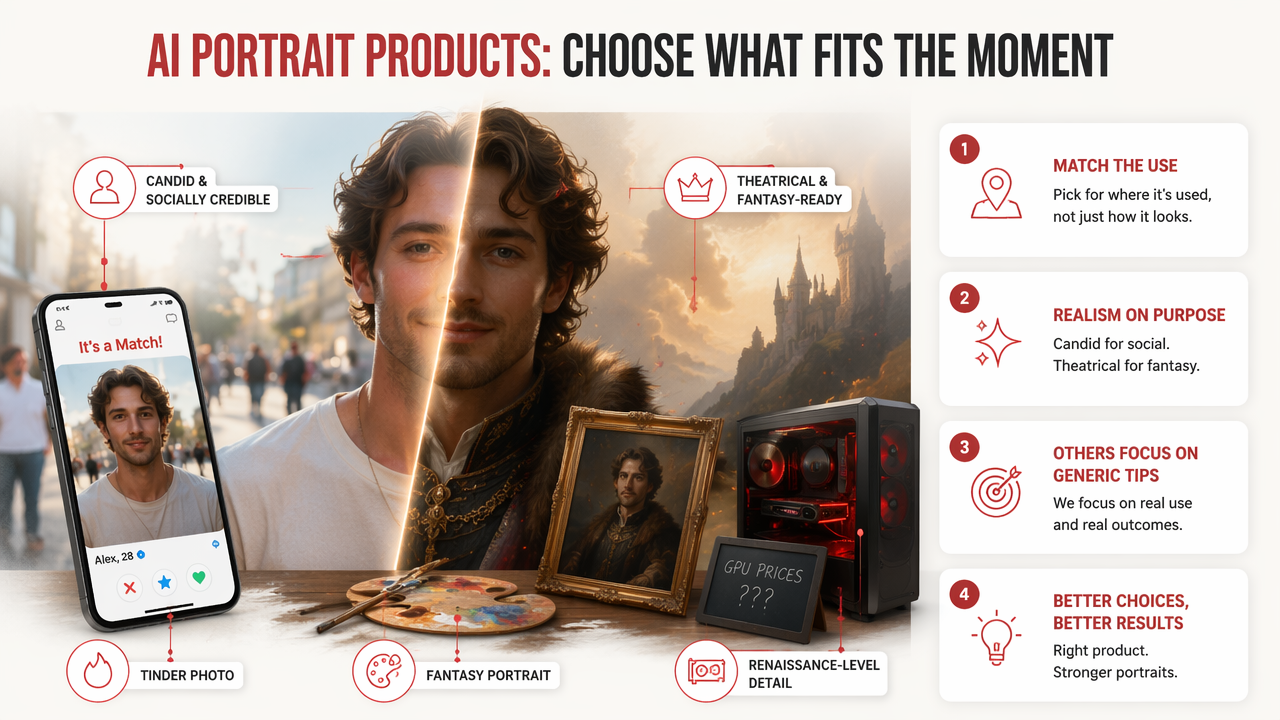
Competitor pages in the current search results focus heavily on e-commerce product photography, with tools such as Claid, Canva Apps, Pebblely, and Flair.ai emphasizing brand-style product scenes, templates, and bulk generation. Personal AI portrait products need a different buying lens: identity consistency, attractiveness, realism, styling range, and platform fit.
Taxonomy of popular AI photo products
| Product type | Best for | Inputs required | Realism target |
|---|---|---|---|
| Dating profile photos | Tinder, Hinge, Bumble users | Clear selfies, vibe, outfits, settings | High, candid, believable |
| Professional headshots | LinkedIn, resumes, company bios | Face references, dress code, backdrop | High, polished, conservative |
| Lifestyle portraits | Instagram, creator content, personal branding | Selfies, location themes, mood | Medium to high |
| Model-style shoots | Glamour, fashion, portfolio looks | Face photos, body framing, wardrobe prompts | Stylized but recognizable |
| Fantasy portraits | Cosplay, gaming, character art | Selfies, genre, costume, world prompt | Flexible, creative |
| Social content packs | Reels covers, posts, profile refreshes | Brand colors, aesthetics, platform sizes | Consistent and scroll-ready |
For most users, I'd start with one practical pack and one experimental pack. The practical set gives you images you can post today. The experimental set shows what the model can do when you loosen the tie, literally or visually.
How do custom AI photo products work?
Custom AI photo products work by combining identity capture, prompt interpretation, image generation, and post-processing into a repeatable workflow. The user provides photos and creative direction, then the system generates multiple candidate images that can be selected, refined, downloaded, or used across profiles and social channels.
The GPT-4 Technical Report from OpenAI describes progress in multimodal AI systems that can process visual and textual inputs. That matters because photo products increasingly depend on both: the face in the image and the intent in the prompt.
A simple workflow from selfie to finished portrait
- Upload reference photos: use sharp, varied images with different angles and expressions.
- Choose a goal: dating, career, glamour, lifestyle, fantasy, or creator content.
- Set visual direction: pick outfits, lighting, background, mood, and framing.
- Generate variations: create enough options to avoid settling for the first decent result.
- Review identity match: check face shape, eyes, smile, hairline, and hands.
- Export by platform: crop for LinkedIn, Tinder, Instagram, X, or portfolio use.
Companies building these systems usually operate as software businesses, not photo studios. A company, in the standard business sense, is a legal entity organized around a shared objective, often profit or public benefit. In this category, that objective is turning visual AI into a repeatable creative service.
How HotphotoAI handles AI portrait products
HotphotoAI focuses on custom portrait generation for people who want attractive, stylized personal images rather than generic product shots. The strongest fit is users who want dating photos, glamour portraits, model-style images, lifestyle scenes, or fantasy looks without planning a traditional shoot.
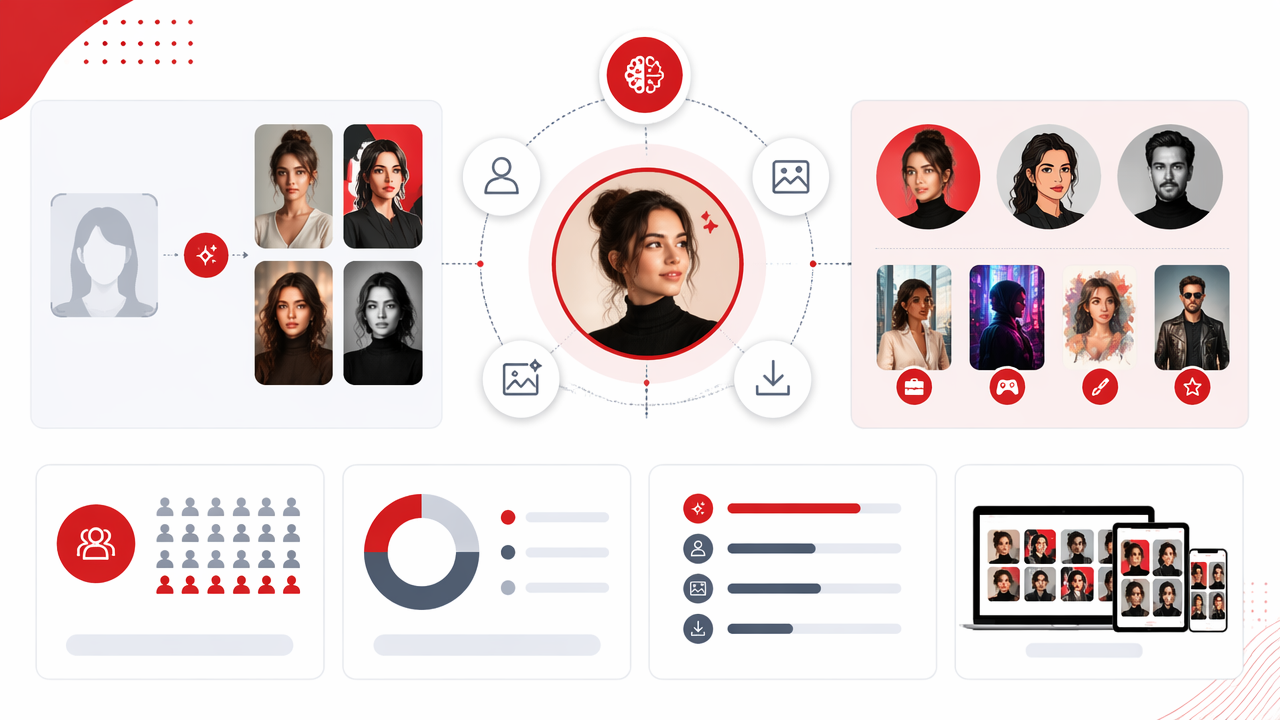
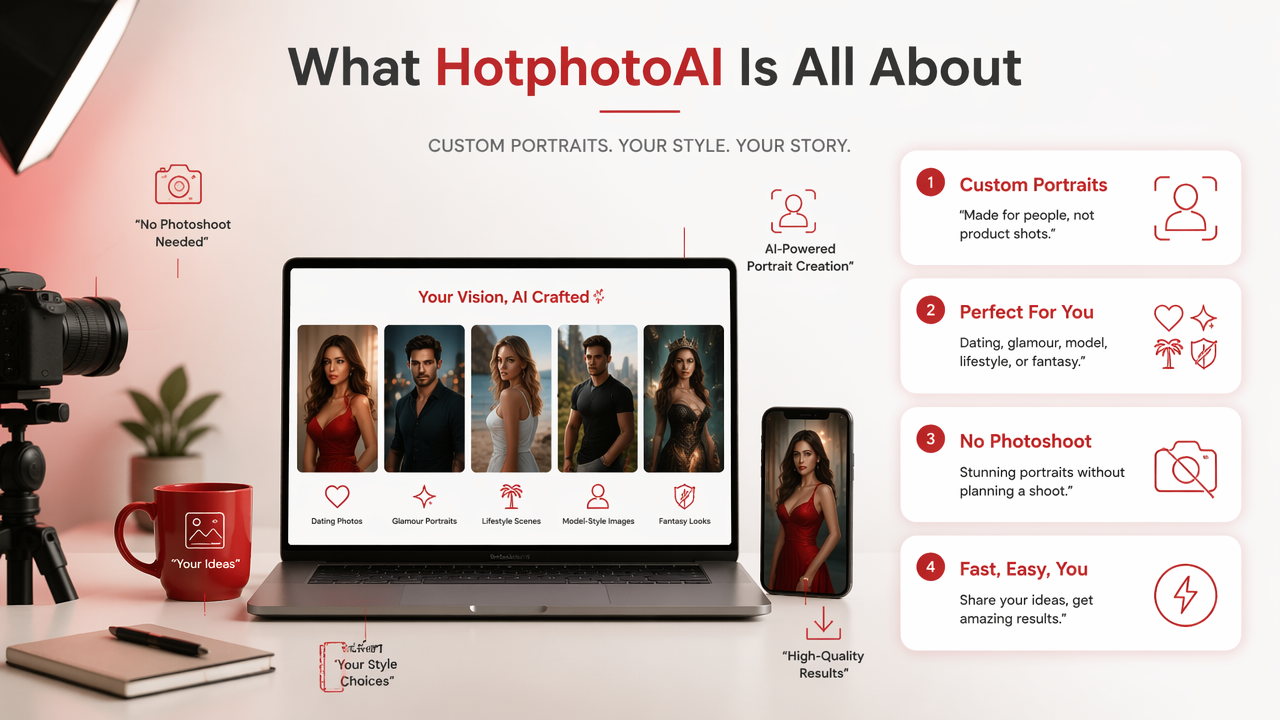
The HotphotoAI platform is most useful when the desired output is personal and expressive. If your goal is "make me look like the best version of myself in a believable scene," that is a different challenge from placing a shampoo bottle on a marble counter.
HotphotoAI versus adjacent photo tools
| Platform type | Primary focus | Best user | Main output |
|---|---|---|---|
| HotphotoAI | Personalized AI portraits and stylized personal photos | Dating app users, creators, professionals, portrait experimenters | Custom face-based image sets |
| Claid-style tools | Product and fashion photography at scale | E-commerce brands and marketplaces | Product visuals, model edits, brand scenes |
| Canva-style apps | Template-based design plus AI image generation | General creators and small teams | Designs, posts, simple product images |
| Pebblely-style tools | Product scene generation | Shopify, Amazon, and DTC sellers | Backgrounds and marketing product photos |
| Picsart-style editors | Cross-platform design, image, and video editing with templates and AI features | Mobile creators and social editors | Edited images, videos, graphics |
Who should pick which is simple. Choose a product-photo generator when the subject is an object. Choose a design editor when the final asset needs layouts and text. Choose HotphotoAI when the subject is you, your look, and the impression your profile makes. For direct exploration, head to hotphotoai.com.
What should buyers check before ordering?
Buyers should check input requirements, identity accuracy, image rights, realism level, export quality, and use-case fit before paying for any AI portrait pack. A pretty image that fails as a real profile photo is just digital costume jewelry: shiny, fun, and not always useful.
Bad outputs usually come from weak references, vague prompts, or choosing the wrong style for the platform. A dramatic fantasy portrait may perform beautifully as character art but look odd on a professional bio. A corporate headshot may be perfect for LinkedIn and painfully boring for a dating app.
Quality checklist before you post
- Face match: eyes, mouth, jawline, age, and hair should look like you.
- Context match: the setting should make sense for the platform.
- Lighting: avoid plastic skin, blown highlights, and wax-museum shadows.
- Hands and accessories: inspect fingers, glasses, earrings, watches, and collars.
- Image honesty: don't use a portrait that misrepresents your current appearance.
- Export size: make sure the image stays sharp after app compression.
A useful AI photo should pass the "would a friend recognize me?" test and the "would a stranger believe this photo could exist?" test.
FAQ about custom AI photo products
Custom AI photo products raise practical questions about realism, inputs, use cases, and what to expect from the final image set. These answers cover the decisions most buyers make before uploading photos.
Are AI-generated profile photos acceptable for dating apps?
AI-generated profile photos can work for dating apps when they look realistic, current, and recognizably like you. The safest approach is to use them as polished lifestyle images, not fake travel flexes or impossible body changes. Keep at least one natural phone photo in the mix so your profile feels grounded.
How many photos should I upload for better results?
Most portrait workflows perform better when you provide several clear reference images instead of one perfect selfie. Use different angles, expressions, lighting conditions, and outfits. Avoid heavy filters, sunglasses, group shots, and low-resolution crops because the system needs clean identity signals to generate consistent portraits.
Can AI photo products replace a professional photographer?
They can replace some casual shoots, especially for profile refreshes, creator content, fantasy portraits, and quick professional images. They don't fully replace a photographer when you need event coverage, exact art direction, controlled brand campaigns, or guaranteed real-world authenticity. Think of AI portraits as a fast creative studio, not a camera crew.
What will change in 2027?
Expect more interactive control in 2027: better face consistency, editable poses, stronger clothing control, and outputs sized automatically for different platforms. The market is likely to split further between e-commerce product photography tools and personal portrait tools. That split helps buyers choose faster and waste fewer generations.
Conclusion
Custom AI photo products are moving from novelty to normal profile maintenance. Start by choosing the outcome, dating, professional, lifestyle, glamour, or fantasy, then provide strong references and judge results by realism, identity match, and platform fit.
If your priority is personal portraits rather than product scenes, try a focused workflow with HotphotoAI and compare a practical pack against a creative one. Visit hotphotoai.com, choose the image style that matches your next profile goal, and generate a set you'd actually be comfortable posting.