Facetune Alternatives for AI Profile Photos: A 2026 Guide
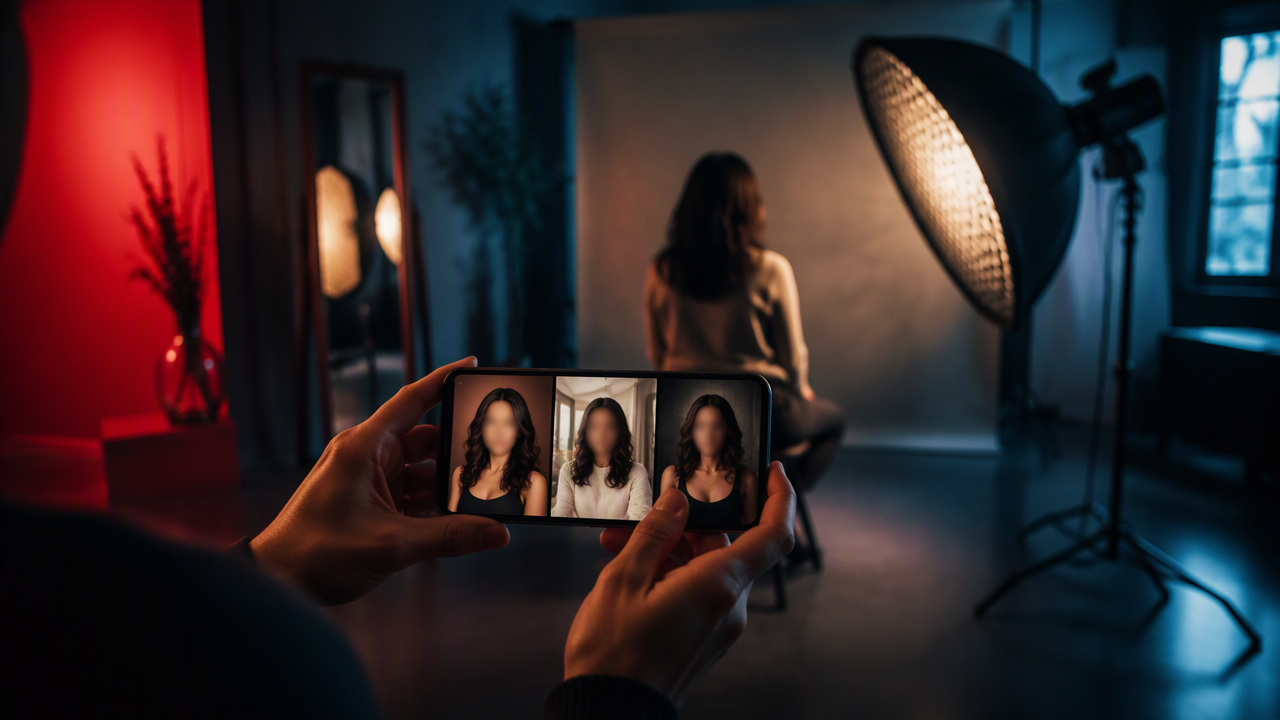
TL;DR
Choose a portrait generator for new photo concepts, a selfie enhancer for better clarity, or a retouching app for small corrections. For dating profiles, prioritize face accuracy over glamour and compare every candidate with a recent, unfiltered photo before uploading.
Your best profile photo should look like you on a good day, not your fictional celebrity cousin. Choosing Facetune alternatives for AI profile photos starts with deciding whether you need a new portrait or a better version of an existing selfie. HotphotoAI belongs on the shortlist for readers exploring AI personal portraits. I'd judge any option by recognizable features, believable lighting, and whether the finished image suits its destination.
AI profile photo: A personal image created or modified with artificial intelligence for use on a dating app, social network, or professional profile.
Table of Contents
What separates the main Facetune alternatives?
Facetune alternatives differ primarily in whether they generate portraits, enhance existing selfies, retouch selected details, or change the surrounding scene. These workflows solve different problems: a sharper selfie is not a new photoshoot, and an outfit change does not automatically improve facial accuracy. Choose the workflow before comparing subscriptions.
Portrait generators, enhancers, and editors compared
The comparison below describes buying priorities, not verified performance rankings. No hands-on testing or current pricing data was supplied for this guide.
| Option | Main buying purpose | Realism and face-accuracy check | Ease-of-use question | Profile fit |
|---|---|---|---|---|
| HotphotoAI | Explore AI personal-portrait concepts | Does the portrait preserve your defining features? | Can you reach a usable concept with clear inputs? | Dating, social, or styled personal imagery |
| Selfie enhancers, such as Citrus | Improve an existing selfie's clarity | Does added detail remain believable? | Is a quick enhancement enough? | An already strong photo |
| Retouching apps, including Facetune alternatives | Make selective corrections | Are facial proportions unchanged? | Are adjustments easy to control? | Small edits to a real photo |
| Background and outfit tools | Change a portrait's setting or styling | Do edges, shadows, and clothing agree? | Can you keep the original face intact? | A specific visual theme |
The supplied 2026 SERP research describes Citrus as a one-tap AI enhancer. It doesn't establish that any tool wins on face accuracy, so I wouldn't turn that description into a realism leaderboard.
Pick the smallest intervention that solves your photo problem. More AI isn't automatically more attractive.
Who should pick which photo workflow?
Dating-app users should prioritize recognizable portraits, creators can allow more visible styling, and professionals should favor restrained presentation. The right workflow depends on what the photo must communicate. I'd choose based on the intended audience first, then consider how much editing or generation the starting image actually needs.
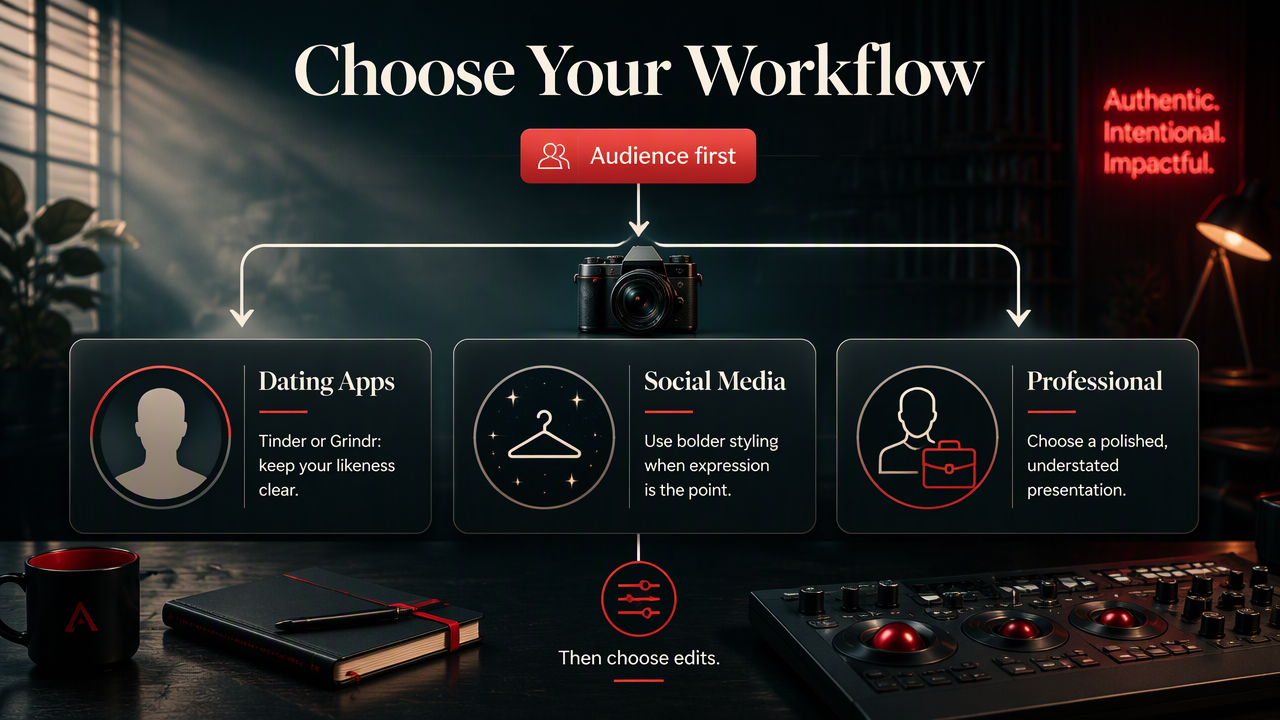
Match the tool to the destination
- Tinder or Grindr: Choose a clear, current likeness. An appealing portrait should still make an in-person introduction feel familiar.
- Social media: Try stronger lighting, themed outfits, or fantasy settings when creative expression is the point. Label conspicuously synthetic imagery where context requires it.
- Professional profiles: Favor simple backgrounds, plausible clothing, and a relaxed expression. Keep the person more memorable than the processing.
For dating profiles, I recommend combining a clear lead portrait with real-life images that show interests and context. A stylized image can add variety, but it doesn't explain what spending time with you might feel like.
Choose convenience without surrendering control
A one-tap enhancer suits someone who already likes their photo. A portrait-generation workflow makes more sense when the missing ingredient is a photo concept, such as a different setting or presentation.
Before paying, check the current plan's export quality, generation allowance, cancellation terms, and commercial-use permissions if relevant. Free access, free previews, and free downloads aren't interchangeable. Your shopping decision should survive the checkout screen.
How HotphotoAI handles this
HotphotoAI fits the portrait-focused route for people exploring personal images beyond a single existing selfie. I'd approach it with a specific brief: the intended platform, the desired visual style, and the recognizable features that should remain consistent. That gives the portrait project a useful purpose rather than a vague request for attractiveness.
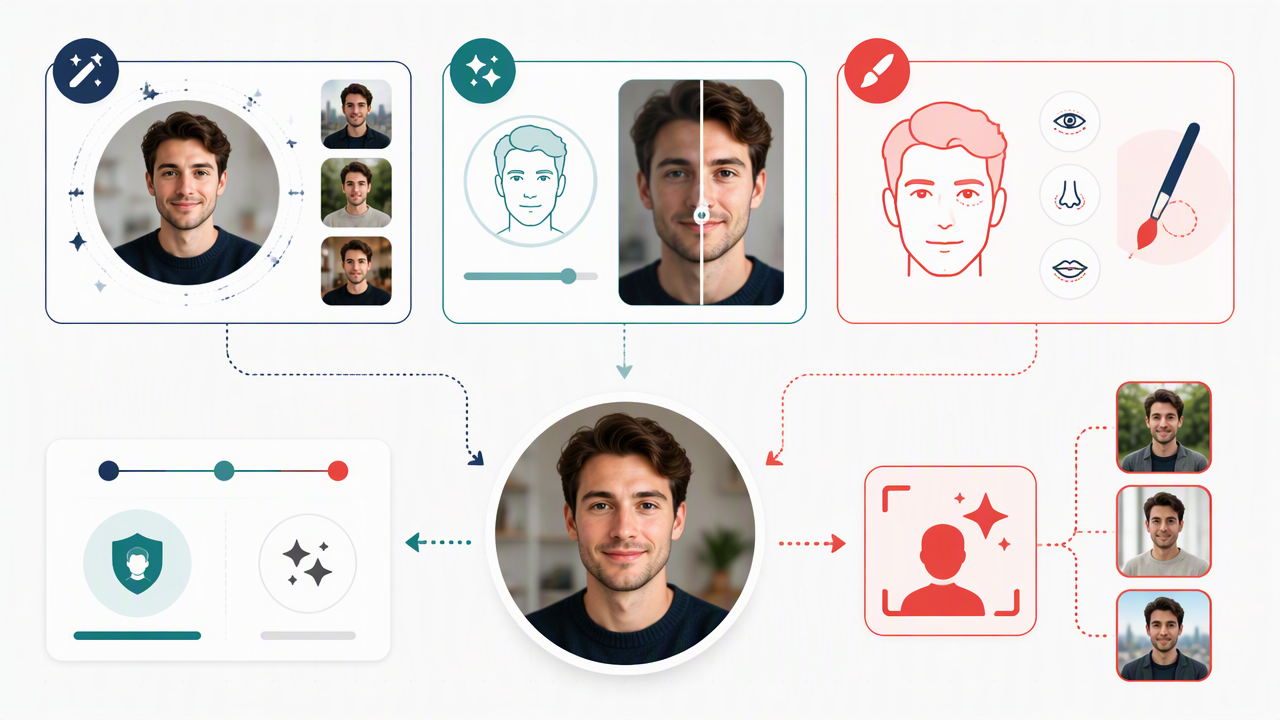
Start with a profile brief, not a beauty score
For a dating portrait, my brief would be: approachable expression, everyday styling, clear facial visibility, and a setting consistent with my actual life. For a creator portrait, I'd specify the mood, colors, and degree of fantasy instead.
- Purpose: Name the destination and audience.
- Identity: Note distinctive hair, facial hair, glasses, or other visible features.
- Presentation: Describe clothing, lighting, and setting.
- Selection: Decide what makes an image suitable before reviewing results.
Treat this as a planning framework, not a claim about specific controls or guaranteed output. The supplied research doesn't document those details.
How do you choose a natural-looking AI profile photo?
Choose a natural-looking AI profile photo by comparing it with a recent reference, checking facial features, inspecting physical details, reviewing it at profile size, and matching it to its destination. I recommend evaluating identity before attractiveness: a beautiful image that introduces a different person has missed the assignment.
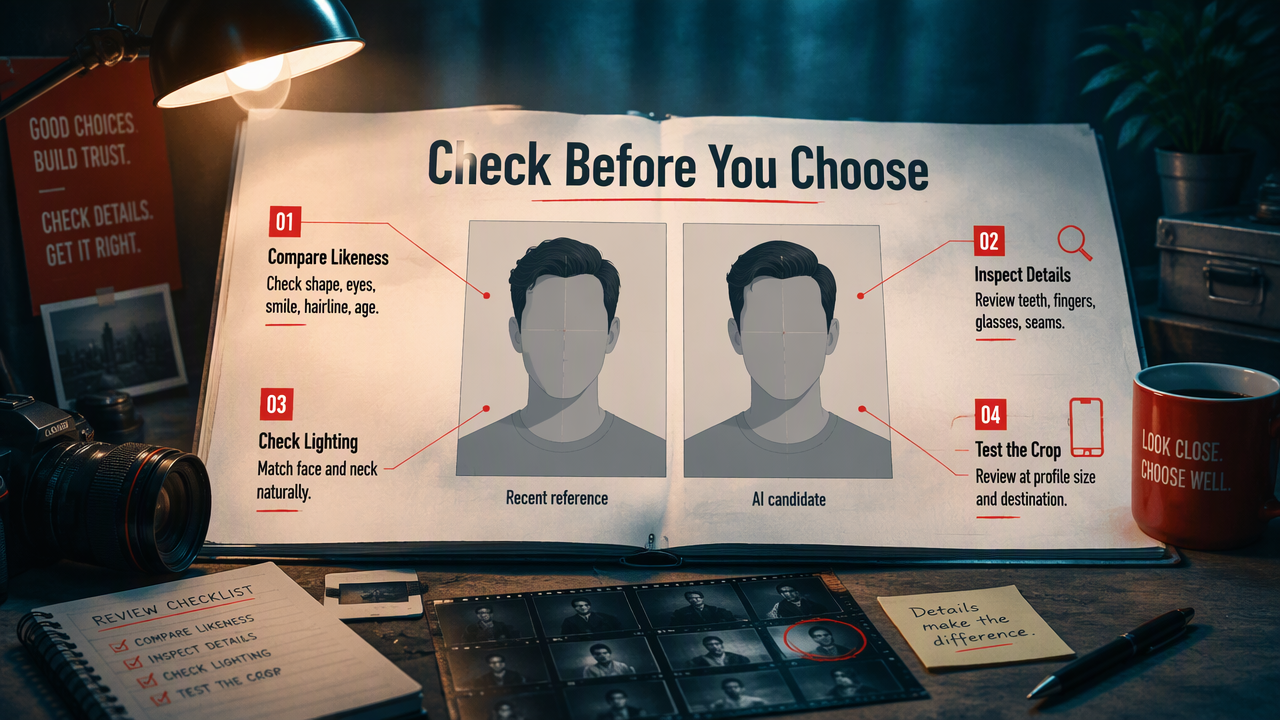
Use a five-step selection check
- Compare your likeness: Check face shape, eyes, nose, smile, hairline, and apparent age against a current photo.
- Inspect physical details: Look at teeth, fingers, glasses, jewelry, and clothing seams for inconsistencies.
- Check the lighting: Face, neck, clothes, and background should appear lit by the same scene.
- Preview the crop: Review the image at phone size and in the destination's actual crop, including circular avatars.
- Apply the meeting test: Ask whether someone could comfortably recognize you from this picture.
Skin texture matters, too. Removing every line can make a portrait look less photographic, even when individual features seem correct.
Separate visual plausibility from evidence
Victor M.-H. Ong's 2021 work, Artificial intelligence in digital visual effects, addresses AI in visual-effects production. It provides background context, not evidence that a particular app improves dating results.
A convincing image is a selection goal, not proof of better matches. This guide has no verified match-rate benchmarks.
FAQ: Choosing and using AI profile portraits
These practical questions help separate a suitable photo workflow from an attractive product preview.
Can I use AI-generated photos on Tinder or Grindr?
Check Tinder's or Grindr's current rules before uploading, since this research doesn't establish their 2026 AI-image policies. My recommendation is to use images that accurately represent your current appearance and avoid implying experiences or circumstances that aren't real. Include recent real-world photos so your profile offers more than a polished portrait.
Is a free Facetune alternative enough?
A free option may be enough when you only need a modest improvement to an existing photo. Check whether the usable export is actually free, whether it includes a watermark, and whether resolution meets your needs. For portrait generation, compare the full cost of producing and downloading candidates rather than judging the preview alone.
What should I check before uploading selfies?
Read the service's current privacy terms for image retention, deletion, training use, and account removal. Upload only photos you have permission to use, and avoid images containing other people or sensitive background details. I'd also check whether deleting an account deletes uploaded images, since those are separate questions unless the policy explicitly connects them.
Conclusion
Choose your workflow first, then write one clear portrait brief. If new personal-photo concepts are your goal, explore HotphotoAI at hotphotoai.com. Select one recognizable candidate, compare it with a recent photo, and preview the final crop before adding it to your profile.