Hair Styler Guide: Test Your Next Look Before You Commit

TL;DR
A hair styler can mean a hot tool, an AI portrait tool, or both. Use AI first to preview hairstyle, color, lighting, and outfit fit, then choose physical tools or salon services with fewer surprises.
A bad haircut grows out, but a bad profile photo can keep working against you for months. A hair styler now covers two useful worlds: physical hair styling tools like irons and dryers, and AI tools that preview cuts, colors, volume, and photo-ready vibes before scissors or bleach get involved. For profile-first testing, HotphotoAI helps people experiment with polished portrait styles before booking a shoot or changing their real hair.
Hairstyle: the styling of hair, usually on the head, and often part of personal grooming and identity.
Hair iron: a heated tool that changes hair shape, commonly by curling, straightening, or crimping.
Table of Contents
What is a hair styler in 2026?
A hair styler in 2026 is either a physical tool that shapes real hair or an AI image system that previews how a hairstyle could look in photos. The best choice depends on whether you need actual styling, visual planning, or better dating, creator, professional, or social profile images.
The search results are still dominated by product pages for dryers, straighteners, hot brushes, and multi-stylers. That makes sense: people buy tools to solve visible problems like frizz, flat roots, uneven curls, or slow drying.
AI changed the planning step. Instead of guessing whether copper layers, curtain bangs, a slick bob, or model-style waves will flatter your face, you can test the look visually first. I like this approach because hair choices are weirdly emotional. One fringe can turn "effortless Parisian" into "school photo retake."
Key insight: physical tools style the hair you have today; AI stylers help you choose the hair, setting, and image mood you want tomorrow.
Core terms to know
Heat tool: a dryer, straightener, curling wand, hot brush, or multi-styler used on real hair.
AI portrait generator: software that creates or edits personal images using prompts, reference photos, or preset styles.
Virtual hairstyle preview: an AI-assisted image showing how a cut, color, texture, or volume change may look on your face.
Profile-photo styling: the full visual package: hair, outfit, background, lighting, expression, and crop.
When should you use AI before real styling?
Use AI before real styling when the decision is expensive, permanent, photo-sensitive, or hard to describe to a stylist. It works best for testing broad direction: color family, length, silhouette, texture, styling mood, and whether the finished image fits the platform where you'll use it.
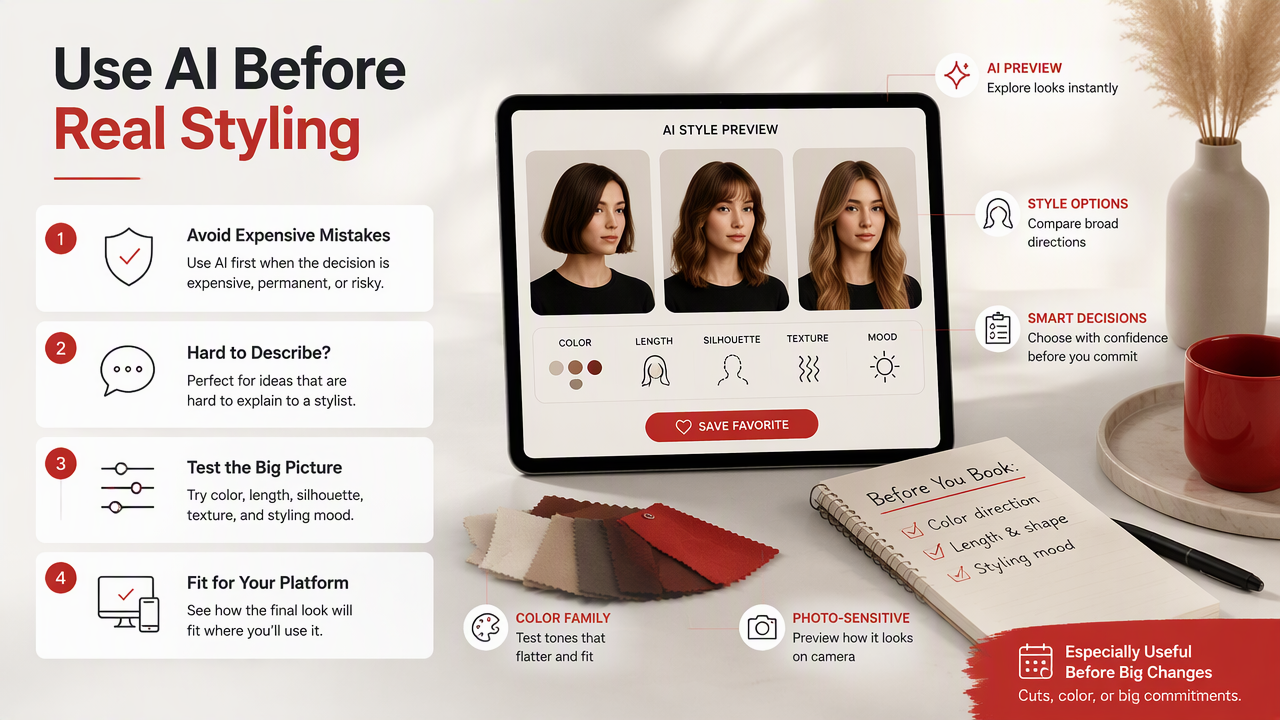
AI is especially useful before dating-photo updates, professional headshots, creator shoots, or salon consultations. It gives you a visual draft. That draft won't replace a stylist's skill, but it can stop the classic "just a trim" tragedy from entering group-chat folklore.
Research on generative AI keeps expanding beyond text into creative decision support. Dwivedi, Kshetri, Hughes, and colleagues discussed opportunities and challenges for generative conversational AI in research and practice in a 2023 paper in the International Journal of Information Management (study PDF). For hair and portraits, the practical lesson is simple: treat outputs as drafts, not destiny.
Best use cases by photo goal
| Use case | What to test first | Best output | Watch for |
|---|---|---|---|
| Dating photos | Volume, face framing, relaxed texture | Natural lifestyle portraits | Overly perfect glamour shots |
| Professional photos | Neatness, color subtlety, part placement | Polished headshots | Distracting fashion edits |
| Creator shots | Fantasy color, dramatic lighting, bold cuts | Stylized campaign images | Inconsistent identity across posts |
| Salon planning | Length, layers, bangs, color family | Reference images for consultation | Expecting exact real-world replication |
For dating apps, I'd test hair with the same outfit energy you plan to use. Tousled waves with a hoodie say something different from the same waves with a black blazer. Neither is wrong; one just gets invited to brunch, the other to a quarterly meeting.
For salons, bring two or three AI references plus real photos of your current hair. A stylist still needs to assess texture, density, condition, and color history before deciding what's possible.
How do you test a hairstyle with AI?
Test a hairstyle with AI by starting with clear face photos, choosing one change at a time, comparing several styles, and saving only the versions that still look like you. The goal is not to become a plastic billboard. The goal is to find a flattering direction you can actually use.
- Upload sharp photos with your face visible from the front and slight angles.
- Pick one variable first: length, color, bangs, curls, part, or volume.
- Match the style to the platform: dating, LinkedIn, Instagram, portfolio, or salon planning.
- Generate multiple versions, because one output is just a mood swing with pixels.
- Compare against your real features, skin tone, wardrobe, and usual grooming.
- Save the top three and ask a trusted human, not the friend who says "slay" to everything.
The HotphotoAI platform is useful here because the hairstyle does not sit alone. It appears with lighting, background, pose, and overall portrait style, which is closer to how people judge photos in real life.
Prompt patterns that produce better previews
- For subtle polish: "natural shoulder-length waves, soft side part, warm studio light, realistic dating profile photo."
- For professional use: "neat medium haircut, clean part, natural color, simple background, confident headshot."
- For bold color: "glossy copper bob, soft layers, editorial portrait, realistic skin texture."
- For salon planning: "front-facing reference image, collarbone-length layered cut, curtain bangs, natural daylight."
Keep prompts specific, but don't over-direct every strand. Hair has physics. If the image ignores gravity, humidity, or your natural texture, treat it as inspiration rather than a receipt.
How do AI previews compare with hair styling tools?
AI previews and physical hair tools solve different problems: one helps you decide what look suits you, while the other helps you create it on real hair. The smart workflow is preview first, then buy, book, or style with more confidence.
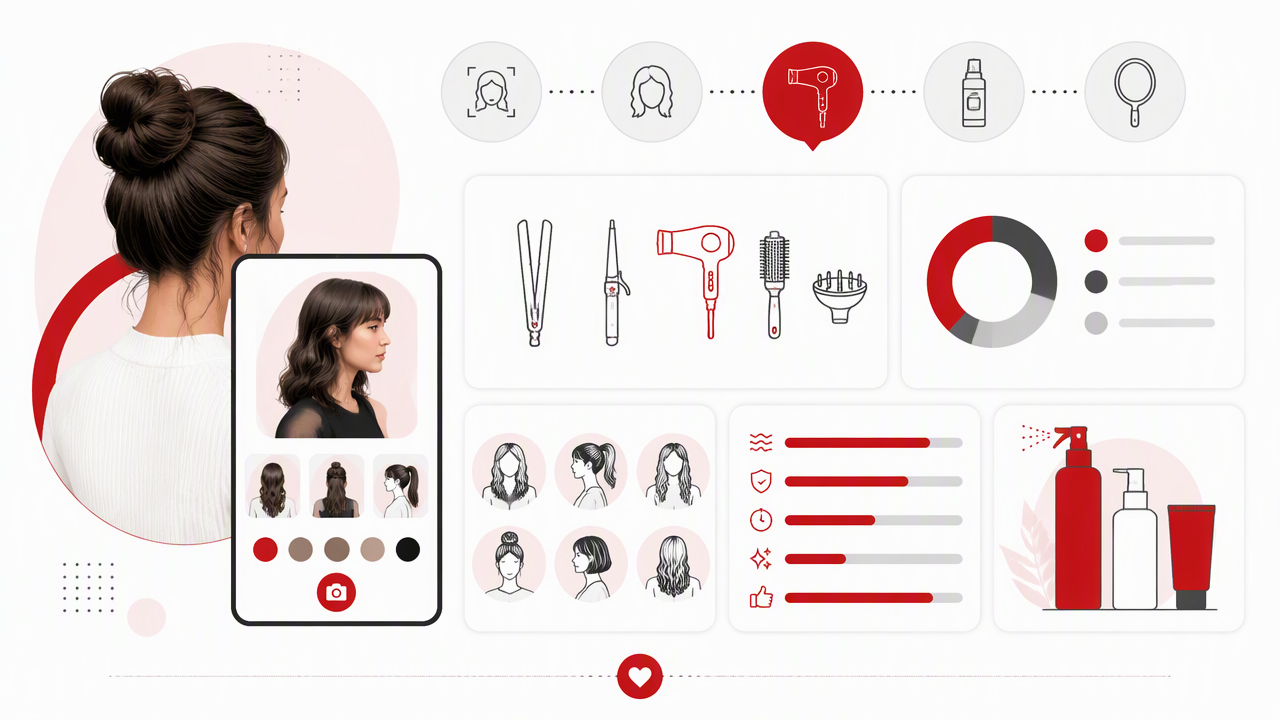
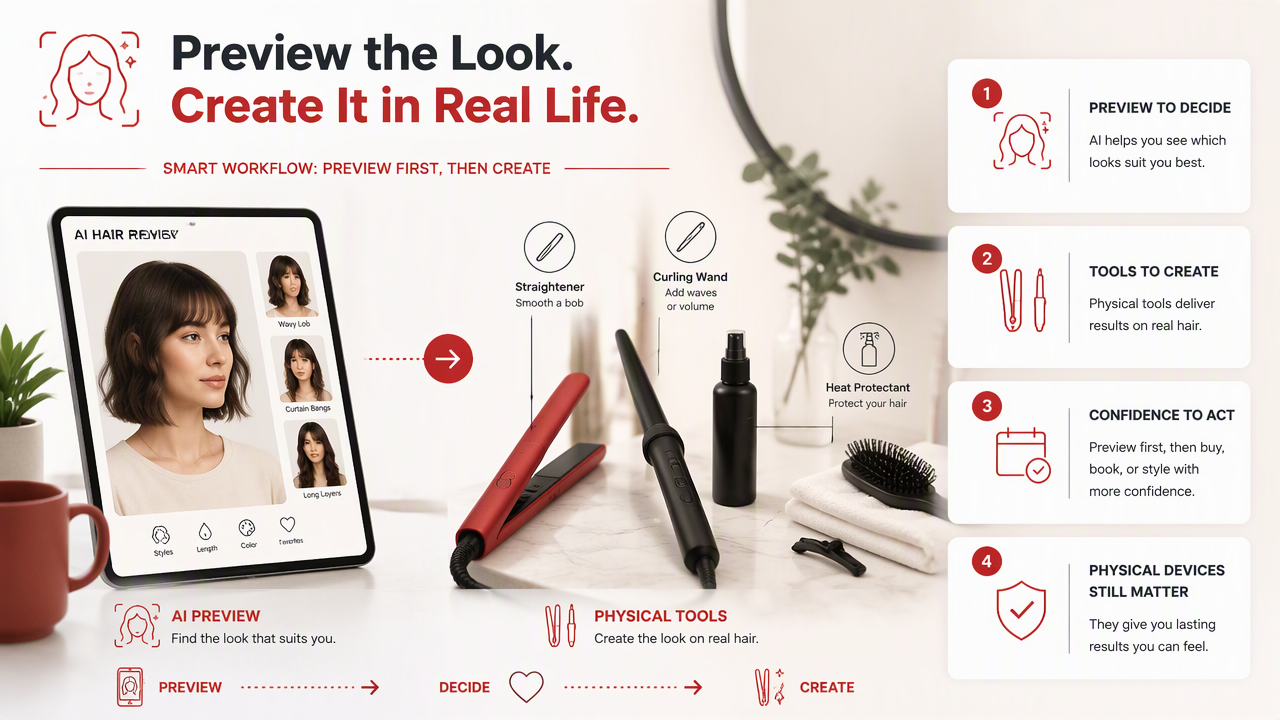
Physical devices still matter. A straightener can smooth a bob; a curling wand can add shape; a hot brush can lift roots; a dryer can speed the whole operation. AI cannot give you bounce on Tuesday morning before work. Sadly, your laptop remains terrible at round-brushing.
Park and Kim's 2022 IEEE Access paper on metaverse components and applications examined virtual environments and their open challenges (paper PDF). Personal-image styling fits that broader shift: people now test identity, appearance, and presentation digitally before acting physically.
Decision table: AI preview vs real tool
| Need | AI preview | Physical styling tool | Best choice |
|---|---|---|---|
| Try a new color | Strong for direction | Limited unless temporary color is used | AI first |
| Smooth frizz today | Not applicable | Strong | Tool |
| Plan bangs | Strong for face framing | Limited without cutting | AI first |
| Add curls for an event | Good for photo planning | Strong for real result | Both |
| Create profile images | Strong with outfits and settings | Helps if styling before photos | Both |
The main mistake is asking one category to do the other's job. Don't buy a premium multi-styler because you're unsure about going platinum. Also don't expect an AI preview to tell you how your hair behaves in July humidity.
Use AI for visual decisions. Use tools for daily execution. Use a salon for structural changes that involve cutting, chemical color, or repair work.
What should you expect from AI hair styling next?
AI hair styling in 2027 will likely become more personalized, more photo-realistic, and more connected to shopping, salon planning, and virtual identity. The biggest improvement will be context: tools will better account for face shape, lighting, outfit, hair texture, and platform-specific photo goals.
Expect stronger controls for:
- Texture accuracy: curls, coils, fine hair, thick hair, and flyaways handled with more realism.
- Identity consistency: different hairstyles while keeping the same recognizable person.
- Color realism: better previews for brunette, blonde, red, gray, vivid, and balayage looks.
- Use-specific outputs: dating photos, work portraits, creator thumbnails, and salon reference packs.
Still, good taste will remain annoyingly human. A model-glossy blowout may look great in a fantasy portrait and wrong for your everyday brand. The most useful image is not always the flashiest one.
With HotphotoAI, users can test the complete impression: hairstyle, wardrobe, mood, and setting together. That matters because nobody swipes, hires, follows, or books based on hair alone.
FAQ: Hair styling and AI previews
Can an AI hairstyle preview replace a salon consultation?
No. An AI preview can help you communicate shape, length, color direction, and photo mood, but a stylist still needs to inspect your real hair. Texture, density, damage, previous dye, and maintenance habits all affect what can be done safely and attractively.
Are AI-generated profile photos acceptable for dating apps?
They can be useful if they still look like you and reflect how you actually present yourself. Avoid using images that change your face, age, body, or identity beyond recognition. A flattering portrait should raise confidence, not create a first-date identity audit.
What hairstyle tests work best with AI?
AI works best for visible, high-level changes: bangs, layers, shorter length, longer volume, color family, curl pattern, sleek styling, or glam waves. It works less well for technical salon details like exact foil placement, chemical lift limits, or how your roots will grow out.
Should I buy a styling tool after using AI?
Buy a tool only after you know what result you'll repeat often. If your favorite preview has soft waves, a curling wand or hot brush may help. If it shows sleek short hair, a straightener and dryer may matter more. Match the tool to the look, not the trend.
Conclusion
A smart hair update now starts before the bathroom mirror. Use AI to narrow the look, choose the mood, and create stronger reference images; then use real tools or a stylist to make the look work in daily life. If your goal is better dating, creator, or professional photos, try a few complete portrait directions first with HotphotoAI, then take the strongest style to your camera, salon, or next profile refresh. For a fast starting point, visit hotphotoai.com and test the look before your hair makes any legally binding decisions.