Hairdressers Styles: Turn AI Portraits Into Salon-Ready Hair Ideas
TL;DR
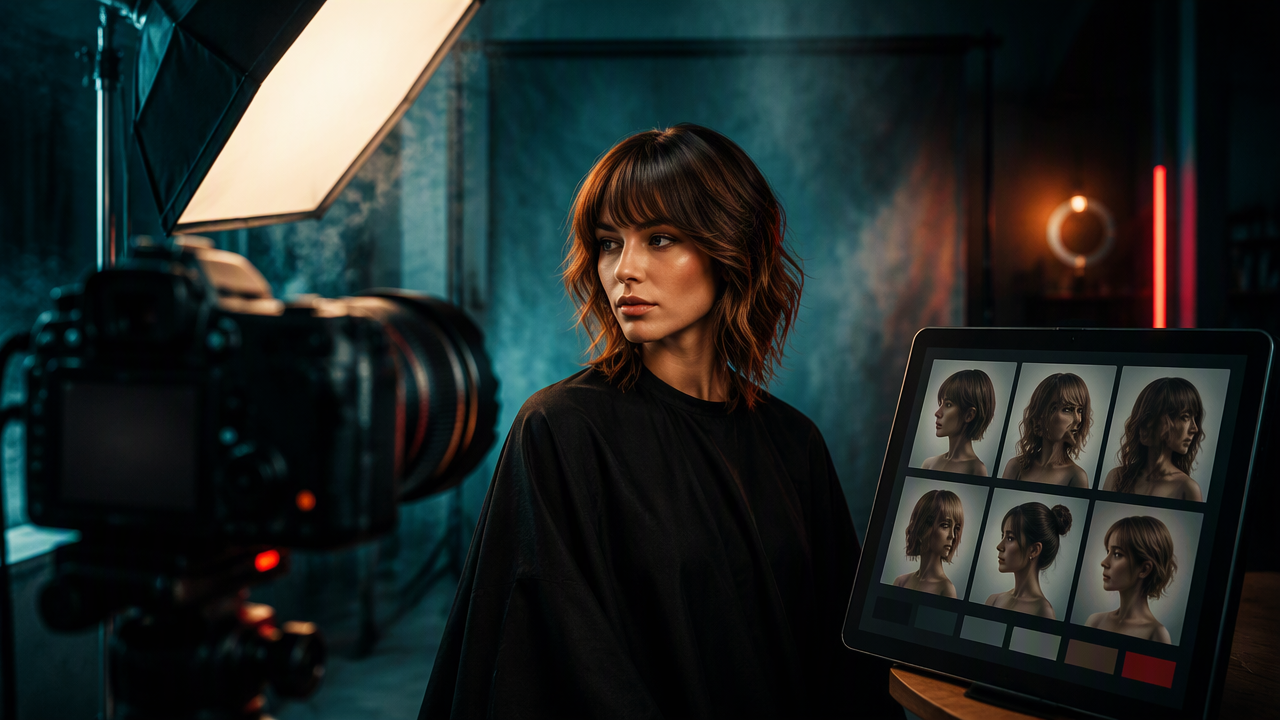
AI portraits can help you test hairstyle ideas before booking a salon, but they work best as inspiration, not a blueprint. Bring your stylist clear references for cut, color, volume, and face framing, then ask what suits your hair type, upkeep budget, and real lighting.
A great hairstyle reference can save a salon visit from becoming a hostage negotiation with bangs. The trick with hairdressers styles in 2026 is knowing how to turn a polished AI portrait into something a real stylist can cut, color, and maintain. A hairdresser is a professional who cuts, styles, colors, and textures hair to change or maintain someone's image. Tools like HotphotoAI are useful because they let you preview glamour, lifestyle, model-style, or dating-profile looks before anyone picks up scissors. Still, your hair, scalp, density, curl pattern, and daily routine get the final vote. Use AI images as a sharp visual brief, then let the stylist translate the fantasy into a flattering, wearable plan.
Table of Contents
What are hairdressers styles in an AI photo workflow?
Hairdressers styles are salon-ready hairstyle ideas built from cut shape, color, texture, volume, and face framing. In an AI photo workflow, they act as visual references that help you explain the look you want, while your stylist adjusts the idea to your real hair type, condition, and maintenance limits.
Key insight: AI can show the vibe faster than words, but the chair decides the physics.
Use the HotphotoAI platform to create a small set of polished portraits, then narrow them down before your appointment. If you want direct recall later, visit hotphotoai.com and save the looks that feel most like you, not just the ones with movie-poster lighting.
Turn a portrait into a salon brief
A useful reference separates the hairstyle from the whole image. Your stylist needs to know what you like about the hair, not the cheekbones, filter, or suspiciously loyal wind machine.
- Save 3 to 5 AI images with different angles.
- Circle the exact elements you like: fringe, layers, color, parting, shine, or volume.
- Write one sentence for the goal, such as soft copper bob with cheekbone layers.
- Add one upkeep limit, such as no heat styling on weekdays.
- Ask the stylist what must change for your density, texture, and face shape.
Research on AI systems is a useful reminder to stay specific. Nadeem, Bethke, and Reddy's 2021 paper on stereotypical bias in pretrained language models examined how models can reflect patterns in training data, so don't let one generated ideal define what attractive hair should look like.
Can a hairdresser recreate an AI hairstyle exactly?
A hairdresser can recreate parts of an AI hairstyle, but not every detail exactly. Cut lines, color families, fringe shape, and styling direction are realistic targets; impossible shine, exaggerated density, flawless extensions, and studio lighting usually need adjustment for real hair and real life.
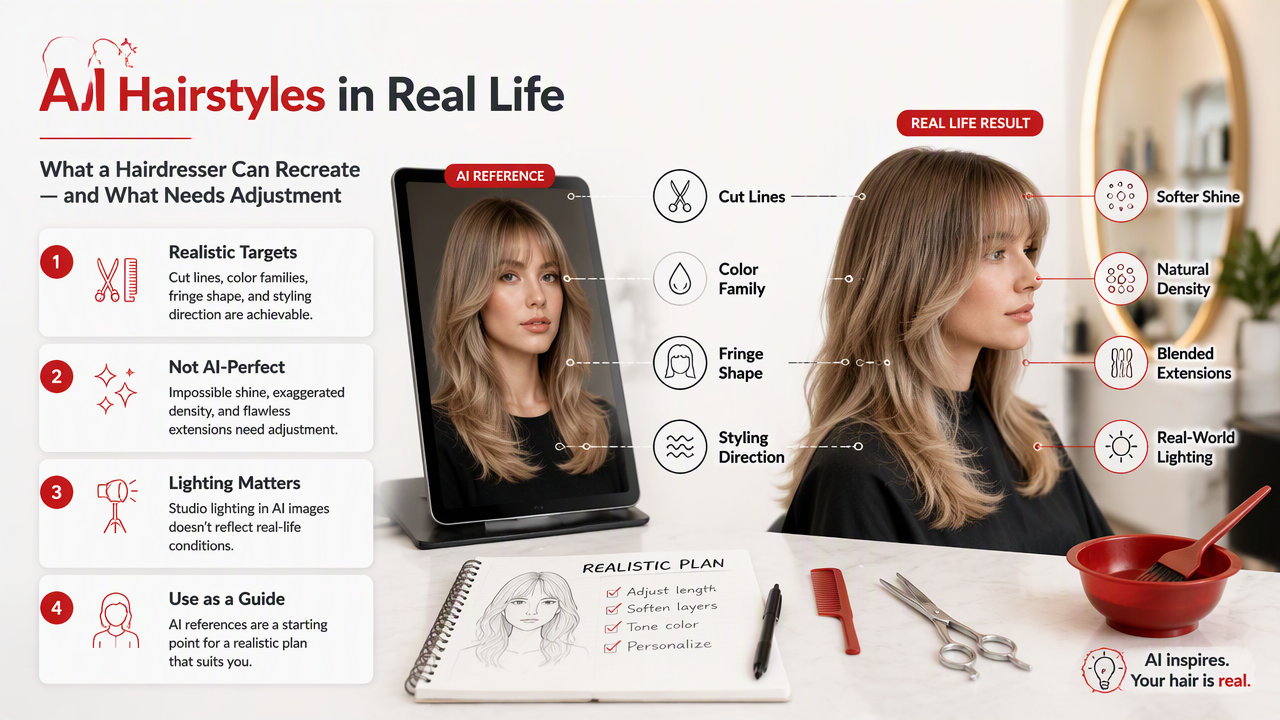
AI references are strongest when you bring them as a conversation starter. They are weakest when treated like a legal contract. Hair has growth patterns, porosity, cowlicks, previous color history, and mood swings worthy of a tiny opera.
AI image details your stylist can and cannot copy
| AI portrait detail | What a stylist can usually recreate | What may need adjustment |
|---|---|---|
| Cut shape | Bob, shag, lob, pixie, long layers, curtain bangs | Exact symmetry, if your growth patterns fight it |
| Color | Warm brunette, copper, blonde, balayage, vivid tones | One-session lift, if hair is dark, damaged, or previously colored |
| Volume | Blowout height, root lift, waves, curls | Permanent fullness beyond your density without extensions |
| Face framing | Bang length, cheekbone layers, soft tendrils | Pieces that sit differently on curls, coils, or strong cowlicks |
| Lighting and shine | Gloss treatment, smoother finish, reflective styling | Digital glow, poreless skin contrast, plastic-looking shine |
| Texture | Sleek, tousled, defined curls, soft waves | A texture that conflicts with your natural pattern or routine |
Bring this table mentally, or literally, to the chair. It helps your stylist separate the haircut from the digital sparkle. If the reference depends on huge volume, ask whether layers, products, rollers, extensions, or a different length would make it believable.
The best salon outcome often sits between the image and your morning schedule. A dramatic wolf cut may look excellent in a portrait, but if you air-dry fine hair and own one brush from 2017, the stylist needs to know.
How do you translate cut, color, volume, and face framing?
Translate an AI hairstyle by breaking it into four decisions: cut shape, color goal, volume level, and face-framing detail. Then ask your stylist which parts suit your hair texture, which parts need styling products or tools, and which parts require a longer color or grow-out plan.
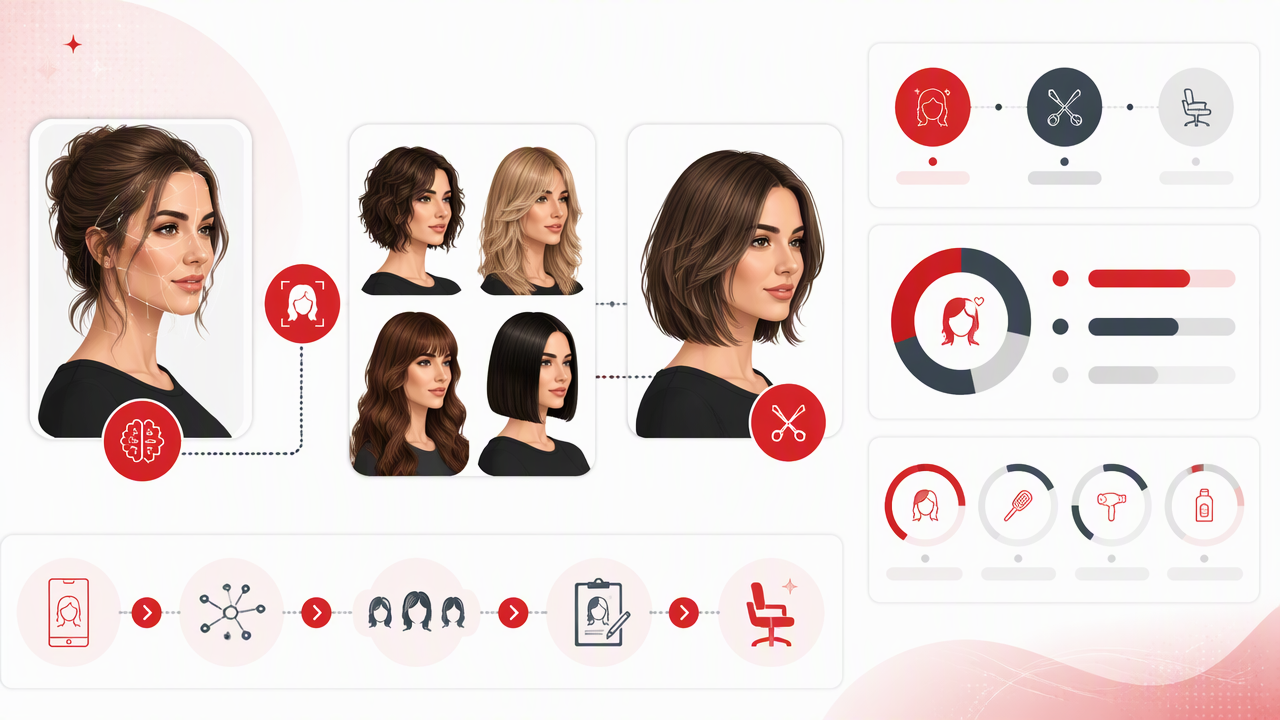
Cut and face framing come first
Start with structure because color cannot rescue the wrong silhouette. If you love an AI image because the hair narrows the jaw, opens the eyes, or softens the forehead, say that clearly.
Useful cut language includes:
- Blunt: one strong line, often cleaner on straight or smoothed hair.
- Layered: shorter interior pieces that create movement or reduce weight.
- Textured: point-cut or razor-softened edges for a lived-in look.
- Face-framing: shorter front pieces designed around cheekbones, jaw, or collarbone.
- Fringe: bangs, curtain bangs, bottleneck bangs, micro fringe, or side-swept pieces.
For curly, coily, or wavy hair, ask whether the cut should happen dry, wet, or both. Shrinkage changes everything, and bangs are where optimism goes to learn humility.
Color and lighting need a reality check
AI portraits often make color look cleaner than it is. A caramel brunette may be partly studio warmth. A platinum blonde may ignore the awkward orange phase. A fantasy pink may assume hair that has already been lifted very pale.
Ask these salon questions before committing:
- How many sessions will this color need?
- What will it look like in daylight, bathroom light, and photos?
- Will it fade warm, cool, pastel, muddy, or bright?
- What maintenance products do I need?
- What will the grow-out look like in 8 to 12 weeks?
If you have eczema, scalp sensitivity, or irritation, mention it before color service. The 2022 EuroGuiDerm guideline on atopic eczema treatments focuses on eczema care and special patient populations, which reinforces a practical salon rule: skin history matters before chemical services.
How should you prepare for a hairdresser consultation?
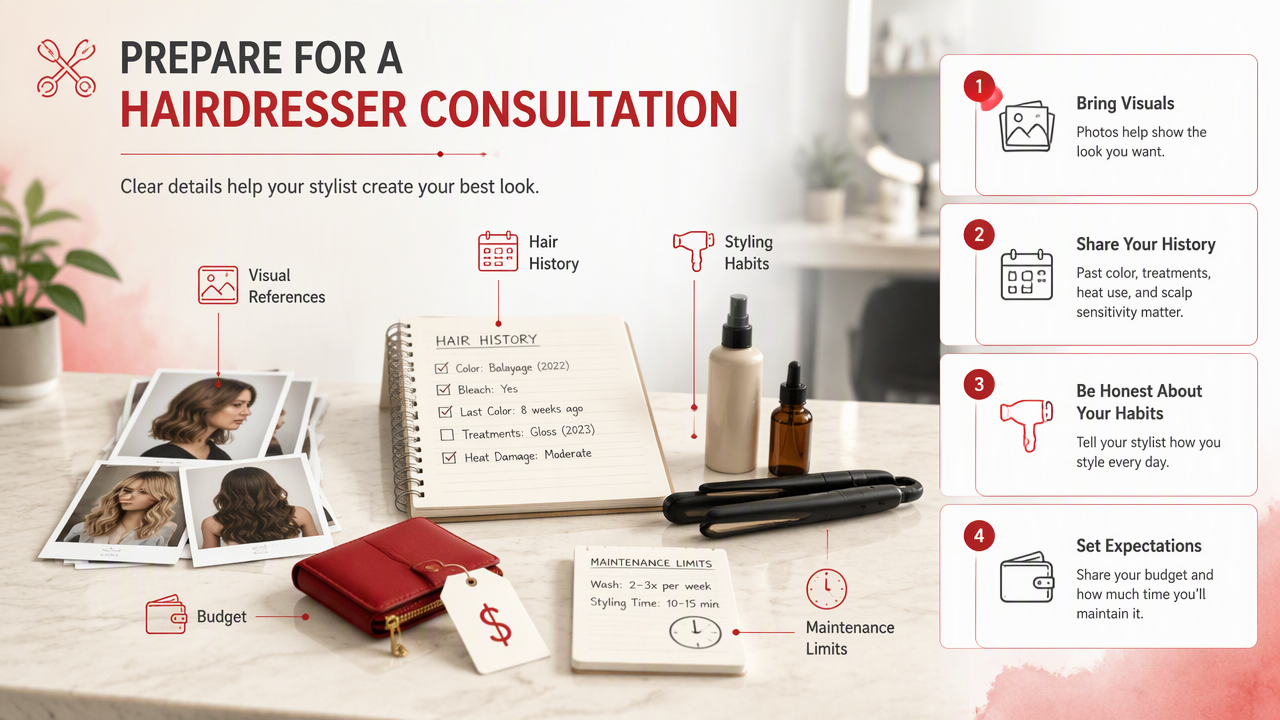
Prepare for a hairdresser consultation by bringing clear visual references, your hair history, styling habits, budget, and maintenance limits. A good stylist can suggest a flattering style, but they need honest details about previous color, heat use, scalp sensitivity, and how much daily effort you will actually spend.
Bring the right reference pack
A strong reference pack saves time and reduces guesswork. I like bringing one dream image, one realistic image, and one absolutely-not image. The last one is underrated. Stylists are talented, not telepathic.
Pack these before you go:
- 3 hairstyle images with visible front and side shape.
- 1 photo of your current hair in natural light.
- Notes on past color, bleach, relaxer, keratin, extensions, or henna.
- A realistic styling time, such as 5 minutes, 20 minutes, or special occasions only.
- Your preferred maintenance cycle, such as every 6, 8, or 12 weeks.
Bai and colleagues' 2022 work on training helpful and harmless AI assistants with reinforcement learning from human feedback is not a hair paper, but it points to a useful habit: better inputs get better outputs. The same applies in salons. Clear feedback beats vague wishes.
Ask questions that reveal fit
A salon can help you choose the right hairstyle, but the consultation should feel practical, not mystical. Listen for a stylist who explains tradeoffs in plain language.
Ask:
- What part of this reference suits my hair best?
- What would you change for my face shape or texture?
- Can this be air-dried, or does it need heat styling?
- What is the grow-out plan?
- What is the lowest-maintenance version of this look?
Salon rule: If a style only works with perfect lighting, extensions, and 45 minutes of effort, it is not low maintenance. It is a part-time job with mousse.
FAQ: using AI hair ideas with a stylist
AI hair ideas work best when they help you communicate faster, not when they replace a stylist's judgment. The best results come from combining generated portraits, honest hair history, and a consultation that turns the image into a workable cut, color, and styling plan.
Can I bring AI-generated photos to a hairdresser?
Yes, you can bring AI-generated photos to a hairdresser, and many stylists will find them useful if you explain what you like. Point out specific details such as the fringe, color tone, layers, or volume. Also bring a current natural-light photo of your real hair so the stylist can judge condition and feasibility.
What if the AI hairstyle does not suit my hair type?
If the AI hairstyle does not suit your hair type, ask for an adapted version rather than abandoning the idea. Fine hair may need blunter lines, dense curls may need different layering, and thick hair may need weight removal. A skilled stylist can preserve the mood while changing the mechanics.
Are AI portraits good for Tinder or profile-photo hair planning?
AI portraits are useful for Tinder, dating apps, and social profiles because they let you test how different hair shapes affect your overall image. With HotphotoAI, you can compare polished looks before choosing the style to discuss at the salon. Keep the final choice believable, especially if you plan to meet people offline.
What should I expect from hairstyle planning in 2027?
By 2027, hairstyle planning will likely become more personalized, with better previews for hair texture, lighting, outfits, and face framing. Still, stylists will remain essential because AI cannot feel hair elasticity, see scalp condition in person, or predict every color reaction. The winning workflow will be digital preview first, professional judgment second.
Conclusion
The smartest way to use hairdressers styles is to treat AI portraits as a briefing tool, not a promise carved into a salon cape. Choose references for cut, color, volume, and face framing, then ask your stylist what can be copied, softened, or staged over several visits. Create a small set of polished options with HotphotoAI, save the most realistic favorites, and bring them to your next consultation. For a cleaner starting point, head to hotphotoai.com, build your reference pack, and let your hairdresser do the beautifully human part.