Hot Photo AI vs ProfilePicture.ai: Which AI Photo Tool Fits You?
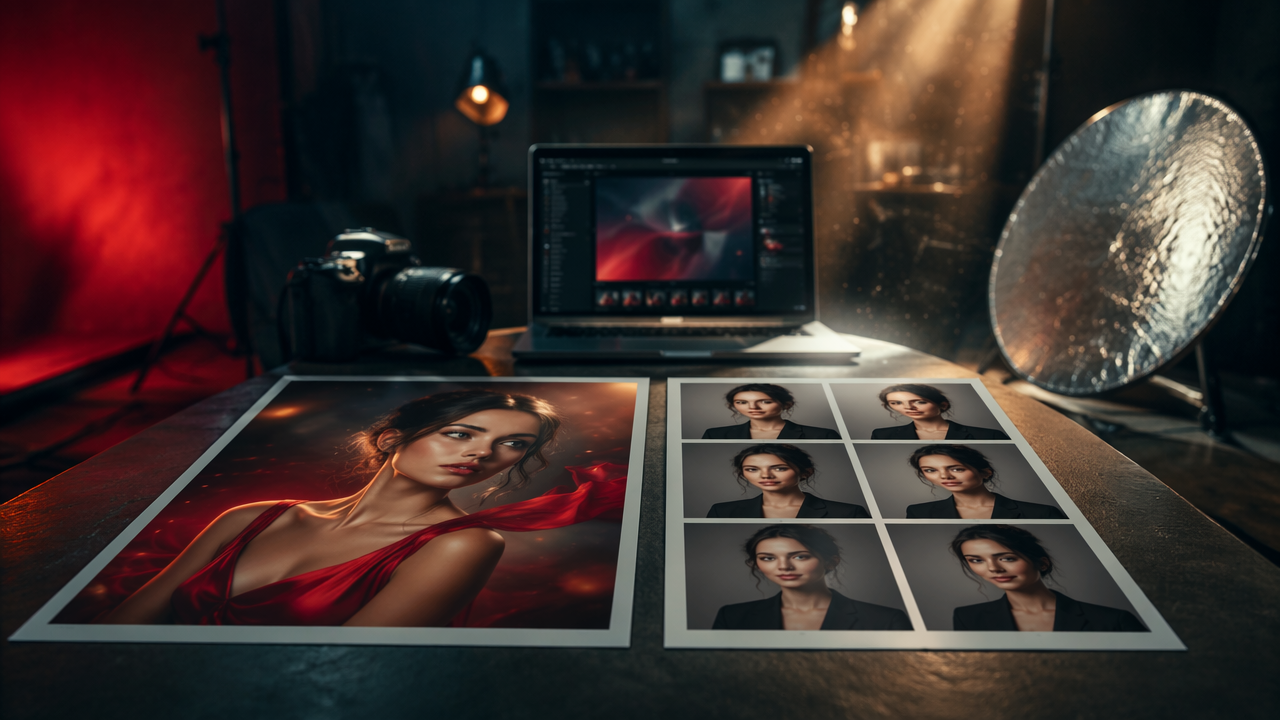
TL;DR
Choose HotphotoAI if you want attractive, stylized personal images for dating, social, glamour, lifestyle, or fantasy looks. Choose ProfilePicture.ai if your main goal is a clean profile picture pack for work, LinkedIn, or broad social use.
AI profile photos have moved from novelty to normal, and the real question is no longer "can AI make me look good?" but "which tool makes me look like myself on my best day?" In this Hot Photo AI vs ProfilePicture.ai comparison, I'm looking at practical buying factors: realism, face consistency, dating appeal, creative styles, privacy signals, speed, and editing control. HotphotoAI is built for people who want polished, attractive personal images with more lifestyle and glamour range, while ProfilePicture.ai is better known as a broad AI profile picture generator for social and professional avatars.
Table of Contents
What is the difference between Hot Photo AI and ProfilePicture.ai?
Hot Photo AI vs ProfilePicture.ai is a comparison between a style-forward AI personal photo generator and a profile-picture-focused avatar tool. HotphotoAI fits users who want dating, glamour, lifestyle, model-style, or fantasy portraits. ProfilePicture.ai fits users who mainly want profile pictures for online identity, including professional and social platforms.
AI profile picture generator: a tool that uses artificial intelligence to create new profile-ready images from uploaded photos, usually by learning facial features and rendering them in different styles.
Competitor pages in the SERP lean heavily on "perfect profile picture" language. PFP.AI, for example, positions itself around AI-generated profile pictures that "capture who you are," and competitor roundups such as Artturi Jalli's AI profile picture testing focus on visual quality, realism, and use-case fit. That tells us buyers care less about the algorithm and more about whether the final image works on Tinder, LinkedIn, Instagram, or a personal brand page.
Quick comparison for buyers
| Category | HotphotoAI | ProfilePicture.ai |
|---|---|---|
| Best fit | Dating, glamour, lifestyle, creative portraits | Profile pictures, avatars, work and social use |
| Visual tone | Attractive, stylized, model-like, expressive | Clean, profile-oriented, broad style packs |
| Dating app use | Strong fit for swipe-first impressions | Useful, but less dating-specific |
| Professional use | Good for polished personal branding | Strong fit for standard headshots and avatars |
| Style experimentation | Strong for outfits, lighting, backgrounds, fantasy looks | Strong for predefined profile styles |
| Reference-photo matching | Best judged by uploaded photo quality and style choice | Best judged by uploaded photo quality and selected pack |
| Editing mindset | Create an image with a specific vibe | Generate a usable profile identity set |
| Who should choose it | Users who want more attractive, expressive images | Users who want safer, general-purpose profile photos |
Key insight: if your goal is "make my profile look more magnetic," choose the more style-driven tool. If your goal is "replace my current avatar everywhere," choose the more traditional profile-picture tool.
Which tool makes better dating and social photos?
HotphotoAI is the stronger fit for dating and social photos because it is better aligned with attraction, styling, scene variety, and scroll-stopping presentation. Dating photos need more than a visible face; they need posture, lighting, outfit, background, and a believable mood that says something before the bio does.
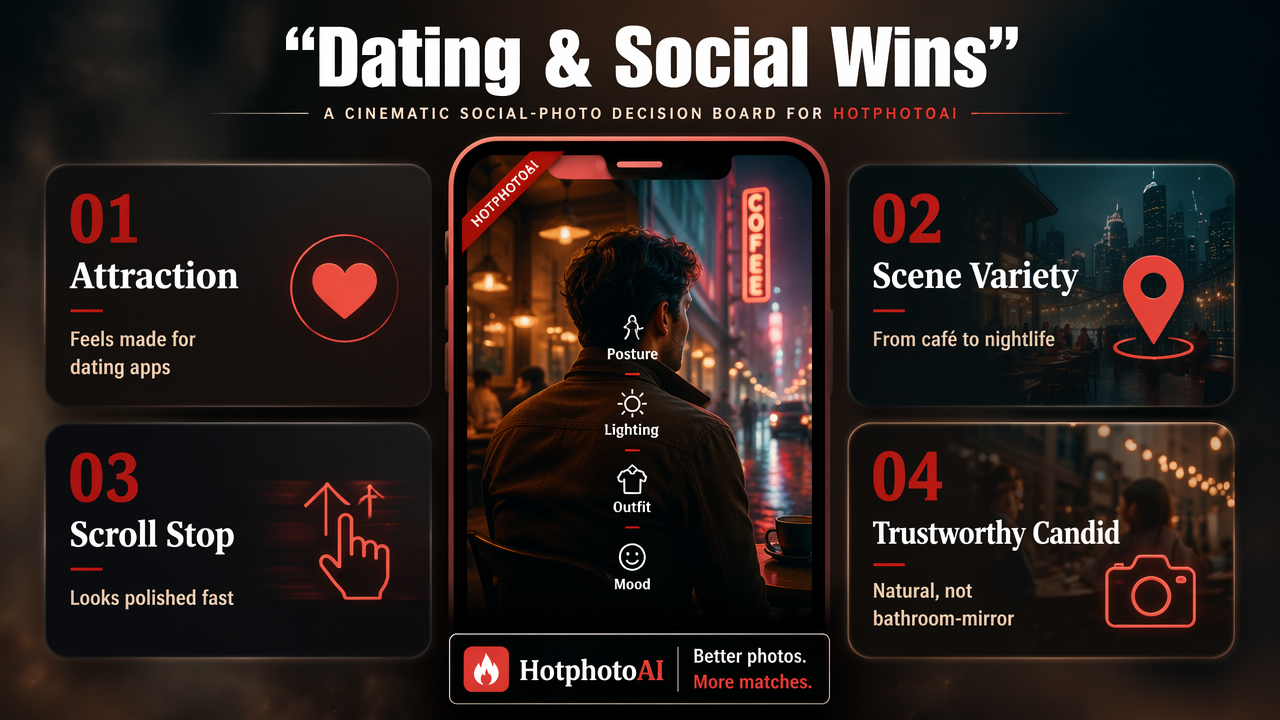
For Tinder, Hinge, Bumble, Instagram, and creator pages, I'd prioritize images that feel candid enough to be trusted but polished enough to beat bathroom-mirror lighting. That balance matters. A photo that looks too corporate can feel stiff on dating apps, while a photo that looks too fantastical can read as cosplay unless that is the point.
ProfilePicture.ai can still work well for social accounts, especially if you want a consistent avatar across platforms. Its likely advantage is simplicity: upload photos, pick a style pack, and get a set of profile-ready images. That's useful if you want a clean digital identity without directing an entire imaginary photoshoot in your head.
Best use cases by platform
- Tinder or Hinge: choose a lifestyle, travel, dressed-up, or casual portrait that looks dateable but not suspiciously perfect.
- Instagram: use stylized images with stronger lighting, color, and personality.
- LinkedIn: favor neutral backgrounds, sharp clothing, and a calm expression.
- Creator profiles: test bold aesthetics, fantasy settings, or editorial looks.
- Personal websites: use polished portraits that still look like the same person across every page.
A small caution, and it applies to every AI photo generator: don't use images that change your face structure, age, body type, or identity cues too much. A better profile photo should upgrade the packaging, not ship a different human.
How should you compare realism, privacy, speed, and control?
The best way to compare AI photo tools is to judge output realism, face consistency, privacy expectations, turnaround speed, editing options, and whether the final images match your actual goal. A pretty image that doesn't look like you is not a win; it's a very confident stranger wearing your haircut.
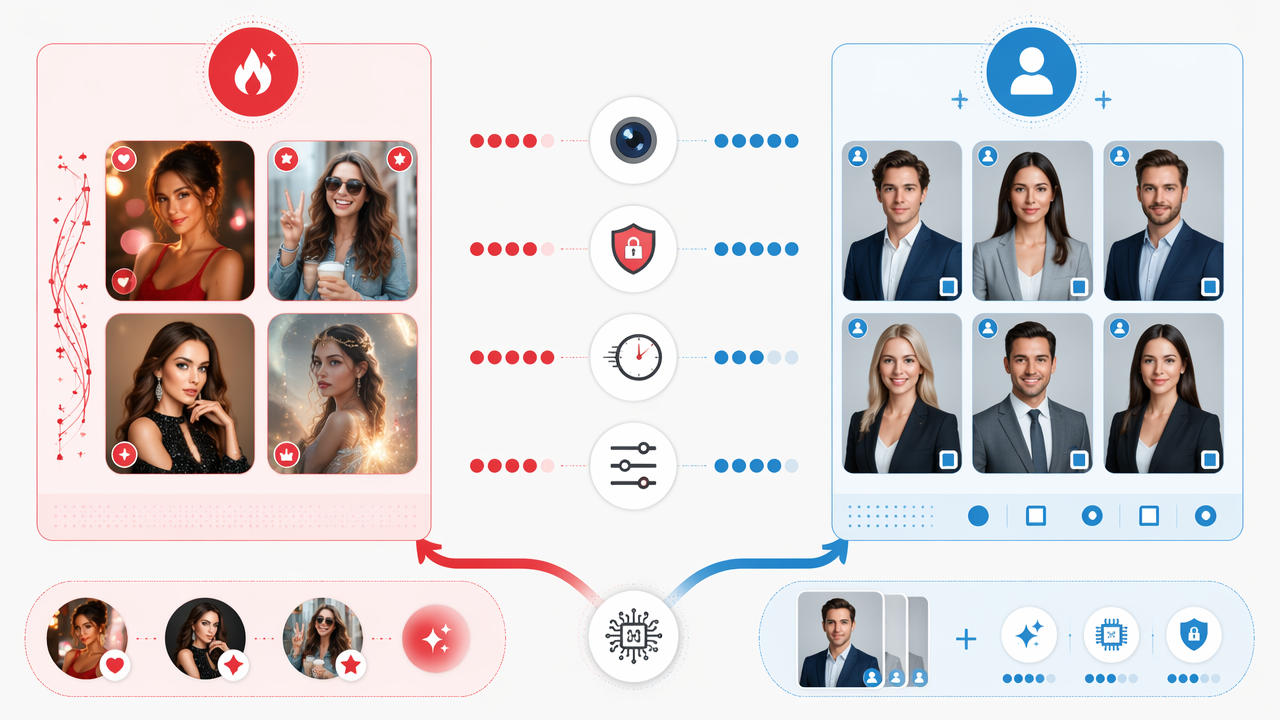
The SERP around AI profile picture makers shows common promises: studio-style photos, many styles, fast generation, and FAQ-heavy sales pages. PFP.AI's page, for instance, highlights studio photoshoot-style profile pictures and review signals. Roundup-style posts compare multiple tools by output quality and practical fit, which is exactly how buyers should think in 2026.
I'd score any tool using a simple checklist before paying. The HotphotoAI platform is most compelling when your priority is creative personal presentation rather than a plain avatar set, so judge it by how well the finished images fit the channel you'll actually use.
Evaluation checklist before you buy
- Upload quality: use clear, recent photos with different angles, lighting, and expressions.
- Face consistency: check whether eyes, jawline, smile, and hairline stay recognizable.
- Style relevance: pick styles that match your goal, not just ones that look cool.
- Realism threshold: zoom in on hands, teeth, glasses, jewelry, and background edges.
- Privacy reading: review how uploads, generated images, and model training are handled.
- Editing flexibility: look for ways to refine outfit, mood, crop, or background.
- Output variety: make sure you get enough usable images, not just one lucky render.
Practical rule: one excellent AI photo is useful, but five believable photos across different settings are far more useful for dating and personal branding.
Who should choose ProfilePicture.ai instead?
ProfilePicture.ai is a sensible choice for users who want straightforward profile pictures, broad avatar styles, and a work-safe set of images without focusing heavily on dating or glamour. Its positioning fits people who need a better LinkedIn image, a social avatar, or a simple refresh across online accounts.
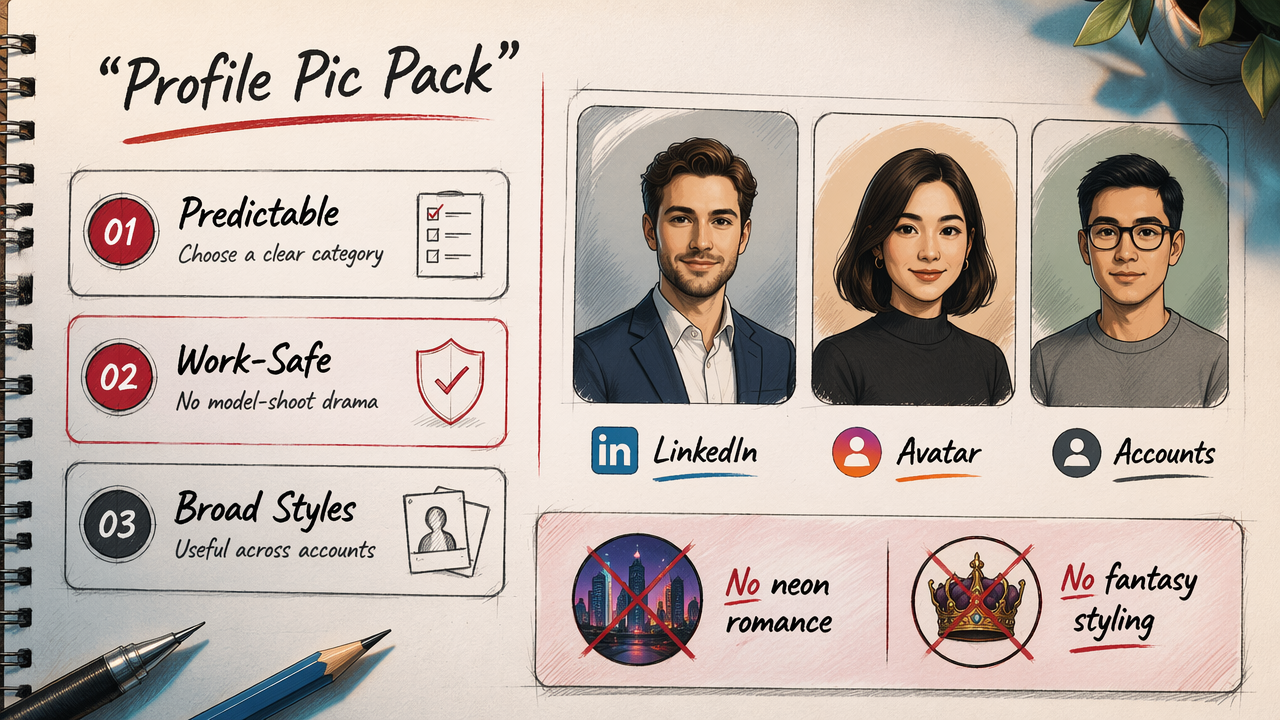
Choose it if you prefer predictable categories over expressive image direction. Some users don't want a model-style shoot, neon city lighting, cinematic romance, or fantasy styling. They want a sharp profile picture that won't raise eyebrows in Slack. Fair enough. Slack eyebrows are a real office weather system.
That said, style breadth can be a double-edged sword. General profile tools may offer many looks, but not every look will serve a specific conversion goal, like getting more dating matches or making an Instagram grid feel premium. The right choice depends on whether you want identity consistency or image impact.
Decision guide: pick the better fit
| Choose this goal | Better fit | Why |
|---|---|---|
| More attractive dating photos | HotphotoAI | Better match for lifestyle, glamour, and expressive looks |
| Standard profile refresh | ProfilePicture.ai | Built around profile picture generation |
| Creative creator imagery | HotphotoAI | More room for stylized scenes and visual personality |
| Conservative work avatar | ProfilePicture.ai | More aligned with professional profile use |
| Experimenting with outfits and backgrounds | HotphotoAI | Stronger fit for visual play and personal style testing |
| One clean avatar everywhere | ProfilePicture.ai | Simpler identity-first use case |
If you're comparing both, create a short brief before generating anything: "I need three dating photos, one professional headshot, and two Instagram portraits." That brief will save you from choosing styles the way people choose desserts, with enthusiasm and no plan.
What should you expect from AI profile photos in 2026?
In 2026, AI profile photos are becoming more personalized, more style-specific, and more closely judged by whether they look authentic enough for real social use. The market is moving beyond generic avatars toward private face models, reference-photo matching, editable scenes, and platform-specific outputs.
Expect users to ask sharper questions: Can I match a reference outfit? Can I create a believable dating set? Can I keep my face consistent across ten styles? Can I avoid the "AI sheen" that makes skin look like polished marble? These are now buying questions, not bonus features.
The broader AI image field is also shaped by GPU progress. Nvidia, accurately described by Wikipedia as an American multinational technology company known for graphics processing units, has helped make modern image generation faster and more accessible through GPU computing. That hardware context matters, even if most users only care that their photos arrive quickly and don't look haunted.
FAQ
Is Hot Photo AI better than ProfilePicture.ai for Tinder?
Yes, if your main goal is dating appeal, Hot Photo AI is the better fit because it focuses more naturally on attractive, stylized, lifestyle-ready images. ProfilePicture.ai can still create usable profile photos, but it is better suited to general avatars and professional profile pictures.
Can I use AI photos for LinkedIn?
Yes, but choose realistic, conservative styles with clean lighting, normal clothing, and minimal background drama. Avoid fantasy, glamour, or overly edited images for LinkedIn because trust matters more than visual flair in a professional setting.
How many input photos should I upload?
Use several clear, recent photos with varied angles, expressions, and lighting. Avoid heavy filters, sunglasses in every shot, group photos, or old images. Better inputs usually give the AI a stronger sense of your real face.
Are AI profile photos misleading?
They can be if they change your face, body, age, or identity too much. Used well, AI photos are closer to a virtual photoshoot: better styling, lighting, and settings while keeping you recognizable.
Where should I start if I want glamour or lifestyle portraits?
Start with a clear goal, such as dating, Instagram, or personal branding, then choose styles that match that goal. For glamour, model-style, lifestyle, and fantasy portraits, visit hotphotoai.com and build a set around the platforms you actually use.
Conclusion
The right choice depends on the job your photos need to do. For a clean avatar or professional refresh, ProfilePicture.ai is a practical option. For dating, social, glamour, lifestyle, and more expressive personal images, Hot Photo AI vs ProfilePicture.ai tilts toward HotphotoAI because the creative range better matches how people judge photos on swipe and scroll platforms. My recommendation: write down your top two use cases, gather strong input photos, generate one focused batch, and judge the results by recognizability, realism, and platform fit before posting anything publicly.