HotPhotoAI vs Remini: Which AI Photo Tool Fits Your Profile Goals?

TL;DR
Choose Remini when you need to sharpen, restore, or clean up an existing photo. Choose a portrait-generation tool when you want fresh dating, lifestyle, glamour, or professional-looking images from selfies instead of one repaired picture.
HotPhotoAI vs Remini is really a choice between creating new profile photos and improving old ones, not a simple battle of identical apps. AI photo enhancement: software that improves an existing image by sharpening detail, reducing blur, or restoring faces. AI portrait generation: software that creates new images of a person in different outfits, lighting, backgrounds, and visual styles from input selfies. If your camera roll is a museum of nearly-good selfies, HotphotoAI gives you a different route: make fresh portrait options instead of asking one blurry shot to carry your entire dating life.
Table of Contents
What is the core difference between Remini and AI portrait generation?
Remini is mainly an AI photo enhancer, while AI portrait generation creates new portrait sets from selfies for profile, dating, creator, or professional use. SERP research for Remini shows its official positioning around transforming old or low-quality photos into HD images, with features such as face enhancement and face glow. That is useful, but it solves a different problem.
Remini starts with a photo you already have. The tool tries to improve that source image, so the pose, outfit, background, and facial angle are mostly locked in. If the original photo has good composition but poor sharpness, enhancement makes sense.
AI portrait generation starts with your identity and creates new image options. That matters for Tinder, LinkedIn, Instagram, and creator profiles, where variety often beats one polished frame.
Key insight: enhancement fixes the photo you took; generation helps you get the photo you wish you had taken.
Quick comparison table for profile-photo shoppers
| Category | HotphotoAI-style portrait generation | Remini-style photo enhancement |
|---|---|---|
| Primary job | Create new portraits from selfies | Improve existing photos |
| Best input | Several clear selfies | One blurry, old, or low-resolution photo |
| Output variety | Multiple outfits, scenes, moods, and lighting styles | Sharper or cleaner versions of the same image |
| Dating-profile value | Strong when you need variety and different vibes | Strong when you already have a great candid photo |
| Creative control | Higher, because style and scene matter | Lower, because the source photo sets the frame |
| Main decision question | Do I need new options? | Do I need this photo repaired? |
HotPhotoAI vs Remini: which use case wins?
The better tool depends on whether your main goal is repair, reinvention, or profile testing. I would not use the same app for a cracked family snapshot and a dating profile refresh, unless I also use a hammer to frost a cupcake.
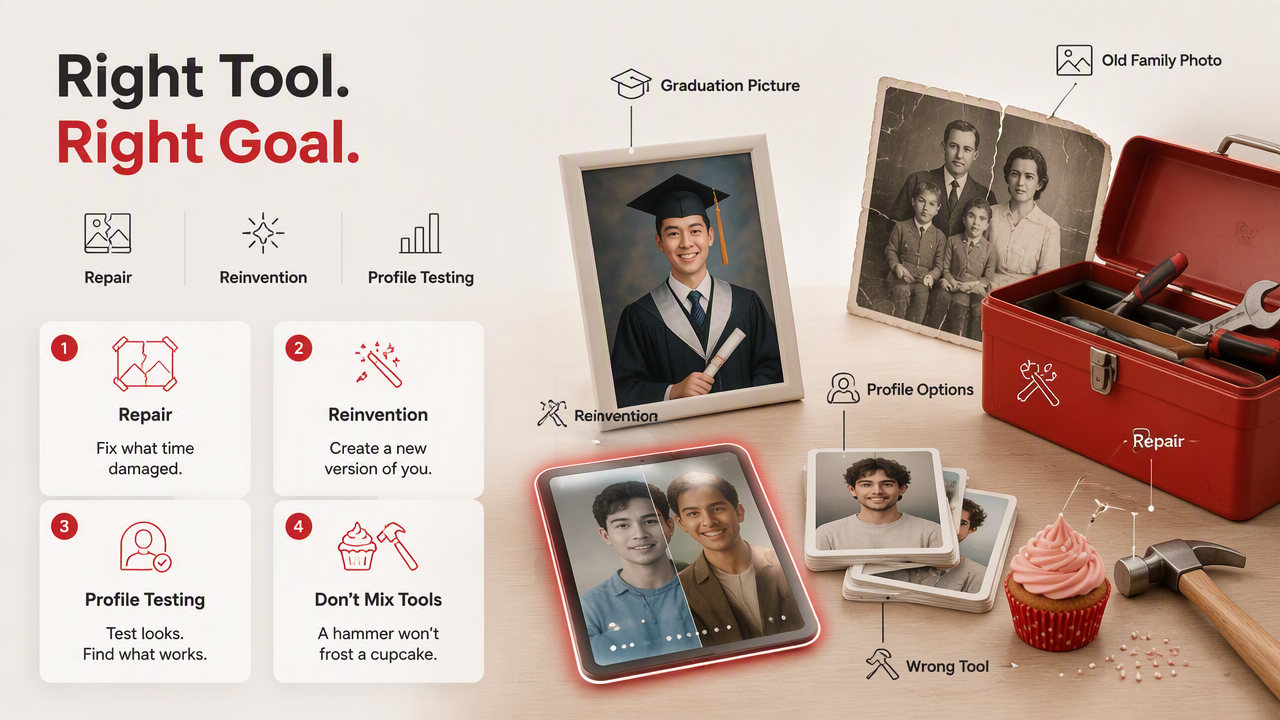
Use Remini when the photo already has the right moment. A graduation picture, an old family photo, or a favorite vacation shot can benefit from sharpening, face repair, and cleaner detail. The research data describes Remini as an enhancer for old photos and low-quality videos, which fits that repair-first job.
Use generation when the problem is not blur, but lack of options. Many profile-photo problems are strategic: every picture has the same angle, the same hoodie, the same dim apartment lighting, or the same expression that says passport renewal under stress.
Decision checklist before you pay for either tool
- Pick Remini if you already love the pose, expression, and background.
- Pick portrait generation if you need several looks for dating apps, social media, or personal branding.
- Pick Remini for old, sentimental, low-resolution images.
- Pick portrait generation for glamour, model-style, fantasy, lifestyle, or polished professional portraits.
- Use both only if needed: enhance a real favorite, then generate fresh options for variety.
For dating apps, variety has a practical advantage. One clean headshot is not a profile. You usually need a main photo, a lifestyle shot, a polished portrait, and at least one image that suggests you leave the house voluntarily.
How do realism, control, and dating value compare?
Realism depends less on the brand name and more on the job you ask the tool to do. Enhancement can look realistic because it keeps the original scene, but heavy face processing may make a photo feel too smooth or artificial. The SERP research even surfaced user complaints around enhanced images looking AI-generated, which is a real concern for dating profiles.
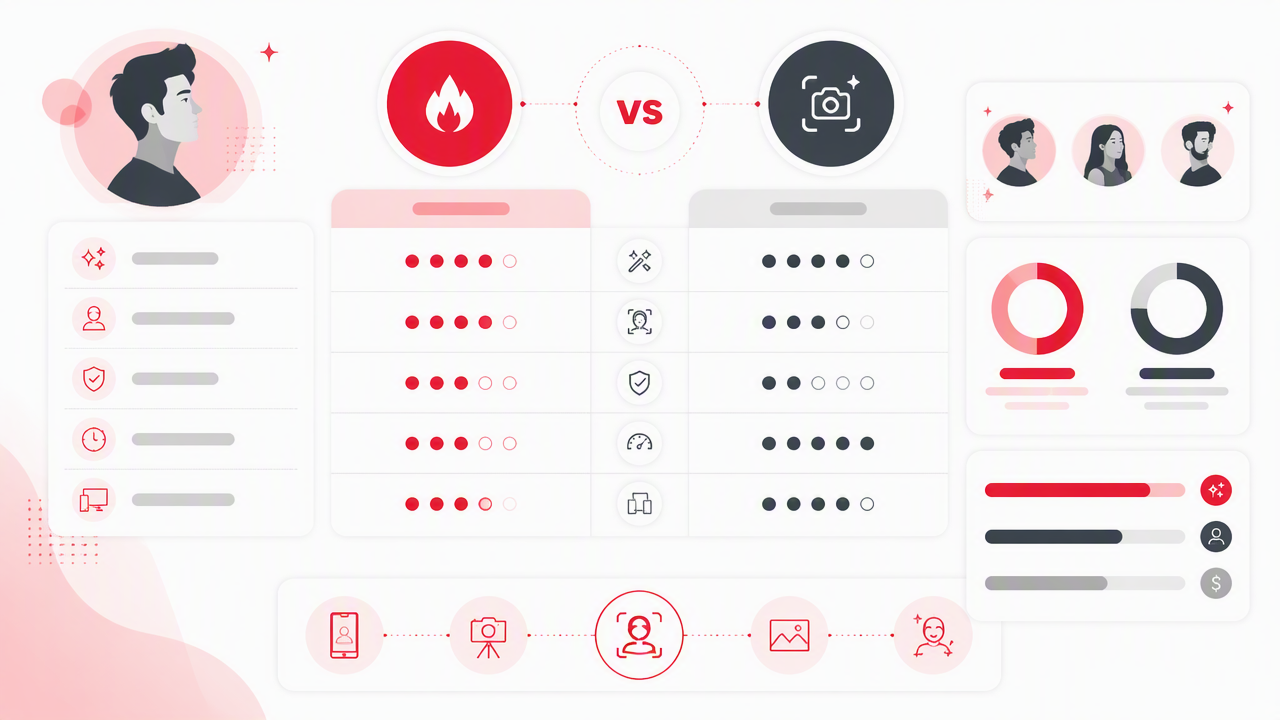
Generated portraits have a different realism test. They must still look like you, while changing the outfit, background, lighting, or pose. That gives more creative range, but it also means users should avoid extreme prompts that turn a profile photo into a perfume ad from another planet.
A dating photo should look like your best Tuesday, not like a billionaire vampire's album cover.
Profile-photo signals that matter in 2026
- Identity match: the person should still look recognizably like you.
- Context fit: dating, LinkedIn, Instagram, and creator profiles need different image styles.
- Lighting quality: clean light often matters more than maximum sharpness.
- Wardrobe variety: one outfit across every profile photo feels staged.
- Expression range: a profile needs warmth, confidence, and approachability.
- Low artifact risk: warped teeth, waxy skin, and strange hands break trust fast.
The practical rule is simple: if the existing photo has great social proof or emotional value, enhance it. If the profile lacks range, generate new looks and choose the images that still feel believable.
How HotphotoAI handles creative profile photos
The HotphotoAI platform is built for people who want fresh profile-photo options rather than a single cleaned-up image. That makes it a better fit for users who care about outfits, settings, mood, and visual style across dating apps, social feeds, creator pages, or online professional profiles.
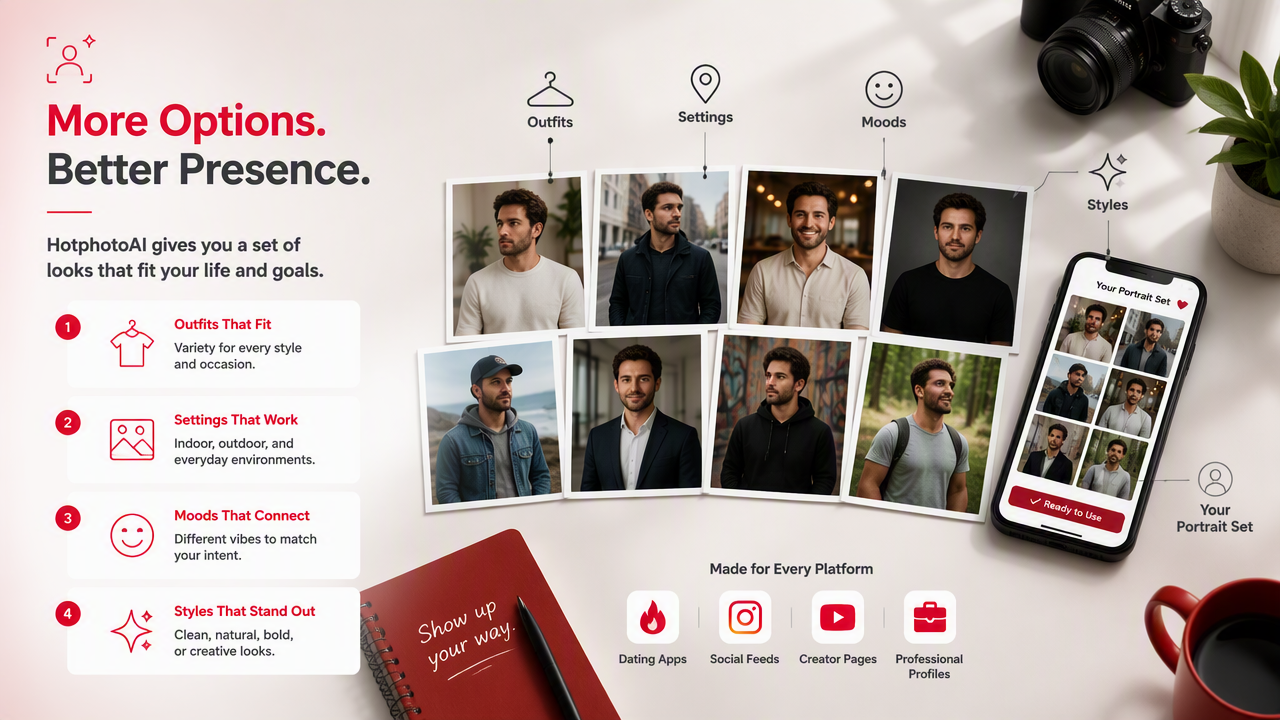
A useful portrait set should not be random. It should give you enough range to test what works while staying close to your real appearance. I like this approach for users who do not have time, budget, or patience for a traditional photoshoot, especially when the goal is modern profile variety.
Because this category creates new portraits, the best results come from good inputs and sane expectations. Use clear selfies with different angles, avoid sunglasses in every upload, and choose styles that match where the photo will appear. A fantasy portrait may be fun, but your LinkedIn recruiter probably does not need to see you as a cyberpunk monarch.
Best-fit workflows for generated portrait sets
- Dating refresh: create a balanced mix of polished, casual, and lifestyle images.
- Social content: test stylized portraits for avatars, posts, and creator branding.
- Professional profiles: generate cleaner headshot-style options without booking a studio.
- Style experiments: preview outfits, backdrops, lighting, and mood before committing to a shoot.
For a practical first run, pick three final images: one clear face-forward portrait, one lifestyle-style image, and one more expressive or stylized shot. If the set looks too perfect, choose the slightly more natural image. Profiles are about trust, not just gloss.
FAQ about choosing between Remini and portrait generators
Choosing between these tools is easiest when you define the photo job before opening the app. If you need restoration, choose enhancement. If you need new profile options, choose generation.
Is Remini better for old photos?
Yes, Remini is usually the better fit for old, blurry, or low-resolution photos because its core job is enhancement. Research data from the Remini result describes it as a tool for transforming old photos into HD images, with face enhancement features. That makes it useful for restoration-style tasks, not necessarily full profile reinvention.
Is AI portrait generation better for Tinder photos?
AI portrait generation is often better for Tinder when your issue is lack of variety. Dating profiles need more than one sharp face photo. They need different moods, settings, and styles. Generated portrait sets can help you build a stronger mix, as long as the final images still look believable and recognizably like you.
Can I use both tools together?
Yes, but use them for different jobs. Enhance a real photo when the moment is strong but the quality is weak. Generate new portraits when your profile needs fresh looks, better lighting, or more visual range. Combining both can work, but do not overprocess everything until your profile looks synthetic.
What should I avoid in AI profile photos?
Avoid images that change your face too much, remove normal skin texture, create strange hands, or place you in a scene that feels fake for the platform. A good dating or professional image should feel polished but plausible. The safest test is simple: would a friend still recognize you instantly?
Conclusion
HotPhotoAI vs Remini comes down to the starting point: use Remini when you already have the right image and need it cleaner, sharper, or restored; use portrait generation when you need new profile-photo options with different styles, outfits, and settings. For most dating-app and creator-profile users, I would start with variety, then keep only the most natural-looking winners.
Your next step is simple: audit your current profile photos, decide whether the problem is quality or variety, then choose the tool that matches that job. If variety is the gap, head to hotphotoai.com and build a set you can actually test across your profiles.