PhotoAI vs ProfilePicture.ai: Which AI Profile Photo Tool Fits You in 2026?
TL;DR
PhotoAI is stronger for generated lifestyle and model-style images, while ProfilePicture.ai is simpler for quick profile-picture cleanup and branded avatar looks. If you want dating photos or stylized portraits, prioritize realism, style control, and privacy before price.
PhotoAI vs ProfilePicture.ai is really a choice between "make me look like I hired a photographer" and "make this profile picture look cleaner." For people testing Tinder photos, LinkedIn headshots, creator avatars, or fantasy portraits, that difference matters more than a shiny landing page. AI profile picture generator: a tool that uses artificial intelligence to create or edit images of a person for online identity, dating, work, or social media. Deepfake: Wikipedia describes deepfakes as images, videos, or audio edited or generated with artificial intelligence or audio-video tools, depicting real or fictional people. If you want a warmer, dating-first alternative, HotphotoAI is worth considering because it focuses on attractive personal images rather than generic avatar polish.
Table of Contents
PhotoAI vs ProfilePicture.ai: quick verdict
PhotoAI is better for people who want realistic AI photos in many scenes, while ProfilePicture.ai is better for fast, simple profile-picture creation.
Search results show the market is split. One top result positions ProfilePicture.ai as a free profile picture maker that can remove backgrounds, add a circle crop or border, and export HD images. Another result describes Photo AI as purpose-built for generating photos of real people, with trained AI models, 100+ photo packs, and professional-style results.
Best quick read: choose PhotoAI when the photo itself needs to be newly generated; choose ProfilePicture.ai when an existing photo just needs a cleaner profile-ready finish.
Use this decision path before comparing feature lists:
- Pick PhotoAI if you want new portraits in different outfits, scenes, and lighting.
- Pick ProfilePicture.ai if you want a quick PFP, display picture, or avatar-style result.
- Pick a dating-focused tool if your main goal is attraction, not just neat cropping.
- Avoid any tool that hides how it handles uploads, training images, or deletion.
I'd treat both tools as photo systems, not magic mirrors. AI can improve presentation, but it can also exaggerate skin, jawlines, eyes, or clothing texture. The best output still starts with good input photos: clear face, varied angles, natural lighting, and no sunglasses in every shot.
What is the main difference between PhotoAI and ProfilePicture.ai?
The main difference is that PhotoAI focuses on generating realistic photos of a person across many scenes, while ProfilePicture.ai focuses on making profile pictures from uploaded images with simpler avatar and formatting tools.
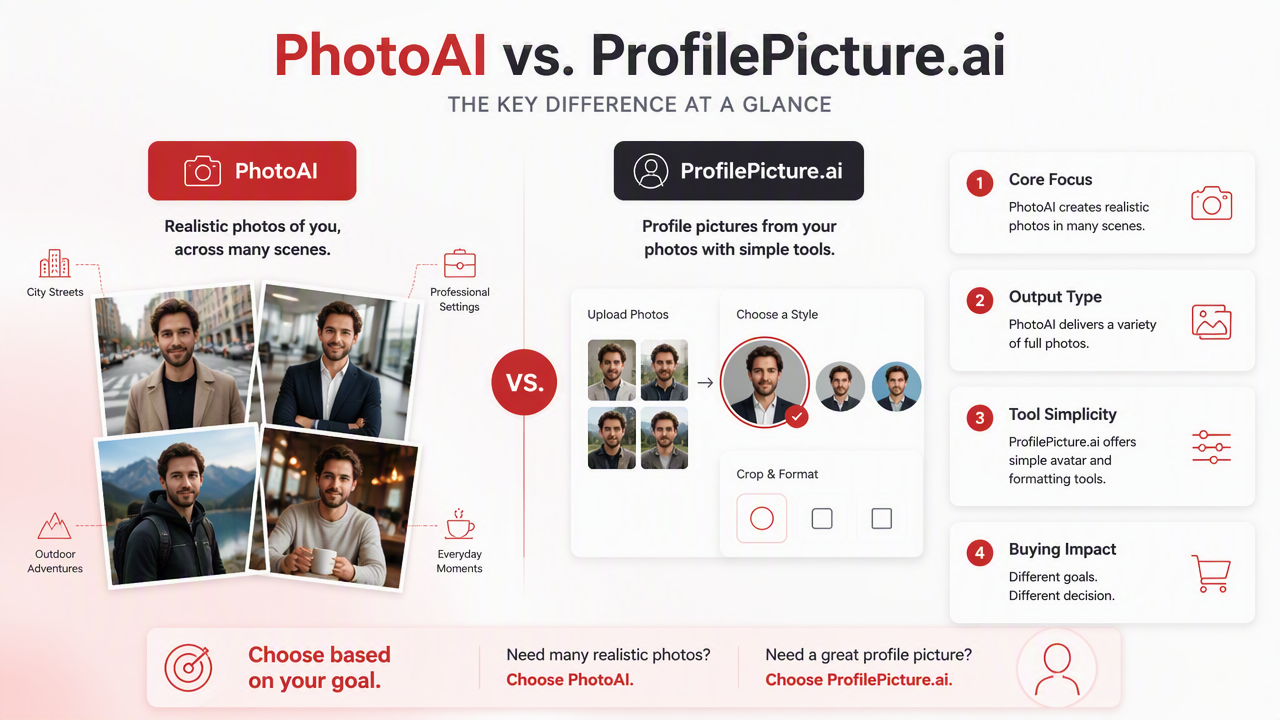
That sounds subtle, but it changes the whole buying decision. PhotoAI sits closer to the "AI photoshoot" category. ProfilePicture.ai sits closer to the "profile picture maker" category.
Feature-by-feature comparison table
| Category | PhotoAI | ProfilePicture.ai | Practical takeaway |
|---|---|---|---|
| Core use | AI-generated personal photos | PFP and display-picture creation | One creates more, one formats faster |
| Realism | Built around realistic people photos | Often more avatar or profile-focused | PhotoAI has the edge for lifelike scenes |
| Style variety | Research result mentions 100+ photo packs | Strong for crops, borders, background edits | PhotoAI offers broader scene changes |
| Dating use | Better fit for lifestyle and attraction shots | Better for clean headshot-style profiles | Dating users need realism first |
| Professional use | Useful for polished personal branding | Useful for simple LinkedIn-style cleanup | Depends on how formal you need to look |
| Privacy scrutiny | Uploads and model training should be checked | Upload and editing policies should be checked | Read policies before sending face data |
| Speed | AI generation may take longer | PFP tools are usually faster | Fast is not always better looking |
| Output risk | Can look too synthetic if prompts or inputs are weak | Can look generic if templates dominate | Review details before posting |
For creators and dating-app users, the strongest question is not "Which tool has more buttons?" It's "Which tool gives me a photo I would actually post without apologizing to my group chat?"
Which tool is better for dating, social media, and professional photos?
PhotoAI is usually the stronger choice for dating and lifestyle images, while ProfilePicture.ai is more practical for quick social avatars and clean professional profile crops.
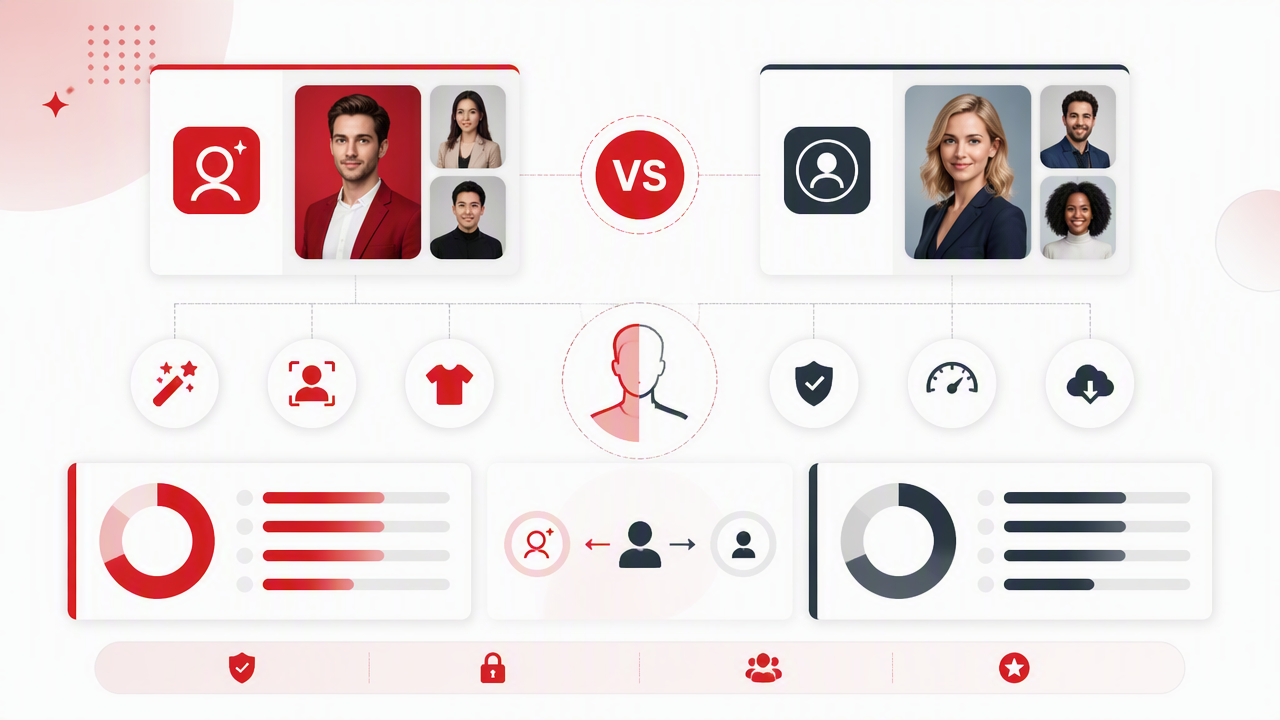
Dating photos need believable context: a good outfit, a flattering angle, relaxed expression, and background variety. A sterile PFP can look tidy, but tidy does not always equal attractive. Tinder, Hinge, Instagram, and creator profiles reward photos that feel lived-in, not laminated.
Best use cases by goal
- Tinder or Hinge photos: choose an AI photoshoot-style tool when you need variety: cafe, travel, gym, evening, outdoor, or smart-casual looks.
- LinkedIn or resume profile: choose the tool that keeps your face natural and clothing believable.
- Creator avatars: choose the platform with the strongest style range, especially if you need themed looks.
- Quick Discord, YouTube, or X profile image: ProfilePicture.ai's simpler PFP workflow can be enough.
- Fantasy, glamour, or model-style portraits: use a tool made for stylized personal imagery instead of a basic cropper.
A SERP result about "I tried 30+ AI profile picture generators" notes that some AI profile pictures can be ready in 30 to 45 minutes. That speed is useful, but I'd still inspect fingers, teeth, earrings, eyeglass frames, hairlines, shirt buttons, and background objects before uploading.
Practical rule: if the image is meant to attract attention, judge it at full size; if it only needs to identify you, judge it as a tiny circle crop.
The HotphotoAI platform fits the first category best: users who want attractive, stylized personal photos for dating, social media, or lifestyle profiles rather than a plain PFP refresh. For that use case, "does this feel like me on my best day?" beats "does this have a neat border?"
How should you judge realism, privacy, and output quality?
You should judge AI profile tools by face consistency, detail quality, policy clarity, and whether the final image matches the platform where you'll post it.
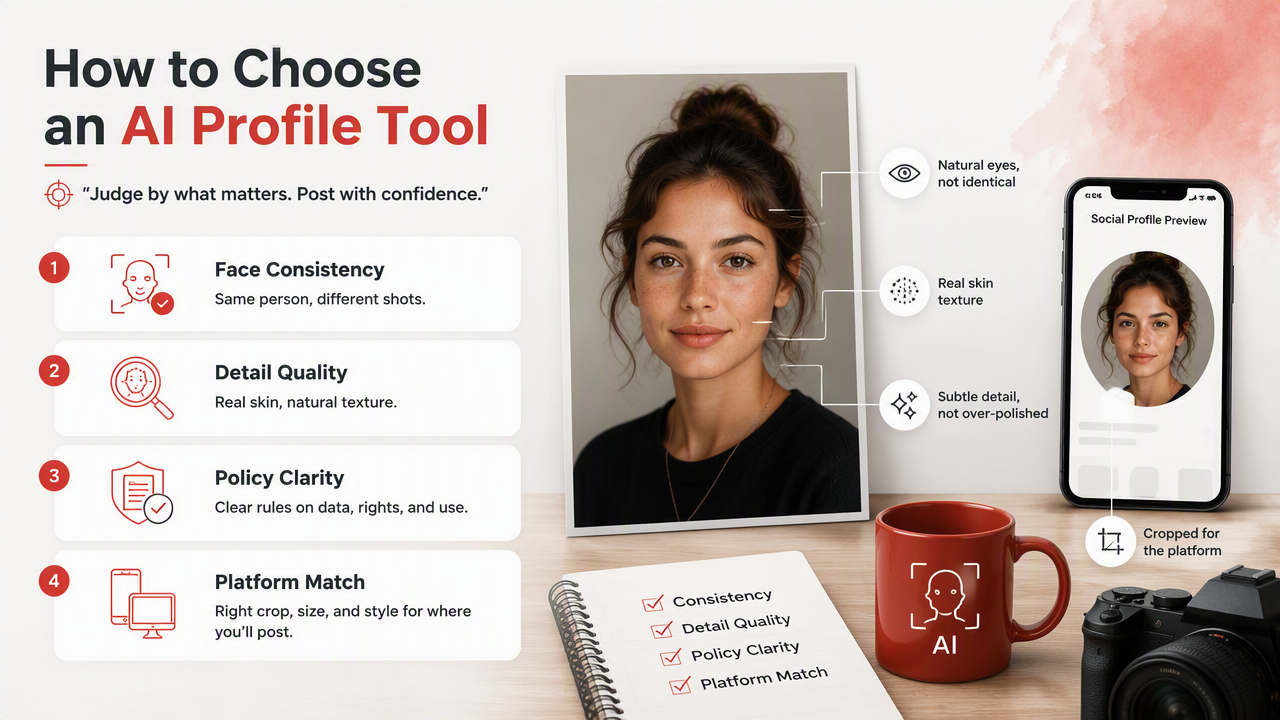
A realistic AI portrait does not need to look hyper-sharp. In fact, too much polish is often the tell. Real skin has texture, eyes are not identical glass marbles, and shirts usually obey physics, unless the algorithm has had too much coffee.
Quality checklist before you publish
- Face match: your face should be recognizable across several outputs.
- Skin texture: avoid waxy or plastic-looking skin.
- Hands and accessories: check fingers, rings, watches, glasses, and earrings.
- Hairline accuracy: AI often struggles with flyaway hair and beard edges.
- Background logic: signs, windows, furniture, and shadows should make sense.
- Platform fit: LinkedIn needs credibility; Tinder needs warmth; Instagram can handle more style.
Privacy deserves the same attention as image quality. These tools require face data, and face data is personal. Before uploading, check whether the service explains retention, deletion, training use, account control, and payment handling.
One search result specifically raises the concern that Photo AI images can look plasticky or show artifacts. Treat that as a useful reminder, not a universal verdict. Any generator can produce weak images when inputs are poor, styles are too aggressive, or the model overcorrects your features.
Here's my quality threshold: if a friend would ask, "Wait, is that AI?" the image needs another pass. If they say, "That's a great photo of you," it's ready.
For dating-first image testing, I'd build a small set: one close-up, one full-body photo, one social-looking scene, one activity shot, and one polished portrait. With HotphotoAI, that mix is the point: variety that still feels personal. For examples or a fresh set, head to hotphotoai.com.
Who should pick PhotoAI, ProfilePicture.ai, or an alternative?
PhotoAI suits users who want generated photoshoots, ProfilePicture.ai suits users who want quick profile-picture formatting, and a specialized alternative suits users who care most about attraction, glamour, or lifestyle identity.
No single tool wins every use case. I'd choose based on the job, not the brand name. That sounds boring, but boring is how you avoid paying for 80 images when you only needed one clean circle crop.
Best-for summary
| User type | Best fit | Why |
|---|---|---|
| Dating app user | PhotoAI or dating-focused alternative | Needs believable lifestyle variety |
| LinkedIn user | ProfilePicture.ai or PhotoAI | Depends on whether you need cleanup or a new headshot |
| Creator | PhotoAI | More room for themed styles and sets |
| Casual social user | ProfilePicture.ai | Fast PFP editing is often enough |
| Glamour or model-style user | Specialized image tool | Style, pose, and mood matter more than cropping |
| Privacy-sensitive user | Whichever has clearer policies | Face uploads require trust |
PhotoAI is the better pick when you want a full gallery effect. ProfilePicture.ai is the better pick when you want a finished PFP without a major creative process. If you want personal images that lean more attractive, stylized, and dating-ready, HotphotoAI belongs on the shortlist before you commit.
FAQ
Is PhotoAI better than ProfilePicture.ai?
PhotoAI is better if your goal is generating new realistic personal photos in varied settings. ProfilePicture.ai is better if you mainly want to edit, crop, or stylize an existing profile picture. The right choice depends on whether you need a new photo set or a cleaner version of one image.
Is ProfilePicture.ai free?
Search results describe ProfilePicture.ai as a free profile picture maker with upload, background removal, circle crop, border, and HD download features. Pricing and access can change, so check the current site before relying on it for a batch of professional or dating photos.
Can AI profile photos hurt dating app performance?
AI profile photos can hurt if they look fake, overly polished, or inconsistent with your real appearance. They can help when they show you clearly, naturally, and in varied contexts. For dating apps, believable warmth usually beats model-level perfection.
What is the safest way to use AI face tools?
Use clear source photos, avoid creating misleading identities, read the privacy policy, and delete unused uploads when the platform allows it. Don't use AI photos to impersonate someone else. If the tool's data handling is vague, treat that as a reason to pause.
Conclusion
The practical PhotoAI vs ProfilePicture.ai answer is simple: choose PhotoAI for realistic generated photos, choose ProfilePicture.ai for fast profile-picture cleanup, and consider a more specialized tool when your goal is attraction, glamour, or lifestyle variety. Before paying, test the tool against your real use case: Tinder, LinkedIn, Instagram, creator branding, or fantasy portraits. If you want a polished, dating-friendly set with less guesswork, visit hotphotoai.com and start with five looks you'd actually post.