Photoshoot in Walmart vs AI Photoshoot: Which Gets Better Profile Photos in 2026?
TL;DR
A Walmart photoshoot is best when you want real, casual, slightly chaotic photos with human imperfections. An AI photoshoot is better when you want fast style variety, polished lighting, and many profile-ready options without booking a photographer or walking past the cereal aisle in formalwear.
The funny thing about a photoshoot in Walmart vs AI photoshoot debate is that both can work, but they solve very different photo problems. A retail-store shoot gives you real locations, real lighting, and real awkwardness. An AI portrait workflow gives you controlled style, faster output, and more looks than most people can pack into one shopping cart. For people improving Tinder, LinkedIn, Instagram, or creator profiles, I'd compare them by outcome: do you need authenticity, polish, speed, or variety? Tools like HotphotoAI sit squarely in the polished-variety lane, especially when you want attractive personal images without arranging a full shoot.
Table of Contents
What is a photoshoot in Walmart vs AI photoshoot?
A photoshoot in Walmart vs AI photoshoot comparison weighs an in-person retail-store photo session against software-generated portraits created from uploaded selfies or reference images.
AI photoshoot: a portrait workflow where artificial intelligence creates stylized, realistic, or fantasy images of a person using source photos and prompt-based style direction.
The Walmart version usually comes from the "Walmart Photo Challenge," a social trend covered by Fstoppers in 2024, where photographers try to create surprisingly good portraits using ordinary store aisles, fluorescent lights, and low-budget props. The charm is the constraint. You're turning garden lights, toy aisles, and parking-lot energy into something shareable.
AI portraits flip the constraint. Instead of working with whatever aisle is open, you choose the look first: studio headshot, model-style streetwear, luxury travel, soft glamour, gym lifestyle, dating profile, fantasy portrait, or business casual. That changes the creative process from "find the shot" to "generate the concept."
Key insight: Walmart shoots win on real-world spontaneity; AI shoots win on controlled variety and speed.
SERP research for this topic shows mixed intent. Some people want the comedy of the Walmart challenge. Others compare traditional photoshoots with AI images for cost and speed. That gap matters, because profile-photo users don't just want a funny challenge. They want photos that make them look like themselves on a good day, not like a mannequin that found ring lighting.
Which option is faster, cheaper, and more flexible?
An AI photoshoot is usually faster and more flexible, while a Walmart shoot can be cheaper if you already have a friend with a camera and don't need polished variety.
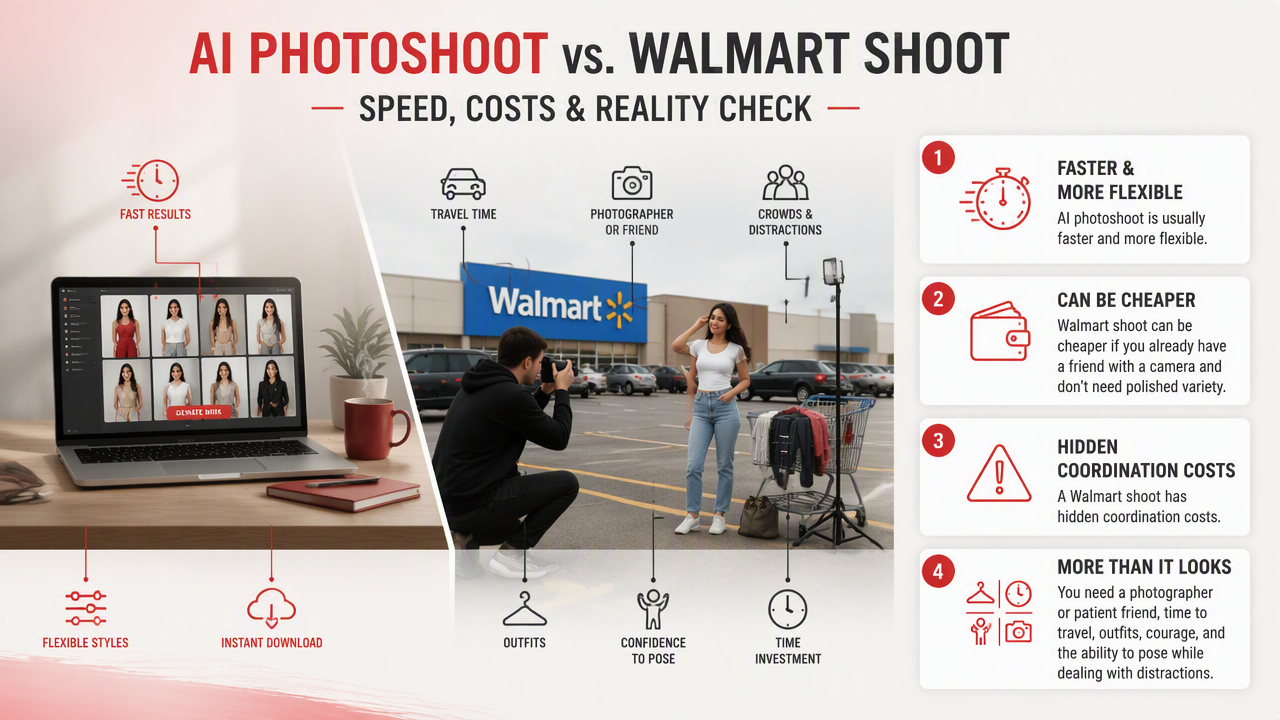
A Walmart shoot has hidden coordination costs. You need a photographer or patient friend, time to travel, outfits, courage, and the ability to pose while someone pretends not to stare near the frozen pizzas. If you want multiple looks, you either change in the car or accept that "aisle couture" has limits.
AI portraits reduce logistics. You upload photos, pick styles, and get many image directions without weather, store rules, lighting issues, or scheduling friction. The tradeoff is that you need to review outputs carefully for realism and consistency.
Side-by-side decision table
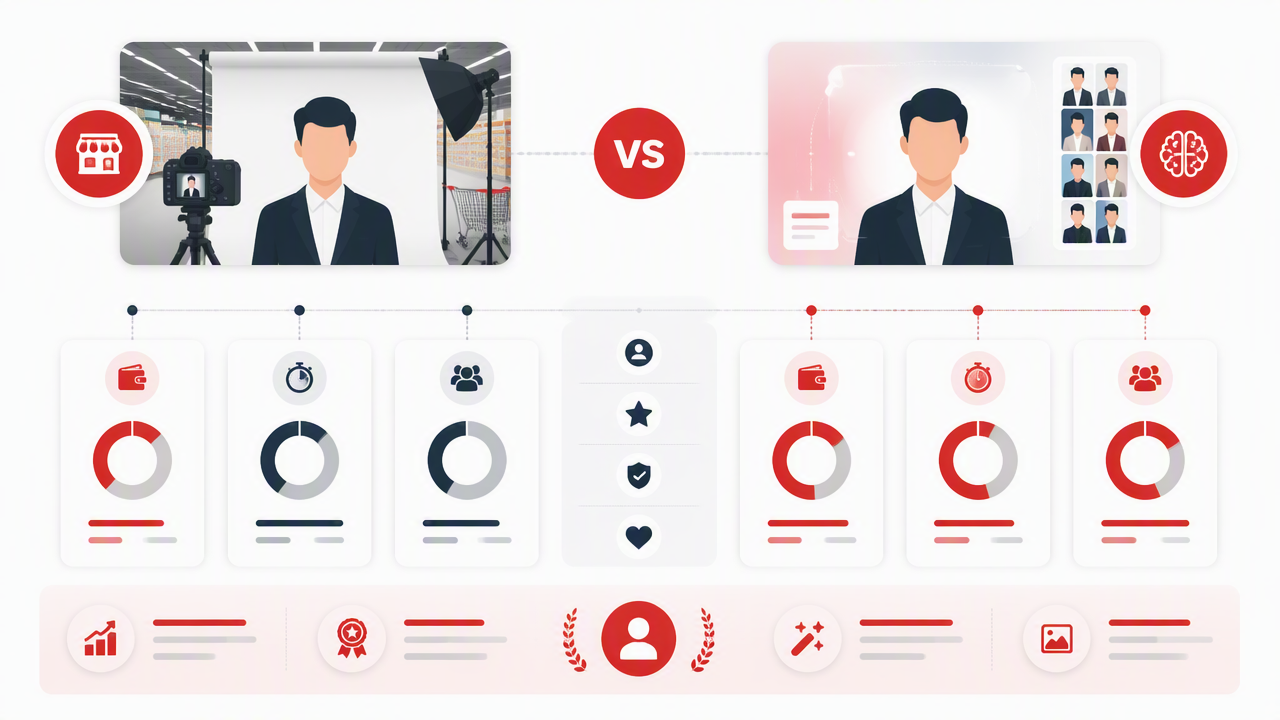
| Factor | Walmart photoshoot | AI photoshoot | Better pick |
|---|---|---|---|
| Price | Low if DIY; higher if hiring a photographer | Usually lower than a full custom shoot | AI for volume |
| Turnaround time | Same day if edited quickly | Often very fast once images are uploaded | AI |
| Style variety | Limited by aisles, props, outfits, lighting | Broad: business, dating, glamour, lifestyle, fantasy | AI |
| Privacy | Public setting; people may watch | Private workflow from your own device | AI |
| Realism | Fully real capture | Depends on source photos and generation quality | Walmart for pure realism |
| Best use case | Fun, candid, social content | Profile photos, stylized portraits, rapid testing | Depends on goal |
For dating apps, I'd rather have ten believable options than one heroic shot in the appliance section. For humor content, Walmart wins because the location is the joke and the proof.
When does a Walmart photoshoot look better?
A Walmart photoshoot looks better when the goal is candid realism, humor, social storytelling, or proof that the person in the photo exists exactly as shown.
Real cameras still have a trust advantage. They capture tiny details AI can struggle with: natural hand placement, messy hair, imperfect smiles, background depth, clothing texture, and the slightly goofy body language that makes a person feel human. On Tinder or Instagram, that can help if the photo feels relaxed instead of overproduced.
The store setting also gives you instant narrative. A portrait beside flowers says playful. A shot in the camping aisle says outdoorsy, even if your last hike was from the couch to the fridge. The lighting won't always flatter you, but the context can make the image memorable.
Best situations for a retail-store shoot
- You want funny, candid photos for social media.
- You have a friend who understands framing, light, and editing.
- You're comfortable posing in public.
- You want one or two standout images, not a full profile set.
- You value documentary realism over perfect styling.
There are real downsides. Store policies may vary, staff may ask you to stop, and public shoppers become accidental background actors. Lighting can be harsh, especially under overhead fluorescents. Also, a retail shoot can look clever once and gimmicky by the fifth photo.
Use Walmart when the setting adds personality. Skip it when the setting becomes the personality.
The strongest Walmart images usually don't pretend to be luxury editorials. They embrace contrast: polished pose, ordinary aisle. That's why the trend works as a challenge. It's photography with a punchline.
When does an AI photoshoot look better?
An AI photoshoot looks better when you need multiple polished personal images across outfits, lighting styles, backgrounds, and use cases without planning a traditional shoot.
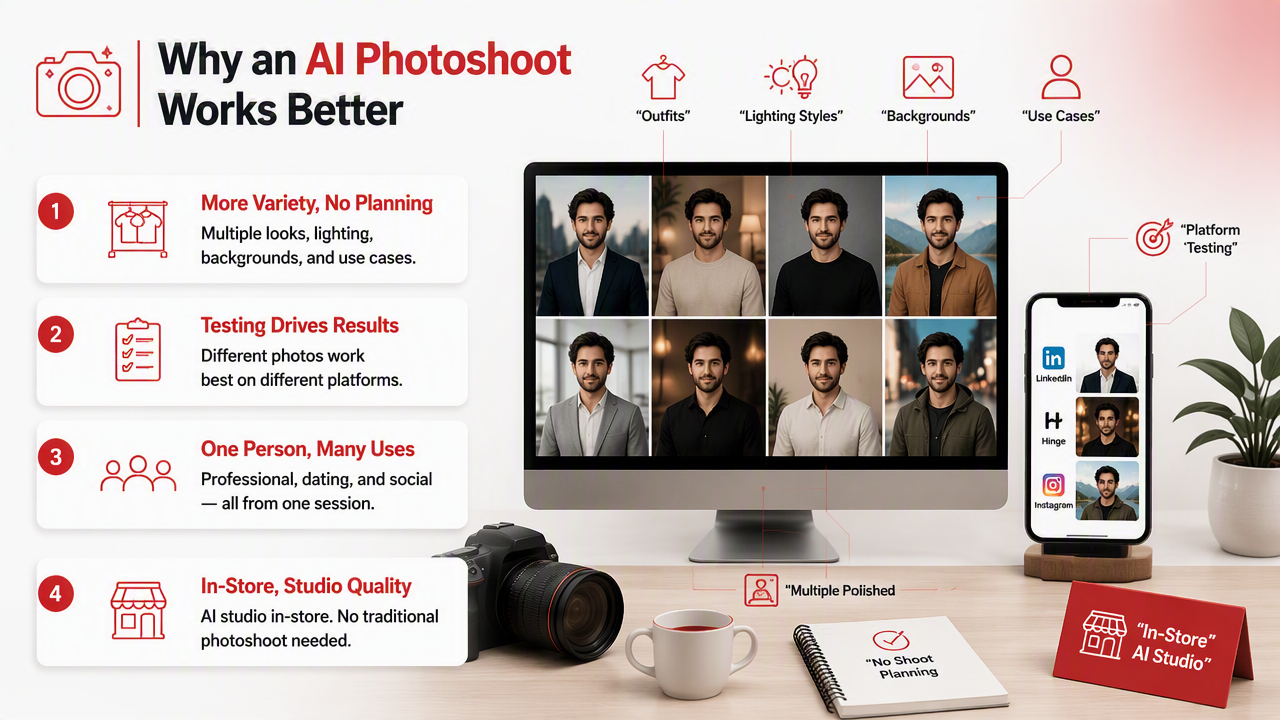
Profile-photo success often comes from testing. One image may work for LinkedIn, another for Hinge, and another for Instagram. A single in-store session rarely gives you enough range. AI makes range the default, which is useful if you're trying to find your best angle, vibe, or wardrobe direction before committing to real-world photos.
With HotphotoAI, the practical benefit is controlled variation. You can create model-style portraits, lifestyle photos, glamour images, or professional-looking profile pictures without renting a studio. For people who don't enjoy posing in public, that alone is worth considering. If you want to experiment, visit hotphotoai.com and think of it as a digital fitting room for your image.
How to get believable AI portraits
- Upload clear source photos with different angles and expressions.
- Choose styles that match your real personality and wardrobe.
- Avoid making every image look like a luxury ad.
- Check hands, teeth, eyes, jewelry, logos, and background details.
- Keep a mix of close-ups, half-body shots, and lifestyle scenes.
- Use the final images where polished presentation matters most.
AI portraits work best when they enhance you, not replace you with your more suspiciously symmetrical cousin. The best outputs still need judgment. If a photo looks too perfect, it may hurt trust on dating apps, where people want attraction and believability at the same time.
The strongest use case is controlled image creation. Want a sharp black blazer shot, a warm café portrait, and a dramatic fashion-style image? AI can produce that spread faster than a human shoot can change locations.
How should you choose in 2026?
Choose Walmart for authenticity and story; choose AI for speed, style variety, privacy, and profile-ready polish.
The 2026 decision is less about "real versus fake" and more about intent. A real photo can still mislead if it is heavily edited, badly framed, or five years old. An AI image can be useful if it looks like you, fits the platform, and doesn't pretend to document a real event that never happened.
Who should pick which option
| User goal | Pick Walmart | Pick AI |
|---|---|---|
| Dating profile refresh | Good for candid backup shots | Best for testing many attractive looks |
| Creator content | Great for trend participation | Great for consistent visual branding |
| Professional profile | Usually too casual | Strong for polished headshots |
| Humor or challenge video | Best choice | Not the main point |
| Privacy-conscious portraits | Public setting is awkward | Better fit |
| Maximum realism | Strongest | Needs careful review |
My honest recommendation: combine them if you can. Use AI for polished first impressions, then add one real candid photo so your profile feels grounded. That mix helps avoid the "all studio, no life" problem.
Expect AI portrait tools to become more realistic in 2027, especially around hands, skin texture, and identity consistency. Retail shoots will still have a place because people like proof, humor, and behind-the-scenes content. The future is not one replacing the other; it's choosing the right image for the right job.
FAQ
Is an AI photoshoot acceptable for dating apps?
Yes, if the photos still look like you and don't create a false lifestyle. Use AI portraits for polished variety, but keep at least one current real photo in your profile. Dating photos need attraction, but they also need trust.
Can a Walmart photoshoot look professional?
Yes, but it depends on lighting, posing, lens choice, and editing. The best retail-store portraits use aisles and props creatively instead of hiding them. If the concept feels intentional, the low-budget setting becomes part of the style.
Is AI cheaper than hiring a photographer?
Often, yes, especially when you need many styles or fast revisions. A human photographer brings direction, real lighting, and authentic capture, while AI gives scalable variation. The better value depends on whether you need one premium session or many usable options.
What should I avoid with AI profile photos?
Avoid images that change your face shape, body type, age, or lifestyle too much. Watch for strange fingers, glassy skin, fake backgrounds, and outfits you'd never wear. A good AI photo should feel aspirational, not legally unfamiliar.
Conclusion
The smartest answer to photoshoot in Walmart vs AI photoshoot is simple: match the method to the message. Pick Walmart when you want candid proof, comedy, and real-world personality. Pick AI when you want fast, polished, varied portraits for dating, social media, or professional profiles. If your goal is better personal photos this week, start with the HotphotoAI platform, review the images with a realism filter, then add one authentic candid shot for balance. For a quick test, head to hotphotoai.com and build a small profile set before you spend a Saturday posing near bulk paper towels.