What Are AI Photo Packs? A Practical 2026 Guide
TL;DR
AI photo packs are preset collections of AI-generated portraits built around a goal, such as dating photos, headshots, glamour shots, or fantasy edits. Use packs when you want fast, consistent results without writing prompts; use custom prompts when you need precise control over outfit, mood, pose, or setting.
AI photo packs are the new shortcut between "my camera roll is chaos" and "why do I suddenly look like I have a lighting crew?" If you've searched what are AI photo packs, the simple answer is this: they're themed bundles of AI-generated personal images made from your uploaded photos, often with preset styles, poses, outfits, and backgrounds. Platforms such as HotphotoAI use this pack-based approach to help people create dating, lifestyle, model-style, fantasy, and polished profile images without booking a traditional photoshoot.
Table of Contents
What are AI photo packs?
AI photo packs are curated sets of AI-generated images that apply a specific visual theme to a person's uploaded photos, such as professional headshots, Tinder-style portraits, glamour shots, lifestyle scenes, or fantasy characters. They package prompts, styling choices, lighting, and background direction into a simpler buying and creation experience.
Generative AI: a branch of artificial intelligence that uses generative models to create new text, images, video, audio, software code, or other data from learned patterns.
A pack usually solves one practical problem: "I want better photos for a specific use, but I don't know how to prompt an image model." Instead of typing "cinematic golden-hour portrait in linen shirt, shallow depth of field," you pick a dating photo pack or lifestyle pack and let the system handle the styling.
Key insight: A photo pack is not just a folder of images. It is a guided creative recipe for a specific identity, use case, or aesthetic.
Research around generative interfaces supports why this matters. The 2023 paper Visual Instruction Tuning examined how models can follow visual and language instructions, which is the same broad direction behind prompt-driven portrait tools. Another 2023 study, Generative Agents: Interactive Simulacra of Human Behavior, explored how generative systems can simulate behavior and context, a useful lens for understanding why modern photo tools can create scenes rather than flat edits.
How do AI photo packs work?
AI photo packs work by training or adapting a generative image workflow around your uploaded images, then applying preset creative instructions to produce themed portraits. The user chooses a pack, uploads reference photos, waits for generation, then downloads the best results for profiles, social posts, or personal branding.
The process is usually less mysterious than the marketing suggests. Yes, there is AI wizardry. No, there is not a tiny photographer living in the server with a ring light.
Typical photo pack workflow
- Choose a pack: Pick a goal such as dating, professional, glamour, travel, fitness, or fantasy.
- Upload reference photos: Use clear images that show your face from different angles.
- Generate variations: The system creates multiple portraits using the pack's style rules.
- Review outputs: Keep the images that look natural, flattering, and useful.
- Download and use: Add them to Tinder, LinkedIn, Instagram, creator pages, or personal projects.
Good uploads matter. A blurry bathroom mirror selfie gives the model less to learn from than a sharp, well-lit portrait. Strong inputs do not guarantee perfect outputs, but they give the system a fair shot.
Most packs also hide prompt complexity. Instead of writing long instructions about wardrobe, lens style, background, expression, and lighting, the pack bakes those choices into the workflow.
What types of AI photo packs can you create?
The most useful AI photo packs are organized by outcome, not by technology. A dating user wants better first impressions; a professional wants credibility; a creator wants visual variety; a fantasy fan wants an alter ego that would be expensive to shoot in real life.
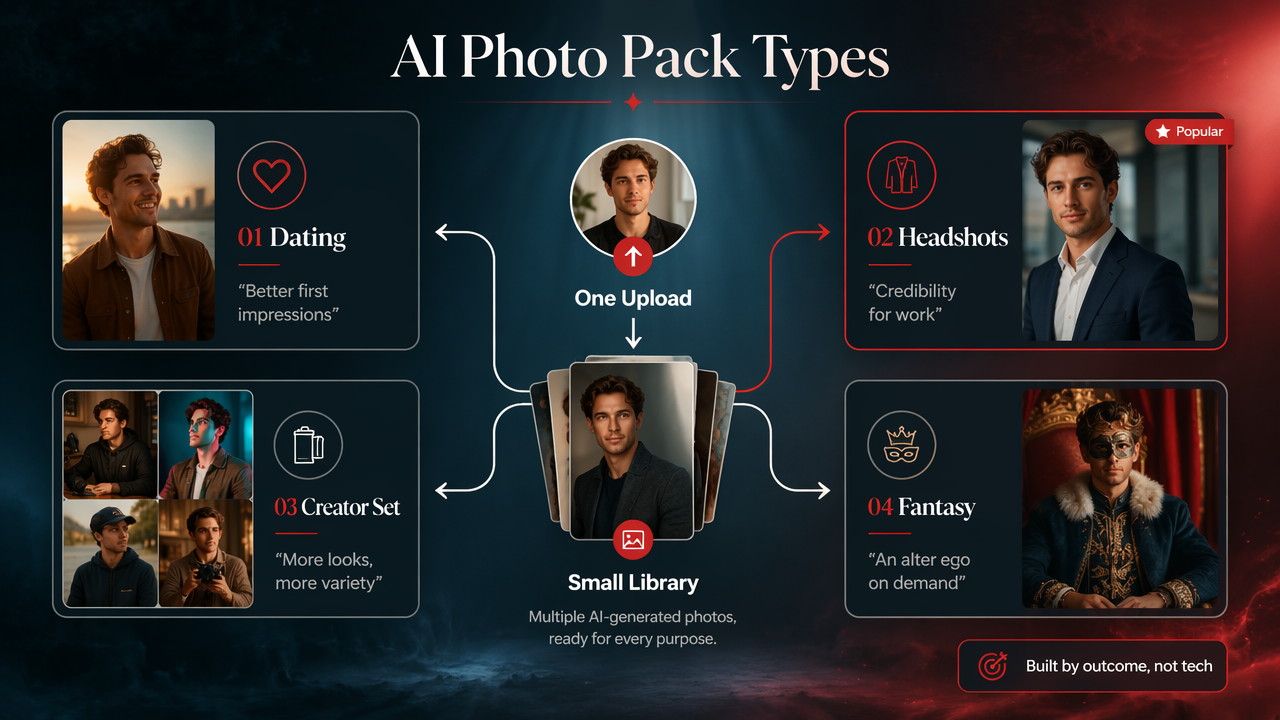
HotphotoAI platform users often look for packs that turn one set of uploads into several polished identities, from clean profile photos to stylized portraits. That matters because most people don't need one perfect image. They need a small library that fits different apps and moods.
Common AI photo pack categories
| Pack type | Best for | Typical style choices | Where people use it |
|---|---|---|---|
| Dating pack | Tinder, Hinge, Bumble | Warm lighting, social energy, confident poses | Dating profiles |
| Professional pack | LinkedIn, resumes, bios | Clean backgrounds, smart outfits, direct eye contact | Work profiles |
| Glamour pack | Personal branding, social posts | Studio lighting, makeup-inspired polish, dramatic styling | Instagram, creator pages |
| Lifestyle pack | Everyday online presence | Cafes, travel scenes, relaxed outfits | Social media and websites |
| Fitness pack | Coaches, gym creators | Athletic poses, activewear, strong lighting | Creator profiles |
| Fantasy pack | Cosplay, avatars, creative fun | Sci-fi, royal, cinematic, character-driven scenes | Avatars and fan content |
Professional headshot tools often market the "photoshoot quality without the price tag" angle, and some competitor pages highlight large production numbers such as 900k+ headshots already created. That framing is useful, but it undersells the bigger point: packs are not only for work headshots anymore.
For 2026 users, the strongest pack categories are personal and situational. A dating pack should not look like a corporate badge photo. A LinkedIn pack should not look like you're auditioning for a vampire perfume ad. Context is the whole game.
AI photo packs vs custom prompts: which should you choose?
AI photo packs are best when you want fast, coherent results for a known use case, while custom prompts are better when you need precise creative control. Packs reduce decision fatigue; prompts reward people who already know how to describe image style, composition, wardrobe, and mood.
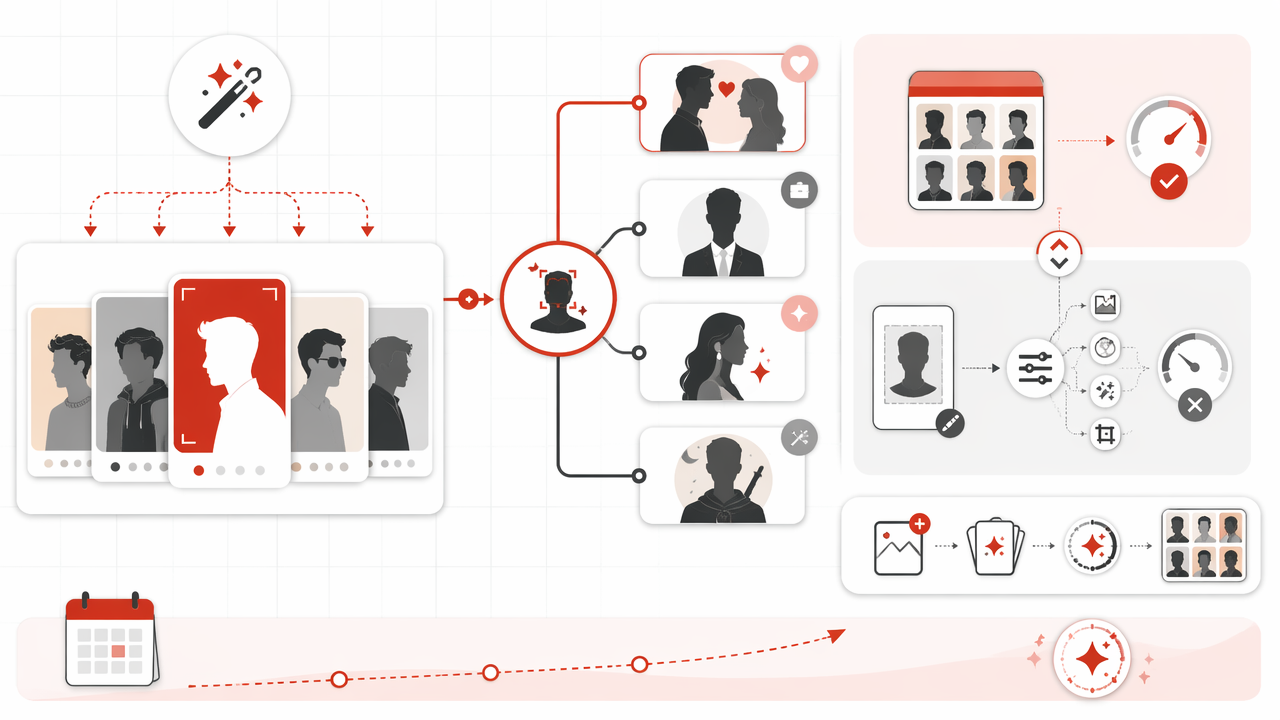
Neither option is "more creative" by default. Packs are like ordering from a great menu. Custom prompts are like cooking from scratch while hoping you remembered what "diffused rim light" means.
Decision table for packs and prompts
| Choice | Pick it when | Main advantage | Tradeoff |
|---|---|---|---|
| AI photo pack | You need polished images for a clear purpose | Faster setup and consistent style | Less granular control |
| Custom prompt | You know the exact scene you want | More creative precision | More trial and error |
| Pack plus edits | You want speed with small adjustments | Balanced workflow | May require regeneration |
| Traditional photoshoot | You need full human direction and real capture | Maximum authenticity and control | Higher cost and scheduling effort |
Packs also help beginners avoid prompt overload. Many people can describe a desired outcome, such as "better dating photos," but not the technical recipe behind it. A pack translates that outcome into repeatable creative instructions.
Custom prompts shine when the details are non-negotiable. If you need a navy double-breasted suit, a Tokyo rooftop, soft rain, and a 35mm editorial look, a prompt-led workflow may be worth the extra time.
How HotphotoAI handles photo packs
HotphotoAI treats photo packs as goal-based creative shortcuts, so users can start with the result they want rather than a blank prompt box. That approach is especially useful for people creating dating images, glamour portraits, lifestyle shots, or stylized personal photos from their own uploads.
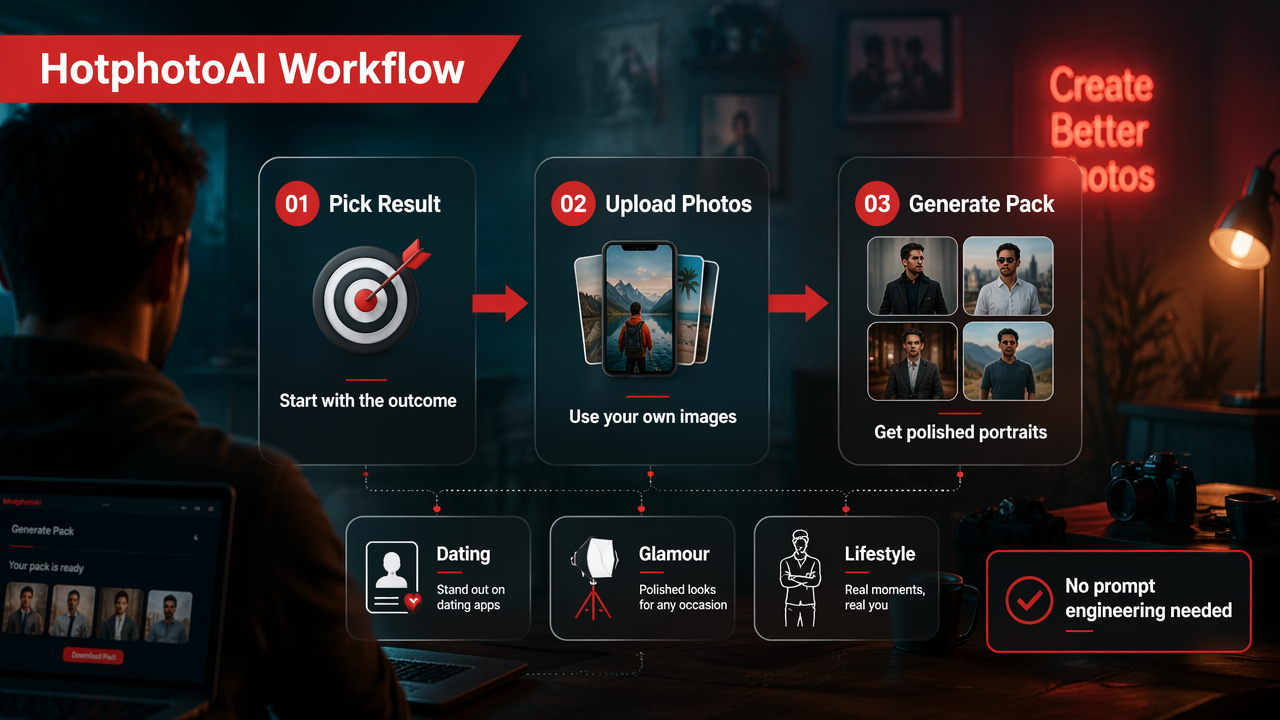
With HotphotoAI, the practical benefit is clarity. You are not forced to become a prompt engineer just to look more polished online. Pick a visual direction, provide usable source images, and generate a set of portraits that can serve different profile needs.
Best use case: Choose a pack when you want a coherent gallery, not a single lucky image.
The buying concept also makes budgeting easier. Instead of paying for every tiny experiment as a separate creative task, a pack gives you a defined theme and expected output style. For personal-photo users, that is simpler than building every image from scratch.
For best results, I'd treat packs like a mini photoshoot plan:
- Use recent photos where your face is clear.
- Include different angles and expressions.
- Avoid heavy filters in source images.
- Choose a pack that matches the platform you care about most.
- Save the most natural results, not only the most dramatic ones.
The wittiest AI portrait is still useless if it looks nothing like you on a first date. Aim for upgraded reality, not a witness protection reboot.
What should you expect from AI photo packs in 2027?
AI photo packs will likely become more personalized, more editable, and more platform-specific by 2027. Instead of choosing broad themes only, users should expect finer controls for pose, outfit, expression, background, aspect ratio, and app-specific formats.
The direction is already visible in generative AI research. As models get better at following visual instructions, photo tools can move from "generate a batch" toward "generate, critique, refine, and keep the person consistent." Network advances may also matter over time; the 2021 IEEE survey The Road Towards 6G reviewed future connectivity goals, which could support heavier media generation and real-time visual workflows later.
Expect three practical shifts:
- More editable packs: Change shirt color, background, or expression without restarting.
- Better identity consistency: Fewer images that look like a cousin from an alternate timeline.
- Platform-aware outputs: Dating, LinkedIn, Instagram, and avatar packs with native crop and style guidance.
The main skill for users will not be prompting every detail. It will be choosing the right pack, reviewing outputs honestly, and matching images to the social context.
FAQ about AI photo packs
AI photo packs raise practical questions about realism, ownership, profile use, and whether they replace photographers. The short version: they are best treated as fast, stylized portrait generation tools, not magic truth machines or a universal replacement for human photography.
Are AI photo packs the same as AI headshots?
AI headshots are one type of photo pack, usually focused on professional profile images for LinkedIn, resumes, company bios, and email avatars. Photo packs can be broader. They may include dating portraits, glamour images, lifestyle scenes, fantasy characters, fitness shots, or social media content.
Can I use AI photo packs for dating apps?
Yes, dating packs are one of the clearest use cases because they create profile-ready images with better lighting, styling, and variety. The smartest approach is to choose images that still look like you. If the photo creates surprise instead of recognition, retire it gracefully.
Do AI photo packs replace a real photographer?
Photo packs can replace some casual shoots, especially when you need fast, affordable, stylized images. A real photographer is still better for live direction, events, brand campaigns, team photos, and situations where authenticity matters more than variety or experimentation.
How many source photos should I upload?
Follow the platform's instructions, but quality matters more than dumping your whole camera roll into the machine. Use sharp, recent photos with different angles, expressions, and lighting. Skip images with sunglasses, heavy filters, extreme blur, or other people crowding the frame.
Conclusion
AI photo packs are themed bundles of generated portraits that make personal image creation easier, faster, and less prompt-heavy. If you came here asking what are AI photo packs, think of them as a guided photoshoot menu for dating, work, social, glamour, lifestyle, and fantasy images.
Start by choosing the outcome, not the technology. Need more matches? Pick a dating pack. Need a sharper bio photo? Pick a professional pack. Want creative range without renting a studio? Try a lifestyle or glamour pack.
If you're ready to experiment with polished personal portraits, head to hotphotoai.com and choose the pack that matches the profile you want to improve first.